19 Straight Hairstyles for Black Women Over 40 That Look Chic
Straight hairstyles for Black women offer plenty of ways to express personal style, whether you prefer a polished bob, smooth shoulder-length hair, or long, flowing strands. After 40, the right haircut can complement your features, add movement, and fit comfortably into your daily routine without sacrificing sophistication.
The best style depends on more than age. Your natural hair texture, density, face shape, preferred length, and willingness to use heat all influence the final result. Some women enjoy a glass-like finish, while others prefer soft layers, face-framing bangs, or a little extra volume around the crown.
In this guide, you will find 19 chic hairstyle ideas, including classic cuts, modern variations, and practical styling options for different occasions. You will also discover ways to maintain a smooth finish while protecting the health of natural or chemically treated hair.
1. Sleek Shoulder-Length Straight Hair
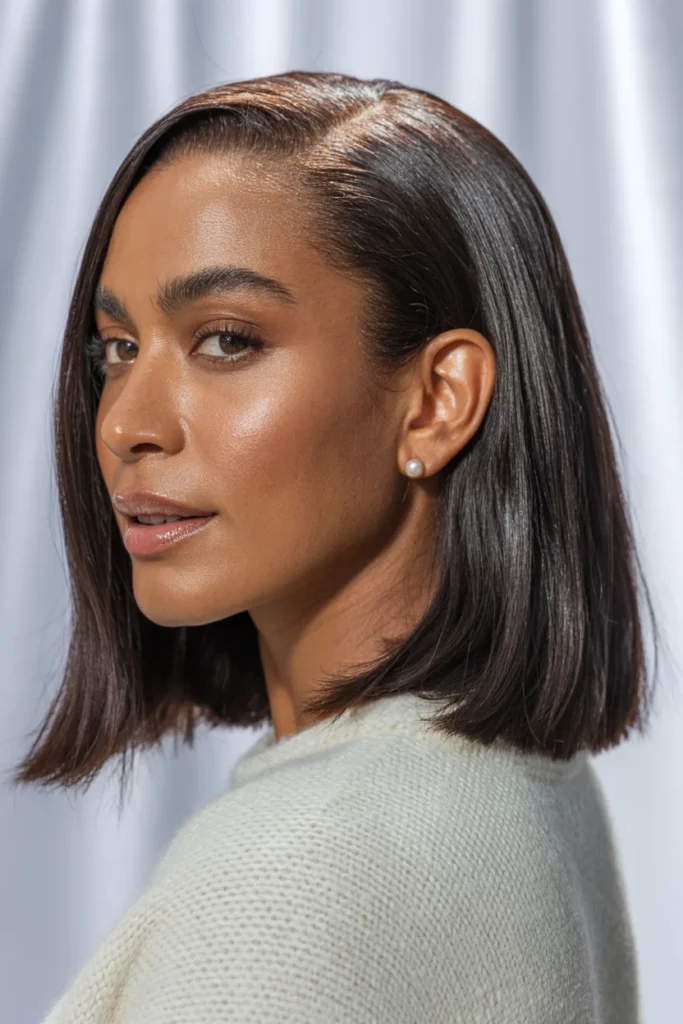
Shoulder-length straight hair offers a lovely balance between sophistication and practicality. The ends sit around the shoulders, creating a clean outline that works beautifully with a center or side part. A smooth finish highlights the haircut’s shape, while gently curved ends add softness without making the style look overly formal.
This length is particularly useful if you want hair that can be worn loose, tucked behind the ears, or gathered into a small ponytail. It suits many hair densities, although fine hair often benefits from a blunt perimeter that makes the ends appear fuller. A heat protectant and controlled blow-drying help maintain the finish.
2. Classic Straight Bob
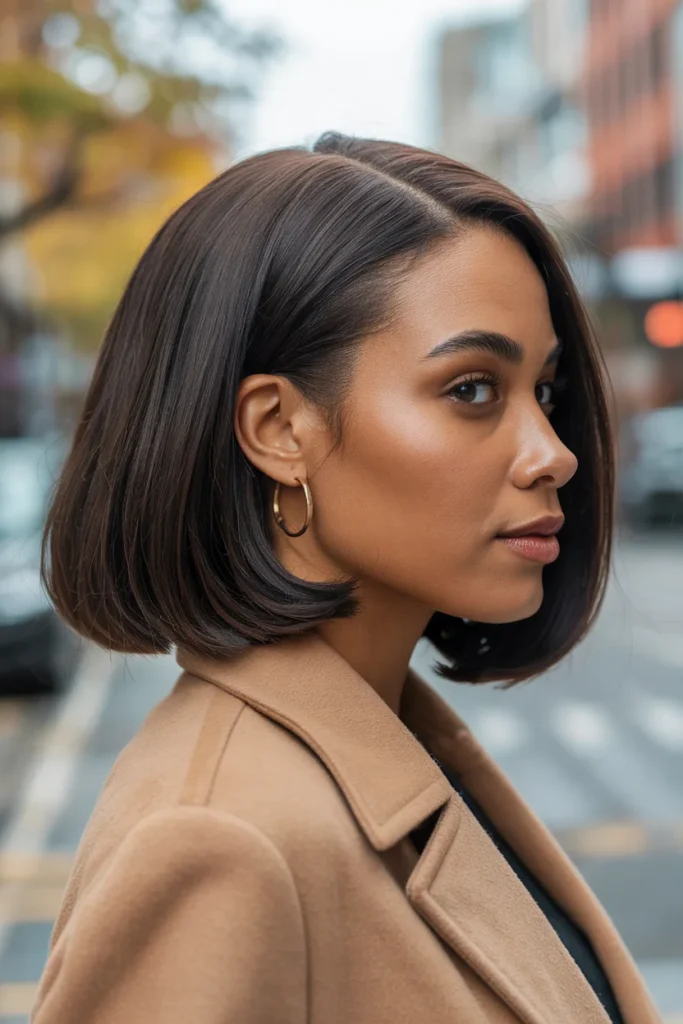
The classic straight bob is a timeless choice with a neat silhouette and minimal fuss. The cut usually falls between the jawline and the chin, with the ends following a consistent line. A center part gives it a contemporary appearance, while a side part creates a softer sweep across the forehead.
- Length: Chin-length to just below the jaw.
- Best texture: Naturally straightened, relaxed, or silk-pressed hair.
- Styling tool: A flat iron or round brush, used with heat protection.
- Maintenance: Regular trims help preserve the crisp shape.
- Best occasion: Workdays, dinners, celebrations, and everyday wear.
For a more relaxed finish, ask your stylist to soften the very ends slightly rather than creating a heavily layered shape. This keeps the bob polished while allowing natural movement.
3. Long Silky Straight Hair
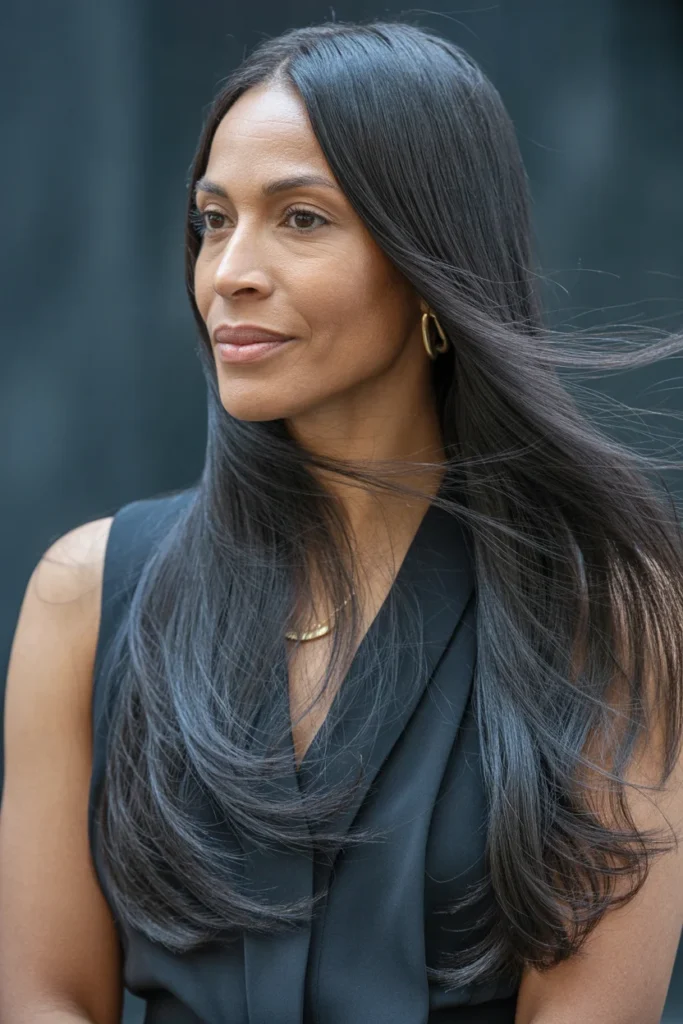
Quick Tip: Divide the hair into small, manageable sections before blow-drying or straightening. Work at an appropriate temperature for your hair’s condition, and avoid repeatedly passing a hot tool over the same section.
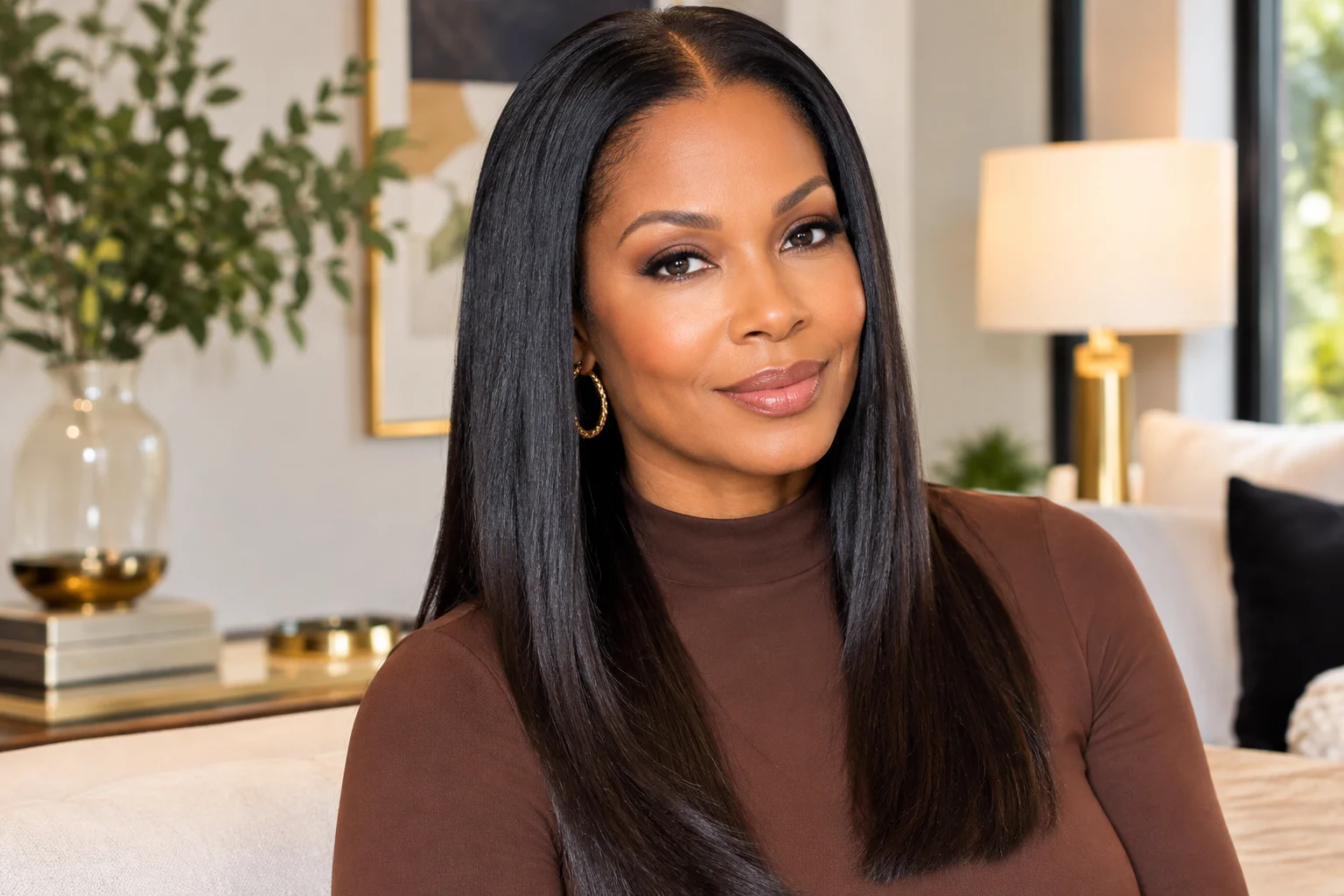
Long, smooth strands create a striking look when the ends are healthy and the surface reflects light. A middle part gives the style symmetry, while a slight bend at the ends keeps it from appearing too rigid. The result can feel elegant without requiring an elaborate cut.
Long hair may suit women who enjoy more styling flexibility, including ponytails and half-up looks. However, length can make fragile ends more noticeable, so gentle detangling, regular conditioning, and occasional trims are important. If your hair is naturally coily, remember that straightening changes its temporary appearance, not its underlying texture.
4. Straight Lob With Side Part
BEFORE
Hair that falls at one uniform length can sometimes look flat around the face, especially when the parting does not complement the natural direction of growth. The ends may also lack definition if the haircut has grown out.
AFTER
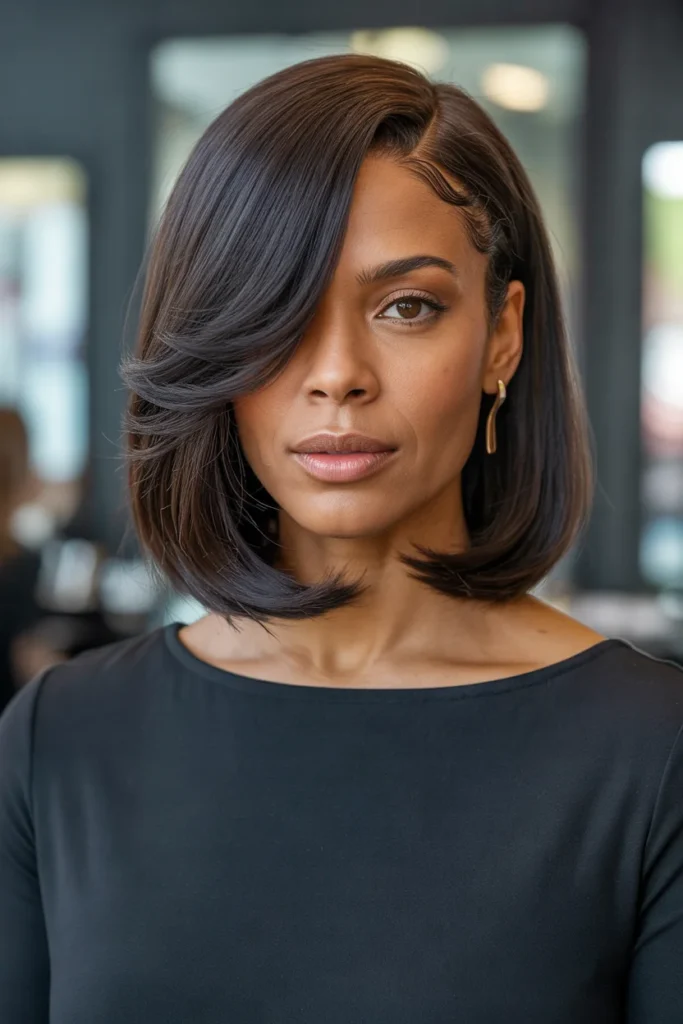
A side-parted lob creates a diagonal line across the forehead and directs attention toward the eyes and cheekbones. The longer bob typically falls between the chin and collarbone, giving the hair enough length to move while retaining a structured shape.
To style it, create a deep or moderate side part while the hair is slightly damp, then blow-dry in sections. A lightweight finishing serum can smooth the ends, but use only a small amount if your roots become oily or your hair is fine.
See Also 25 Curly Hairstyles for Black Women Over 40
5. Blunt Cut Straight Bob
- Prepare the hair. Start with clean, conditioned hair and apply a heat protectant if you plan to blow-dry or use a flat iron.
- Create clean sections. Divide the hair into manageable horizontal sections so the finish stays consistent.
- Smooth the strands. Use a blow-dryer with a nozzle or a flat iron suited to your hair’s needs.
- Check the outline. Make sure the ends fall evenly around the jaw or neck, depending on your chosen length.
- Finish lightly. Apply a small amount of serum to the ends rather than coating the roots.
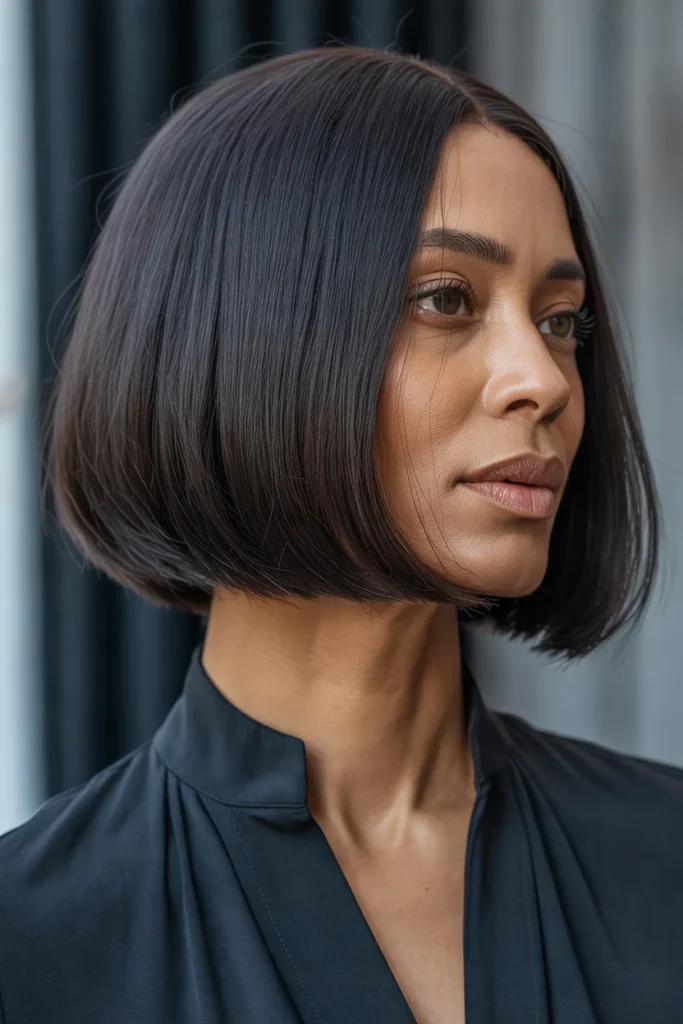
A blunt bob is especially appealing when you want the ends to look dense and defined. It can be flattering for fine or medium-density hair because it avoids removing too much weight. Ask your stylist to consider your natural growth pattern and shrinkage before deciding on the final length.
6. Straight Hair With Curtain Bangs
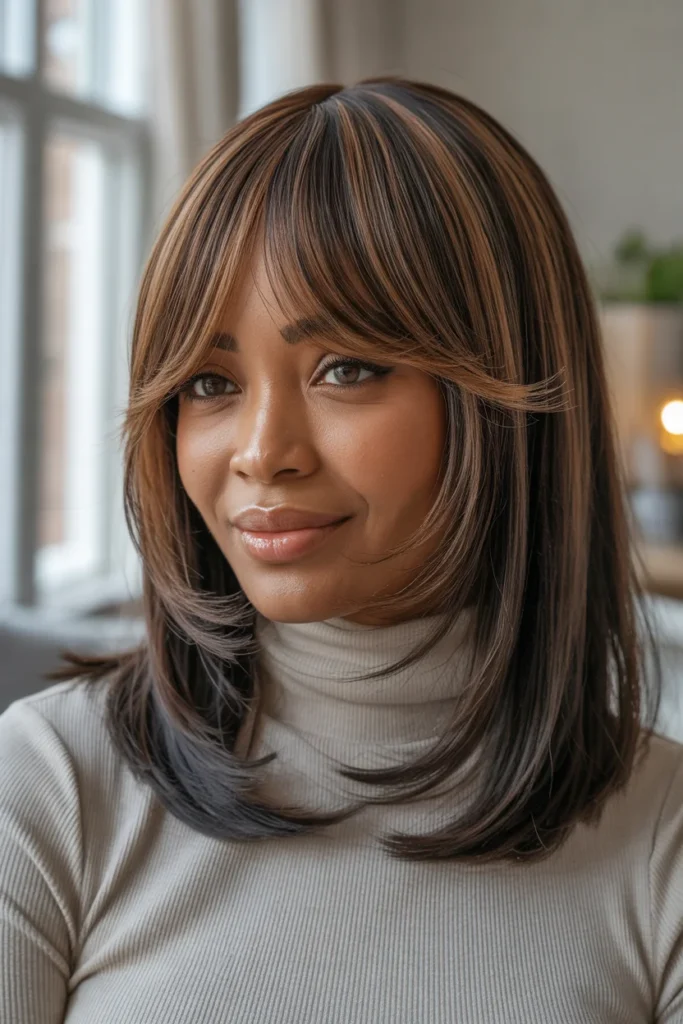
Curtain bangs add softness to straight hair without requiring a dramatic change in length. They are shorter near the center of the forehead and gradually become longer toward the cheekbones, blending into the rest of the haircut. Paired with straight shoulder-length or long hair, they create a relaxed frame around the face.
| Feature | Soft Curtain Bangs | Longer Curtain Bangs |
| Appearance | More noticeable fringe | Subtle face framing |
| Styling | Round-brush shaping | Light blow-drying |
| Maintenance | Frequent fringe trims | Easier to grow out |
| Best for | A defined, modern look | A low-commitment change |
Women with fine hair may prefer lighter bangs to preserve fullness through the sides and ends. Thicker hair may need internal shaping to keep the fringe from appearing bulky. Because bangs sit near the forehead, expect some extra styling on mornings when they separate or bend in the wrong direction.
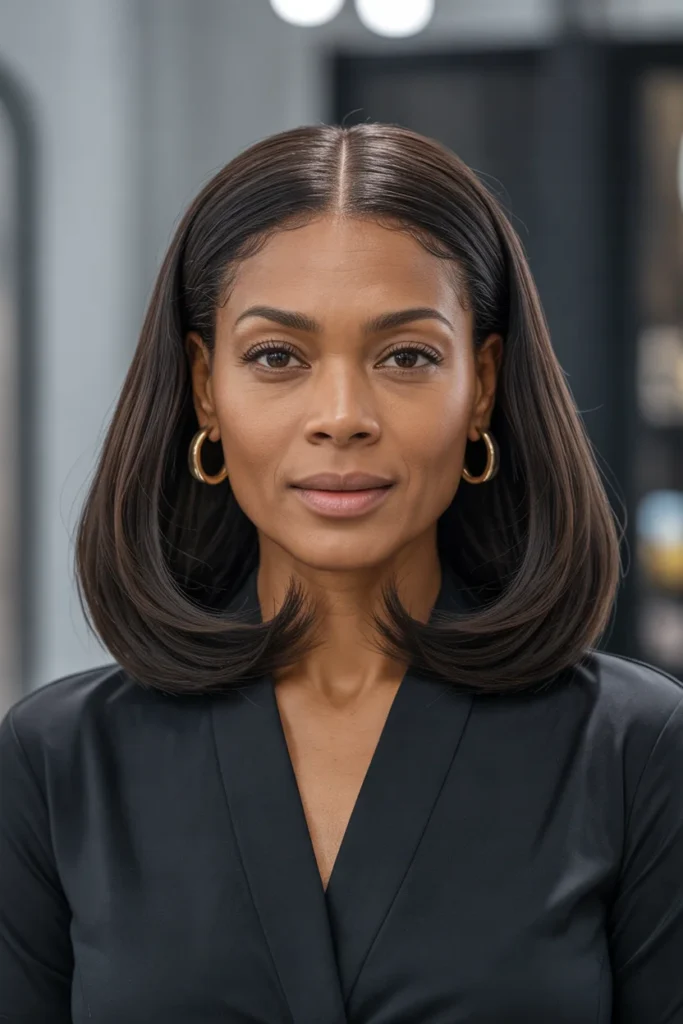
7. Sleek Middle-Part Hairstyle
DO
- Use a tail comb to create a straight, balanced center part.
- Smooth small sections rather than trying to straighten large amounts of hair at once.
- Keep finishing products lightweight so the hair retains natural movement.
- Check the roots and hairline for any areas that need gentle smoothing.
DON’T
- Press a hot iron repeatedly against the same strands.
- Apply heavy oils directly to the roots.
- Pull the hairline tightly when creating a sleek finish.
- Ignore dryness or breakage simply to maintain a glossy look.
The defining feature of a middle-part hairstyle is its symmetry. The hair falls evenly on both sides, creating a clean outline that works with bobs, lobs, and longer cuts. If your hairline is naturally uneven, adjust the part slightly instead of forcing an uncomfortable or unnatural position.
8. Straight Hair With Side-Swept Bangs
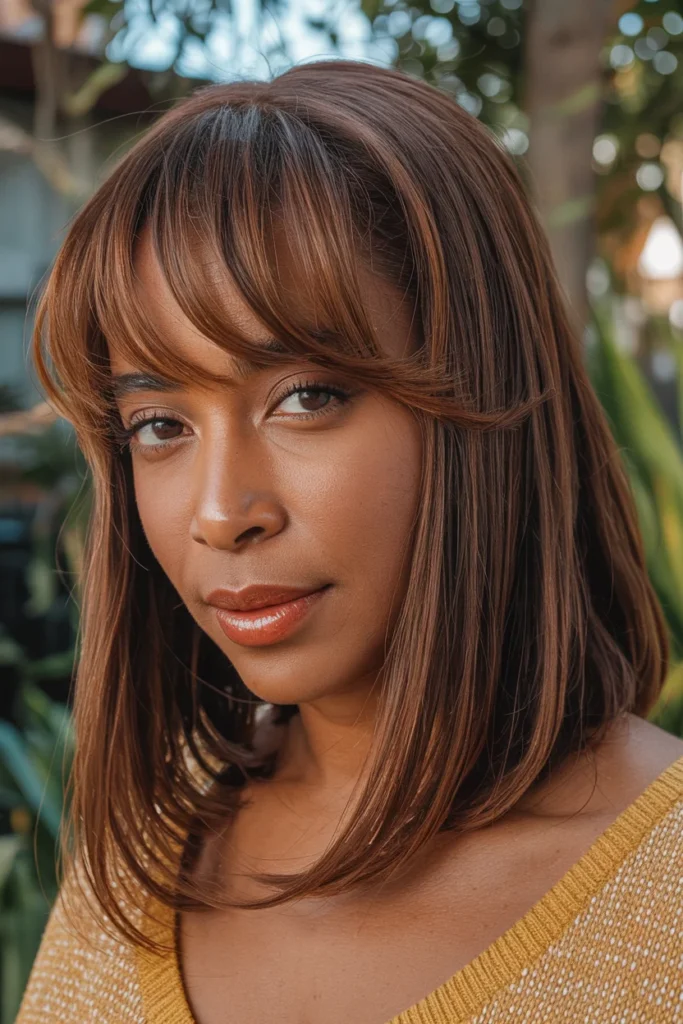
Hair Length: Chin-length to long.
Best Feature: A sweeping fringe that crosses the forehead and blends into the sides.
Styling Time: Around 5 to 15 minutes for the fringe and finishing touches, depending on hair length and texture.
Maintenance: Occasional bang trims and regular shaping.
Side-swept bangs create an asymmetrical line that can soften a strong forehead or add interest to a simple straight haircut. They are also useful if you prefer a fringe that can be tucked behind one ear as it grows. Blow-dry the bangs in the opposite direction from where you want them to fall, then sweep them into place for a more natural curve.
9. Layered Straight Hairstyle
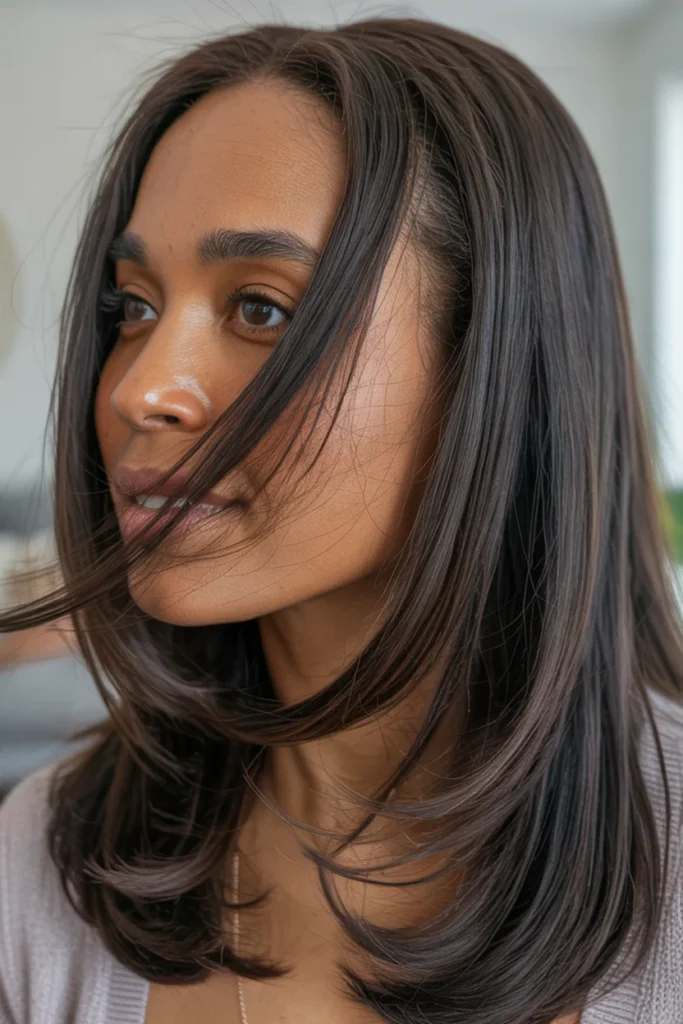
Layers give straight hair movement without requiring curls or waves. The most wearable version for women over 40 combines a smooth top section with long, carefully placed layers through the mid-lengths and ends. This prevents the hair from forming a heavy, triangular shape while preserving enough length for ponytails and other styling options.
For fine hair, subtle layers are usually a better starting point because excessive layering can make the ends appear thin. Thick hair may benefit from more internal shaping to reduce bulk. Ask for the layers to be tailored to your density and desired finish, then use a round brush to turn the ends slightly inward or outward.
10. Angled Straight Bob
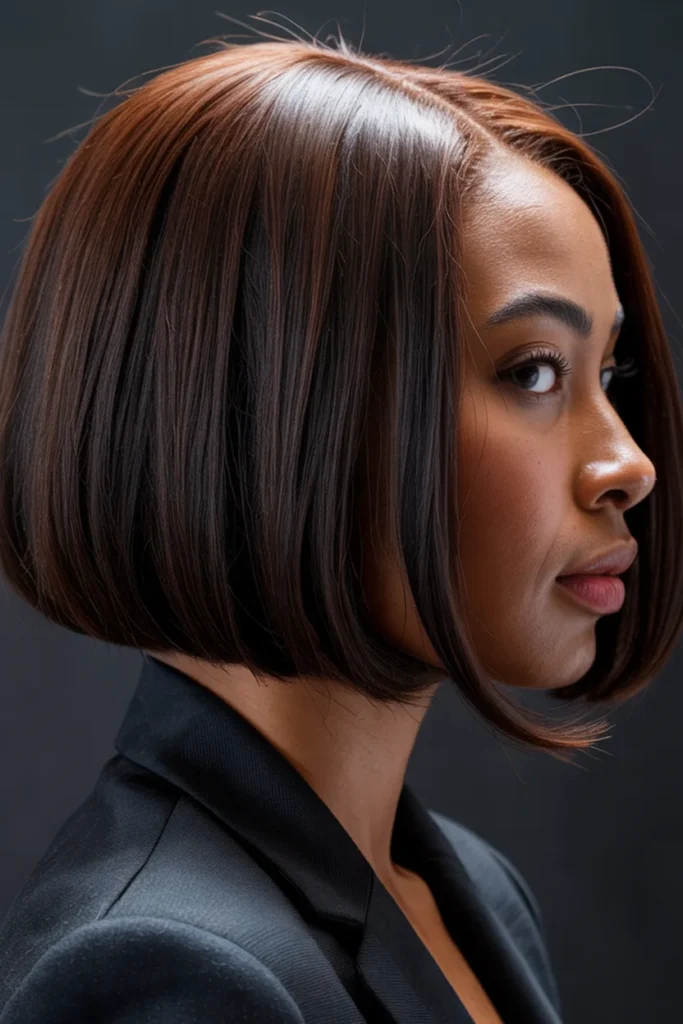
- Front length: The hair is slightly longer near the face.
- Back shape: The nape is shorter, giving the haircut a graduated silhouette.
- Parting: A side part emphasizes the diagonal line, while a center part makes the shape look more balanced.
- Best texture: Straightened natural hair, relaxed hair, or hair that holds a smooth blowout.
- Finishing tip: Direct the front sections forward with a brush to highlight the angled outline.
An angled bob offers more structure than a traditional one-length cut. Its diagonal shape adds definition around the jawline, and the shorter back can make styling more manageable. If your hair is very thick, a stylist can adjust the graduation to prevent excessive volume at the back. Plan for regular trims if you want to preserve the angle.
11. Straight Pixie Cut
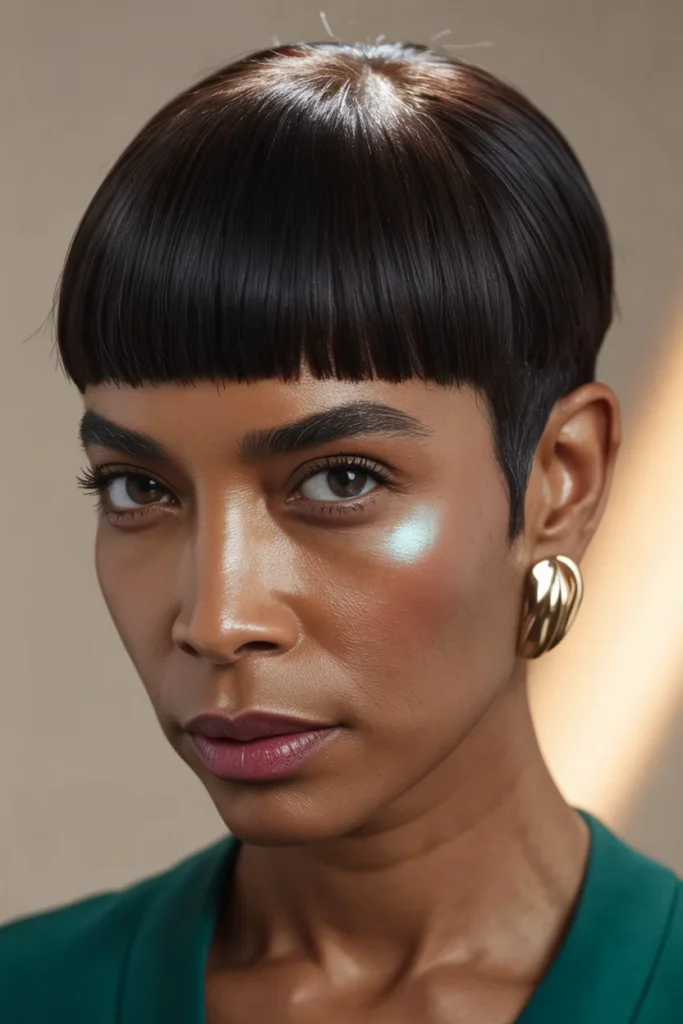
Quick Tip: Keep the crown slightly lifted while smoothing the sides close to the head. A small amount of lightweight styling cream can add definition without making short hair look greasy.
A straight pixie combines a short back and sides with a little extra length on top or through the fringe. The finish can be softly brushed forward, swept sideways, or arranged into a subtle quiff. This variety makes the cut suitable for women who enjoy a modern, confident look without managing long lengths.
Short hair is not automatically maintenance-free. The daily styling may be quick, but a pixie generally needs regular salon visits to retain its shape. If you are transitioning from relaxed or frequently straightened hair to a shorter cut, discuss your hairline, growth pattern, and preferred styling routine with your stylist first.
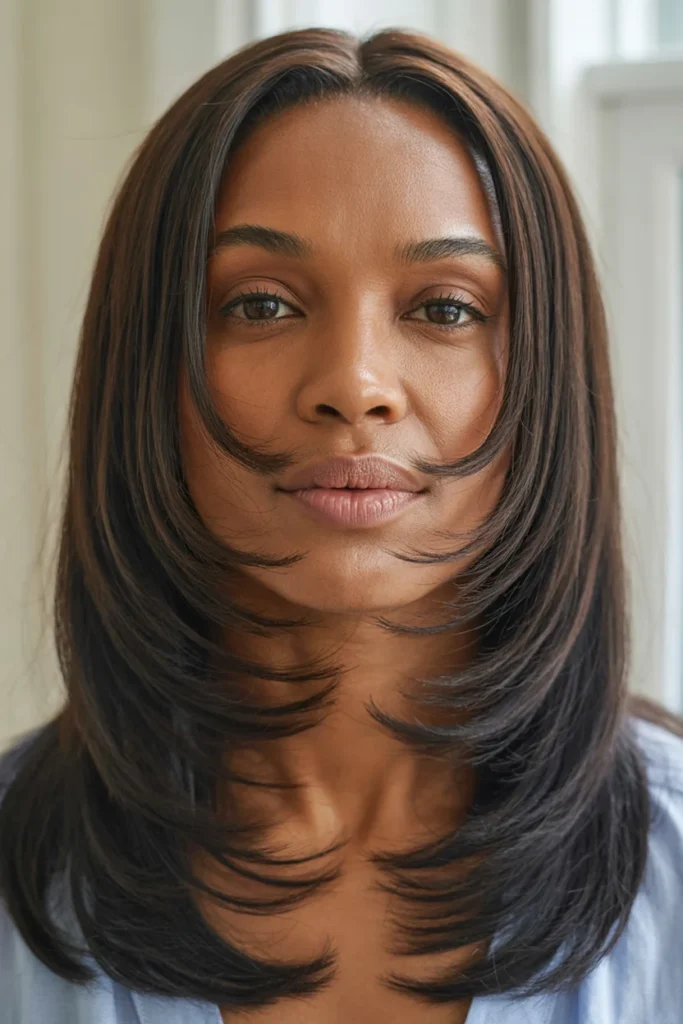
12. Straight Hair With Face-Framing Layers
BEFORE
Long straight hair with little shaping can sometimes hang close to the cheeks, making the overall silhouette feel heavy. The front sections may also blend into the rest of the hair without highlighting the eyes or cheekbones.
AFTER
Face-framing layers create a gradual outline around the forehead, cheekbones, and jaw. The shortest pieces can begin near the chin or lower, depending on your preferred look, while the remaining hair keeps its length. The result is a softer frame without needing a full fringe.
Ask your stylist to place the shortest layers where you want the most movement. For a smooth finish, direct the front sections away from your face with a round brush, then let them settle naturally. If your hair is fine, keep the layers subtle so the ends retain enough density.
13. Chin-Length Straight Bob
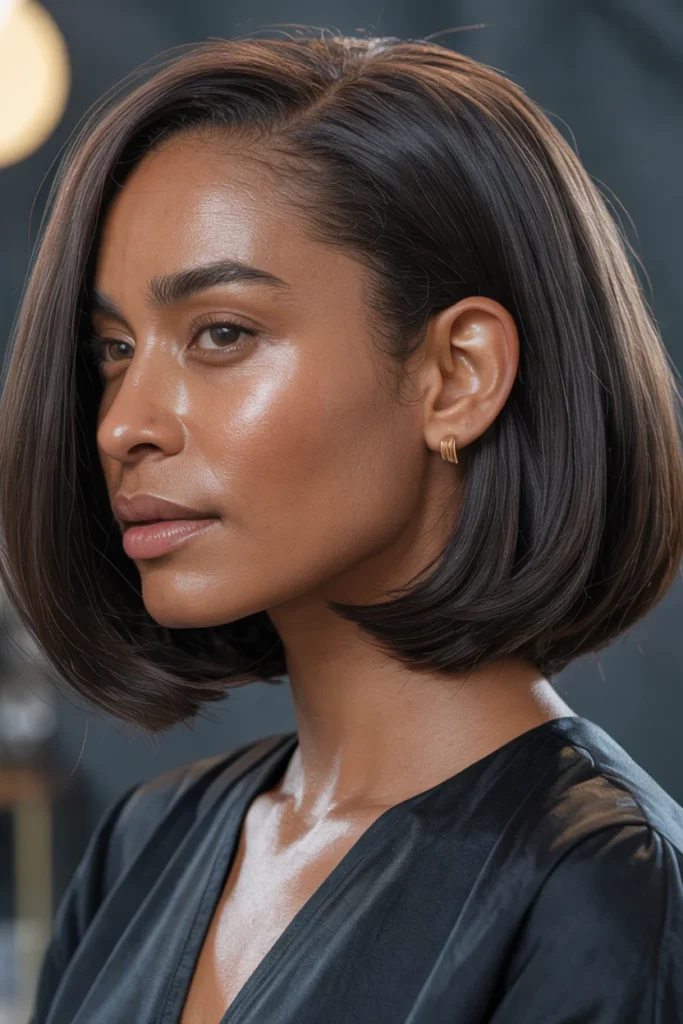
- Choose the outline. Decide whether you prefer the ends directly at the chin or slightly below it.
- Consider your hair density. A blunt edge can create a fuller appearance, while very thick hair may need careful shaping.
- Set the part. A side part adds diagonal movement, and a center part creates a more symmetrical look.
- Smooth the ends. Blow-dry with a small round brush or use a flat iron with heat protection.
- Maintain the cut. Book trims as needed to keep the length and shape neat.
A chin-length bob draws attention to the jawline and works particularly well for women who want a short style that still has a recognizable, feminine shape. The exact result depends on your face proportions and hairline, so bring reference photographs to your stylist. For an easy everyday finish, tuck one side behind the ear and leave the other side softly curved toward the cheek.
14. Straight Hair With Feathered Ends
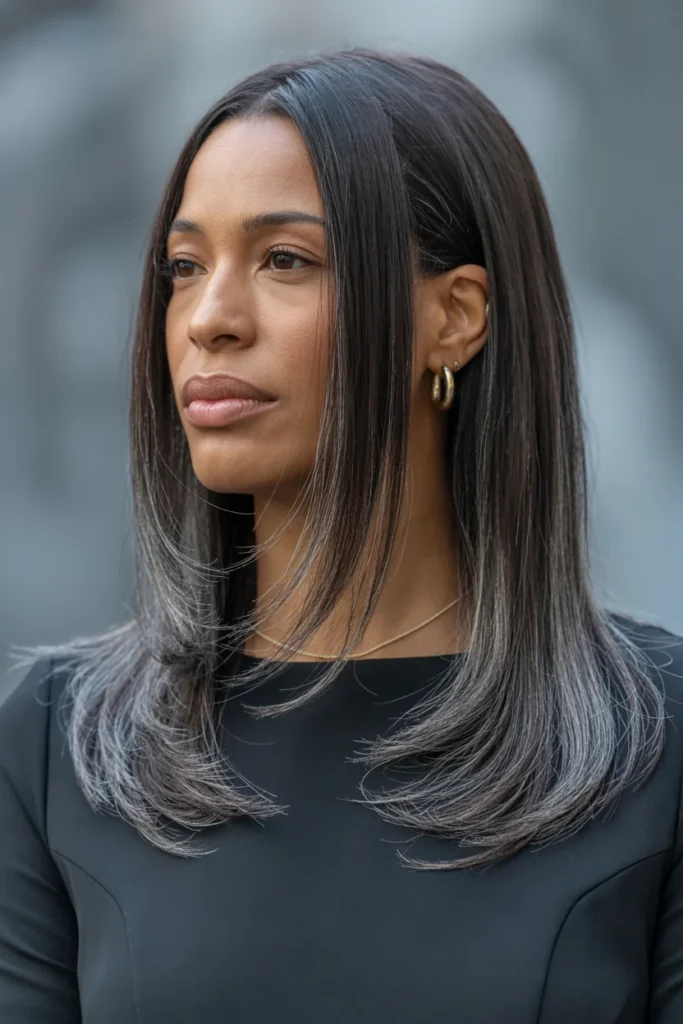
Feathered ends create a light, tapered finish instead of a solid, blunt edge. The effect is especially noticeable on shoulder-length and long straight hair, where the ends separate slightly and follow the movement of the haircut. The overall shape feels softer while still looking smooth and polished.
| Feature | Lightly Feathered Ends | Blunt Ends |
| Outline | Soft and tapered | Clean and solid |
| Movement | More separation | More uniform fall |
| Fine hair | Best with restrained feathering | Often preserves fullness |
| Thick hair | Can reduce a heavy appearance | May feel weightier |
| Styling | Benefits from a light blowout | Easy to keep sleek |
Feathering works best when the amount of tapering matches your hair density. Too much thinning can leave fragile or fine ends looking sparse. Ask for a soft finish rather than aggressive texturizing, and use a small amount of smoothing product to keep the strands defined without making them stiff.
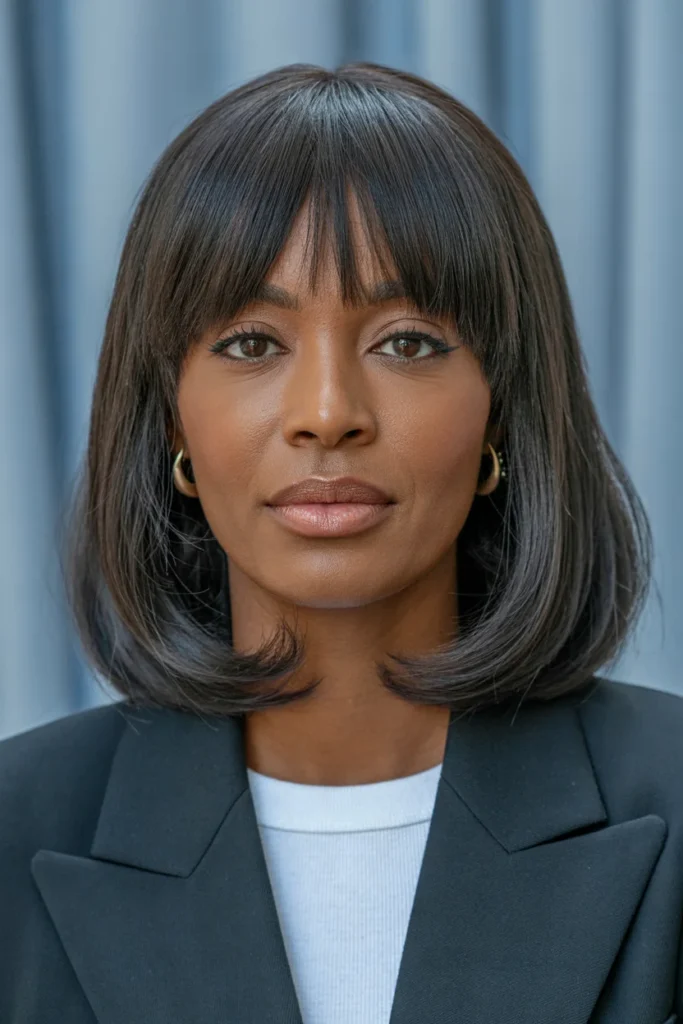
15. Shoulder-Length Straight Hair With Bangs
DO
- Choose a fringe length that works with your forehead and preferred parting.
- Keep the shoulder-length perimeter full if you want the ends to look thicker.
- Use a round brush to shape the bangs while drying them.
- Carry a small comb to refresh the fringe during the day.
DON’T
- Cut bangs too short without considering how they will sit when dry.
- Apply too much conditioner or serum near the roots.
- Expect bangs to stay perfectly smooth in humid weather.
- Forget that fringe growth may require trims between regular haircuts.
Shoulder-length straight hair with bangs gives you a balanced combination of length and framing. A wispy fringe feels light, while a fuller fringe creates a stronger focal point. This style can work for everyday wear or more formal occasions, and the bangs can be swept sideways when you want a different appearance without changing the haircut.
16. Asymmetrical Straight Bob
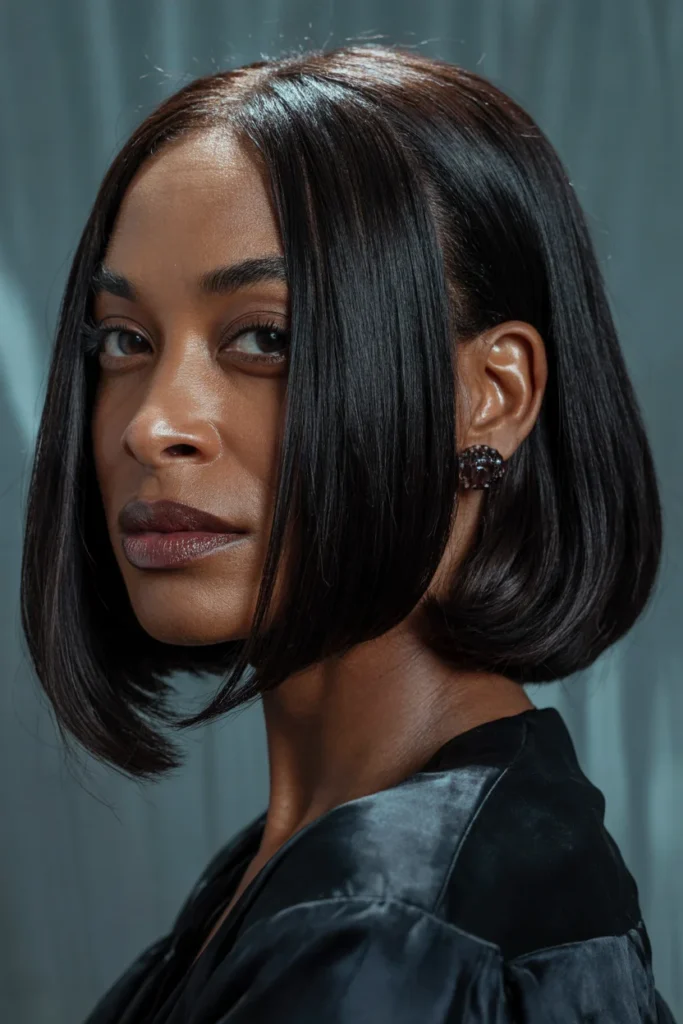
Hair Length: Usually chin-length to neck-length, with one side visibly longer than the other.
Silhouette: A diagonal outline that creates movement even when the hair is completely straight.
Best For: Women who prefer contemporary cuts and enjoy a more distinctive shape.
Styling Difficulty: Moderate, because the asymmetry is most visible when the hair is smooth and the ends fall neatly.
The key to an asymmetrical bob is keeping the longer side deliberate rather than allowing the haircut to look uneven as it grows. A stylist can adapt the difference in length to your face shape and hair density. Use a comb to guide the longer section forward, and avoid excessive teasing or volume that hides the defining line of the cut.
17. Long Straight Hair With a Deep Side Part
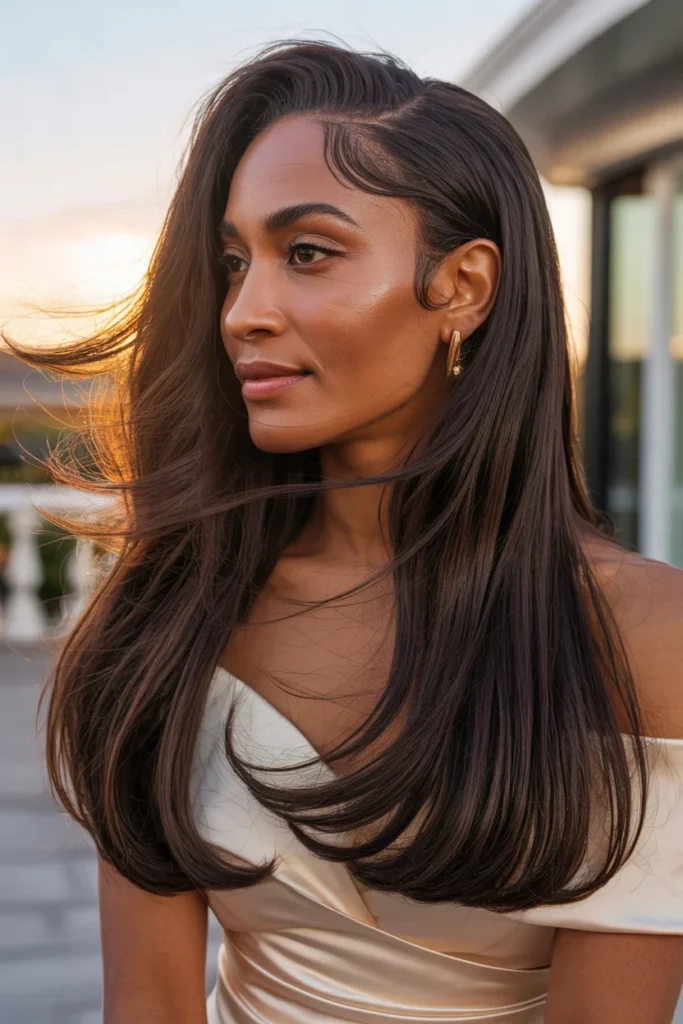
Long straight hair takes on a different character when the part moves well away from the center. The deeper part creates a sweeping front section and can add the appearance of lift at the roots. The lengths remain smooth and flowing, making this a useful variation when you want a noticeable change without cutting your hair.
For a polished finish, create the part while the hair is damp, then blow-dry the roots in the direction you want them to sit. A lightweight root-lifting product may help fine hair maintain height. Women with dense hair can use a paddle brush to keep the lengths controlled. If your part naturally returns to the center, work with your growth pattern rather than forcing it.
18. Sleek Straight Ponytail
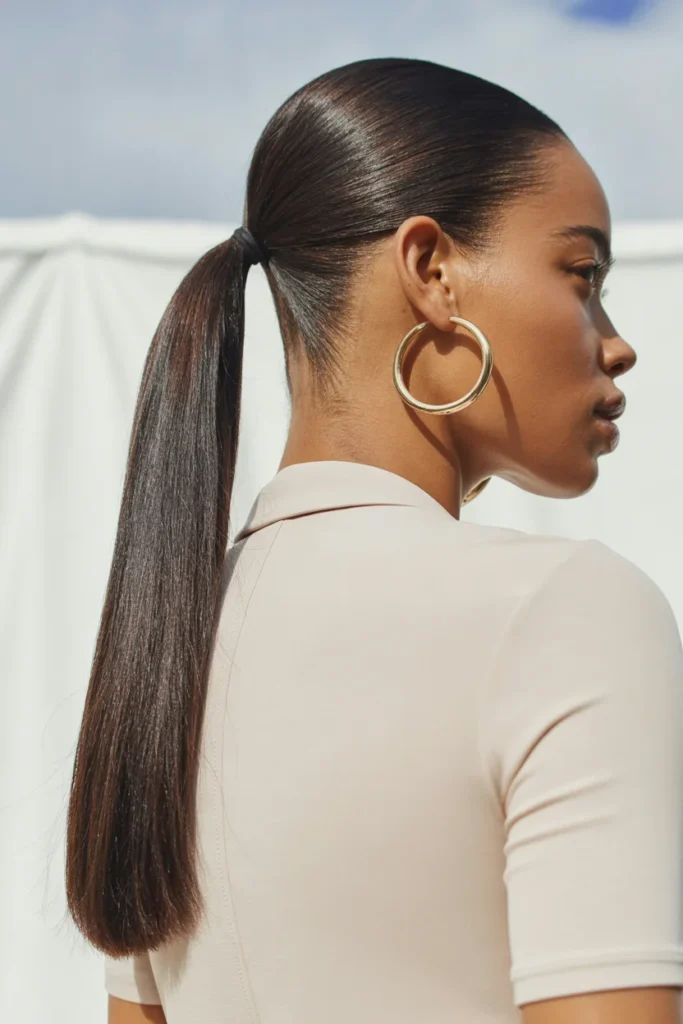
- Prepare the hair. Detangle gently and apply a suitable heat protectant if you need to smooth the lengths.
- Choose the height. A low ponytail looks understated and elegant, while a mid-height ponytail feels more energetic.
- Smooth the surface. Use a soft brush to guide the hair back without pulling excessively at the hairline.
- Secure comfortably. Use a snag-free elastic that holds the ponytail without causing unnecessary tension.
- Finish the look. Wrap a small strand around the elastic if desired, securing it discreetly without making the base too tight.
A sleek ponytail is a practical choice for busy mornings, office days, workouts, and evening events. Straightened hair creates a smooth, streamlined shape, while a little lift at the crown prevents the style from appearing too flat. If your edges are fragile or your hairline is thinning, choose a loose, low ponytail and vary your styling positions to reduce repeated tension.
19. Straight Hair With Soft Layers and Highlights
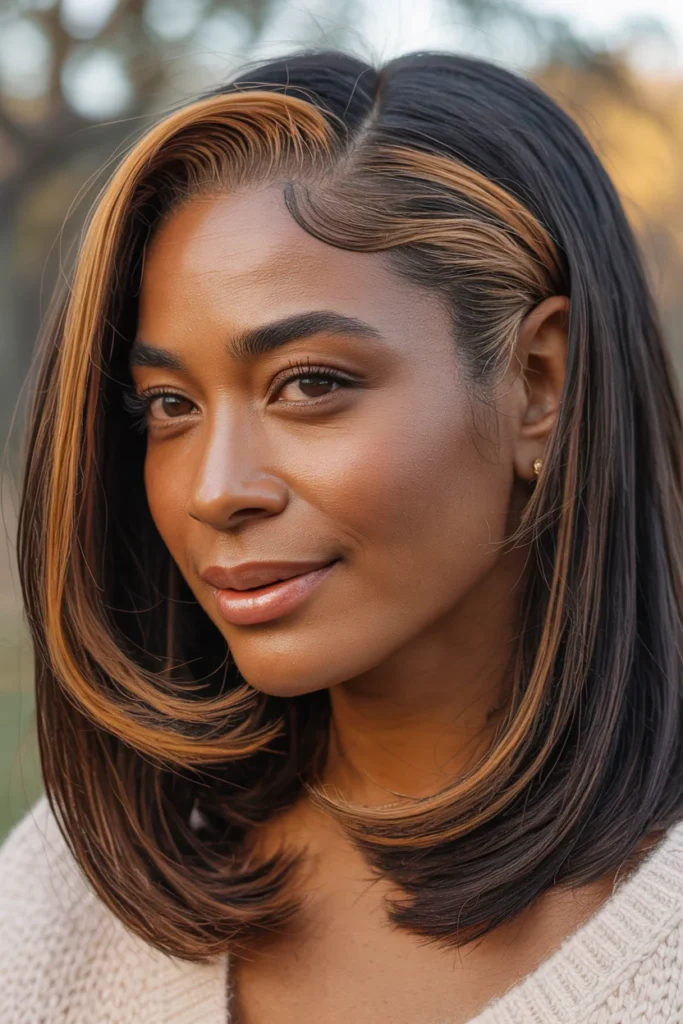
Soft layers combined with subtle highlights add dimension to straight hair without relying on dramatic curls or a complicated silhouette. The layers create gentle movement through the ends, while strategically placed caramel, honey, chestnut, or warm brown highlights can make the surface look more dimensional. The color choice should complement your natural base and personal preference.
For a low-maintenance finish, ask your colorist about blended highlights or a softer root transition instead of a sharply defined color line. Color-treated hair may need extra conditioning, and heat styling can contribute to dryness, so use a suitable heat protectant and avoid excessive temperatures. This combination works on medium-length and long hair, with the number and placement of layers adjusted to your density.
How to Choose the Best Straight Hairstyle for Your Face Shape
Your face shape can help narrow your choices, but it should not be treated as a strict set of rules. Hair density, your natural hairline, personal style, and how much time you want to spend styling matter just as much.
- Oval faces: Many lengths work well, from chin-length bobs to long straight hair. Choose a part and fringe based on the features you want to emphasize.
- Round faces: A longer bob, a deep side part, or face-framing layers can create a more elongated visual line. Avoid assuming that short hair is unsuitable.
- Square faces: Soft layers, curtain bangs, or a slightly angled bob can introduce movement around the jaw.
- Heart-shaped faces: Chin-length bobs and side-swept bangs can add visual balance around the lower face.
- Long faces: Shoulder-length cuts, curtain bangs, and styles with a little side volume can help create a more balanced silhouette.
Your hair texture also matters. Fine hair often benefits from a clean perimeter and restrained layering, while thick hair may need strategic weight removal. If you are unsure, ask your stylist to assess your hair both in its natural state and in the straightened finish you plan to wear.
Tips for Keeping Straight Hairstyles Smooth and Healthy
Straightened hair tends to stay polished longer when it is prepared properly and handled gently. A consistent routine is more useful than repeatedly applying products or passing a flat iron over the same sections.
- Start with conditioning. Choose shampoo and conditioner suited to your scalp and hair condition. Dry lengths may benefit from a moisturizing conditioner or occasional deep-conditioning treatment.
- Use heat protection. Apply a heat protectant before blow-drying or using hot tools, following the product instructions.
- Work in small sections. Controlled sections help create a more even finish and reduce the temptation to make repeated passes.
- Keep products lightweight. A small amount of serum can smooth the ends, while heavy products may leave fine hair flat.
- Watch the weather. Humidity can cause naturally textured hair to swell or revert toward its usual pattern. A suitable anti-humidity finishing product may help, but no product can guarantee a perfectly straight finish in every condition.
- Protect the ends. Gentle detangling, regular trims when needed, and avoiding excessive heat can help reduce breakage.
- Refresh selectively. If only the fringe or front sections have lost their shape, focus on those areas rather than restyling your entire head.
A glossy finish is not worth sacrificing hair condition. If your hair begins to feel brittle, breaks easily, or develops unusually dry ends, reduce heat styling and consider asking a qualified stylist for advice.
How to Protect Natural Hair When Wearing Straight Styles
Black women have a wide range of curl patterns, strand diameters, and hair densities. Natural hair can be worn straight temporarily, but heat styling requires care because excessive heat may cause dryness, breakage, or changes to the hair’s curl pattern.
- Prepare gently. Detangle in manageable sections and condition the hair before a straightening session.
- Dry thoroughly. Avoid using a flat iron on damp hair unless the tool is specifically designed for that purpose and its instructions permit it.
- Use controlled heat. Choose the lowest temperature that gives a suitable result for your hair, and avoid repeated passes over each section.
- Limit repeated straightening. Allow time between heat-styling sessions and consider heat-free styles when your hair needs a break.
- Protect hair overnight. A satin or silk scarf, bonnet, or pillowcase can reduce friction while you sleep.
- Watch for warning signs. Persistent breakage, roughness, excessive shedding, or loss of curl definition are reasons to reassess your routine and seek professional advice if needed.
A silk press and a chemical relaxer are not the same thing. A silk press temporarily straightens the hair with heat, while a relaxer chemically alters the hair’s structure. If you use chemical treatments, follow professional guidance and avoid overlapping relaxer applications on previously treated hair.
Frequently Asked Questions
1. Which straight hairstyles look best on Black women over 40?
Sleek bobs, shoulder-length cuts, layered straight hair, side-swept bangs, and angled lobs are all versatile choices. The most suitable option depends on your face shape, hair density, natural texture, and styling preferences. Choose a cut that complements your features and fits your everyday routine.
2. Does straight hair make you look younger after 40?
Straight hair does not automatically make someone look younger, but a well-shaped haircut can create a fresh, polished appearance. Face-framing layers, healthy-looking ends, and a flattering part can enhance your features. The best result is a style that feels comfortable, suits your personality, and works with your hair.
3. Are short or long straight hairstyles better for women over 40?
Neither length is universally better. Short bobs and pixie cuts can reduce the time spent styling long lengths, although they may need more frequent trims. Long straight hair offers flexibility for ponytails and different partings but may require additional care for the ends. Consider your hair condition, lifestyle, and preferred maintenance level.
4. How can Black women keep straightened hair smooth in humid weather?
Begin with thoroughly dried hair, use a suitable heat protectant, and finish with a lightweight anti-humidity product designed for your hair type. Protect the hair from unnecessary moisture and avoid repeatedly using a flat iron whenever the style starts to revert. Humidity can still affect straightened natural hair, so choose a finish that allows some natural movement.
5. How often should you straighten natural hair to prevent heat damage?
There is no single schedule that guarantees damage-free straightening. The safest approach is to minimize unnecessary heat exposure, avoid excessive temperatures, and give your hair time to recover between sessions. If you notice breakage, dryness, or changes in curl definition, reduce heat styling and consider alternatives such as roller sets, wraps, or other heat-free styles.
Final Thoughts
The best straight hairstyles for Black women are the ones that combine personal style with healthy hair care. From a classic chin-length bob to long, silky strands, a deep side part, or soft face-framing layers, each option offers a different way to create a polished look after 40.
Before choosing a haircut, consider your natural texture, hair density, face shape, and how much time you want to spend styling. Remember that heat protection and gentle maintenance are essential when wearing natural hair straight. Save this guide to Pinterest for your next salon appointment, and use your favorite ideas as inspiration for a look that suits your lifestyle and individual style.