23 Flattering Chin-Length Hairstyles for Women Over 40
Chin-Length Hairstyles for Women Over 40 can be practical, polished, and surprisingly versatile. This hair length sits around the jawline, giving a shorter haircut enough shape to feel fresh while still offering plenty of styling options. Whether your hair is fine, thick, straight, wavy, curly, gray, or color-treated, the right chin-length cut can be adjusted to suit your natural texture and face shape.
From classic bobs and French-inspired cuts to layered, textured, and softly waved styles, this collection includes 23 ideas to save for your next salon appointment. You will also find practical notes about bangs, volume, maintenance, styling time, and choosing a shape that works with your everyday routine.
Classic Chin-Length Bob
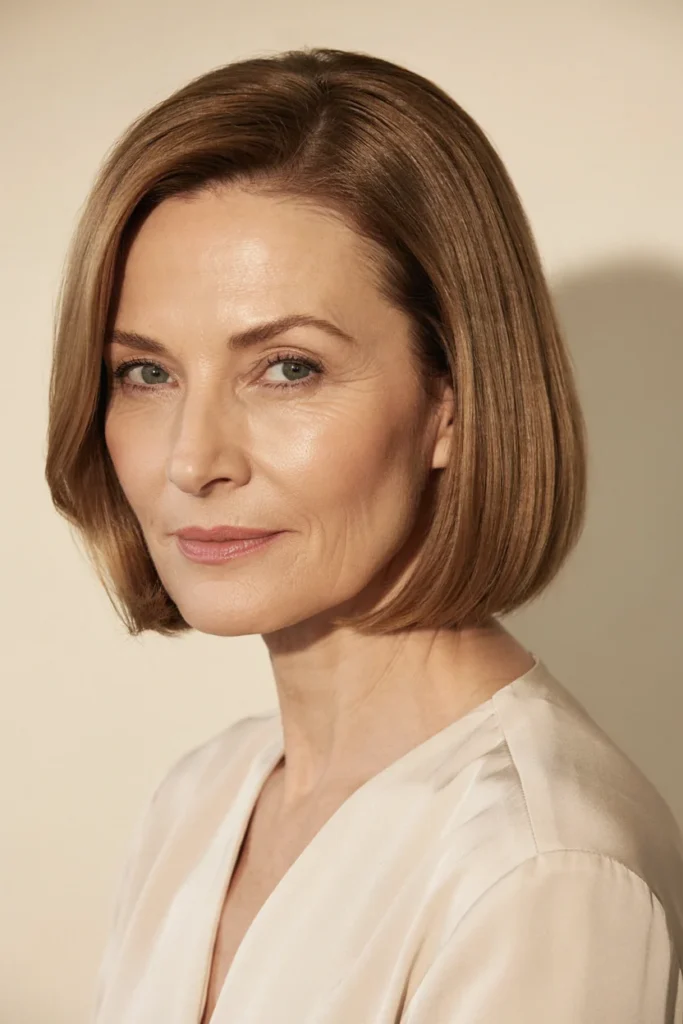
A classic chin-length bob has a clean, recognizable silhouette, with the ends finishing close to the jawline and the shape kept relatively even. A precise center or slightly off-center part gives the haircut a polished appearance, while a gentle bend at the ends can soften the overall finish. It is simple without looking plain.
Straight hair shows off the clean outline particularly well, while slightly wavy hair gives the cut a more relaxed appearance. For a round face, a slightly longer front section can create a little extra vertical emphasis. Regular trims help preserve the crisp shape, especially if you prefer the ends to remain exactly at chin level.
Side-Swept Bangs
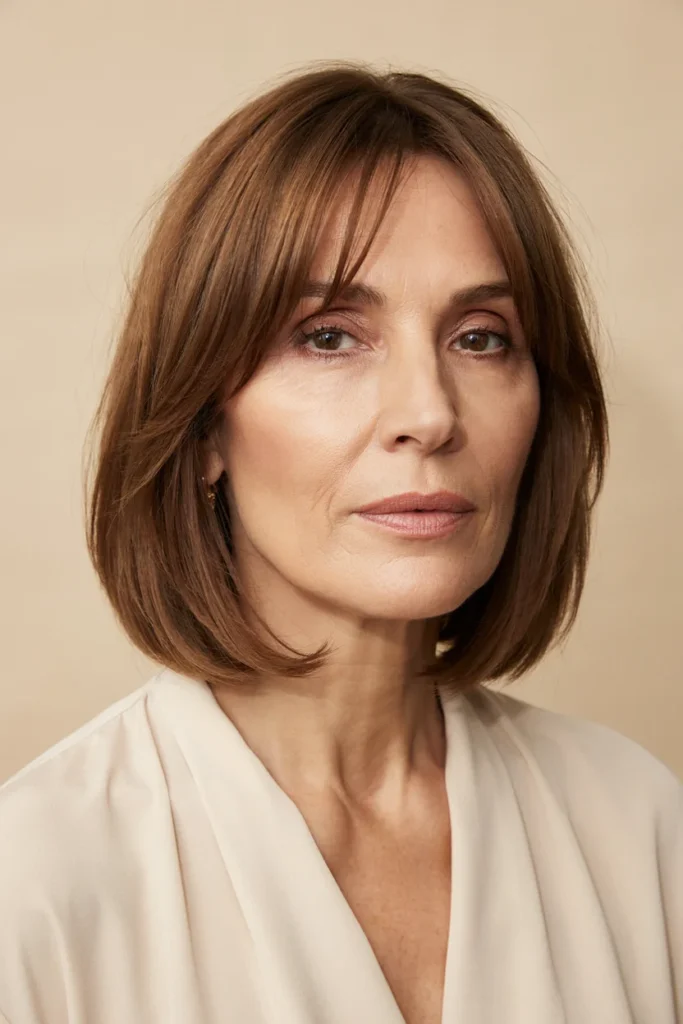
- Bang placement: Sweep the fringe diagonally across the forehead rather than cutting it straight across.
- Length: Keep the bob around the chin, with the front pieces blending naturally into the sides.
- Parting: A side part gives the bangs a natural direction and can add visual movement.
- Styling: A small round brush can help direct the fringe while blow-drying.
- Maintenance: Bangs generally need more frequent shaping than the rest of the haircut.
Side-swept bangs introduce softness around the forehead while maintaining the structured shape of the bob. They can be particularly useful if you prefer a little face framing without committing to a full fringe. For everyday styling, dry the bangs first while they are still damp so they set in the desired direction.
Layered Chin-Length Bob
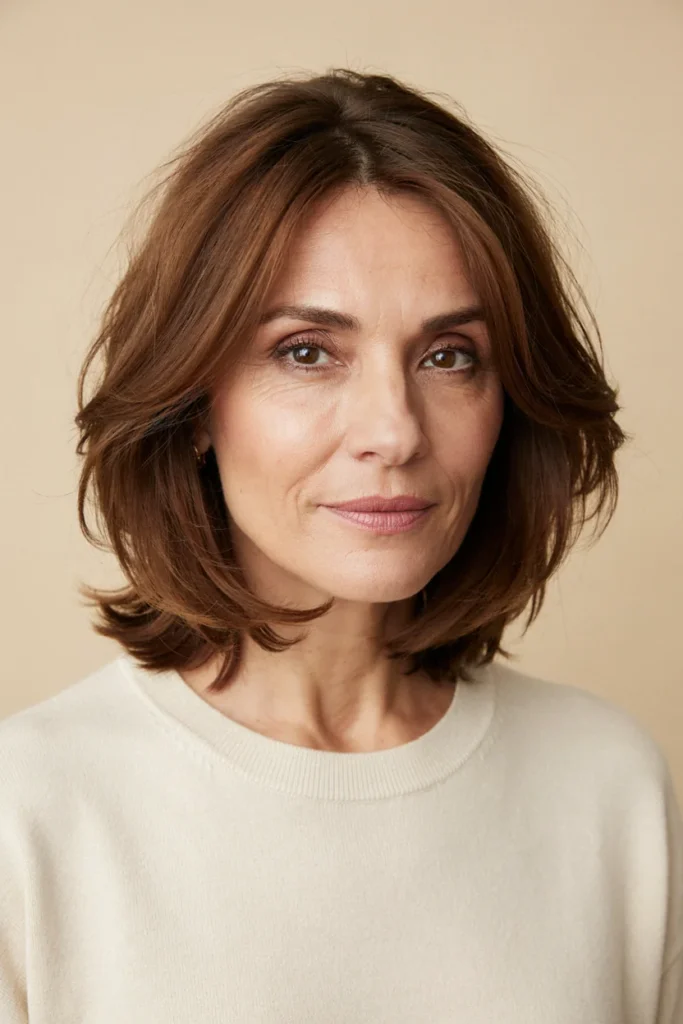
Quick Tip: Ask for subtle layers rather than removing large amounts of weight throughout the haircut. On fine hair, concentrated layering can make the ends appear thinner, so keeping enough density around the perimeter helps maintain fullness. A light volumizing mousse at the roots can add lift without making the hair feel heavy.
The finished cut has movement through the sides while retaining a defined chin-length outline. It is especially adaptable for straight or slightly wavy hair, where the layers can be seen without requiring extensive styling. A few loose bends created with a curling iron can emphasize the different lengths.
Blunt Chin-Length Bob
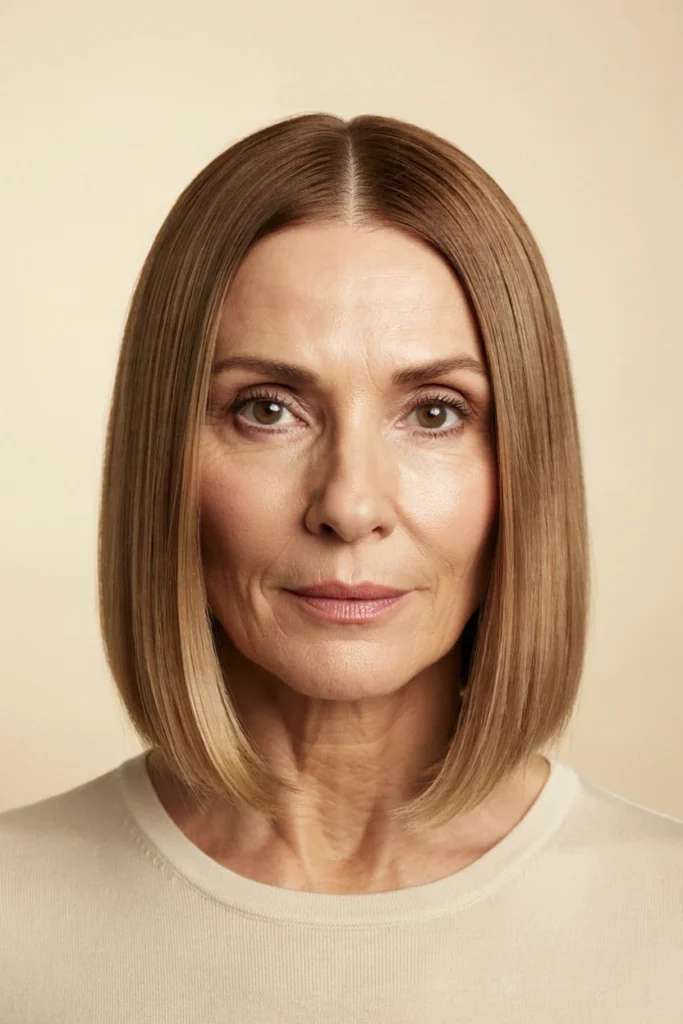
BEFORE
Hair can sometimes look shapeless when the ends sit at inconsistent lengths or have become thin from repeated trimming and heat styling. Fine hair may also lack a strong perimeter, making the haircut appear less substantial.
AFTER
A blunt chin-length bob creates a stronger horizontal line around the jaw. The ends are cut with minimal layering, giving the perimeter a fuller-looking appearance. The result can be worn sleek and straight or given a slight curve at the ends.
To maintain the defined shape, schedule regular trims as the haircut grows out. A heat protectant is useful when straightening or blow-drying, and a lightweight smoothing product can help keep the blunt perimeter neat without weighing down the roots.
Face-Framing Layers
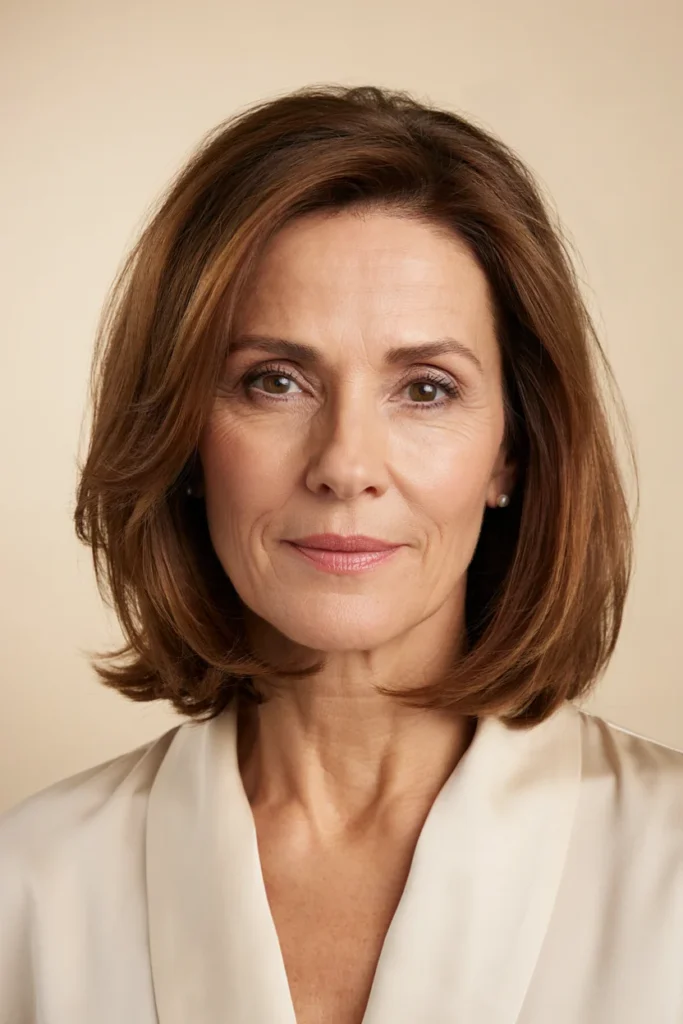
Soft face-framing pieces make a chin-length haircut feel less rigid. The shortest pieces can begin around the cheekbone or lower, depending on your preferred amount of framing, then gradually connect to the ends. The result is gentle movement around the face rather than a heavily layered appearance.
This variation can work nicely for women who want a shorter haircut but do not want a sharp geometric shape. Slightly wavy hair naturally highlights the framing pieces, while straight hair benefits from a quick round-brush blow-dry. Keep the layers subtle if your hair is fine.
French Bob
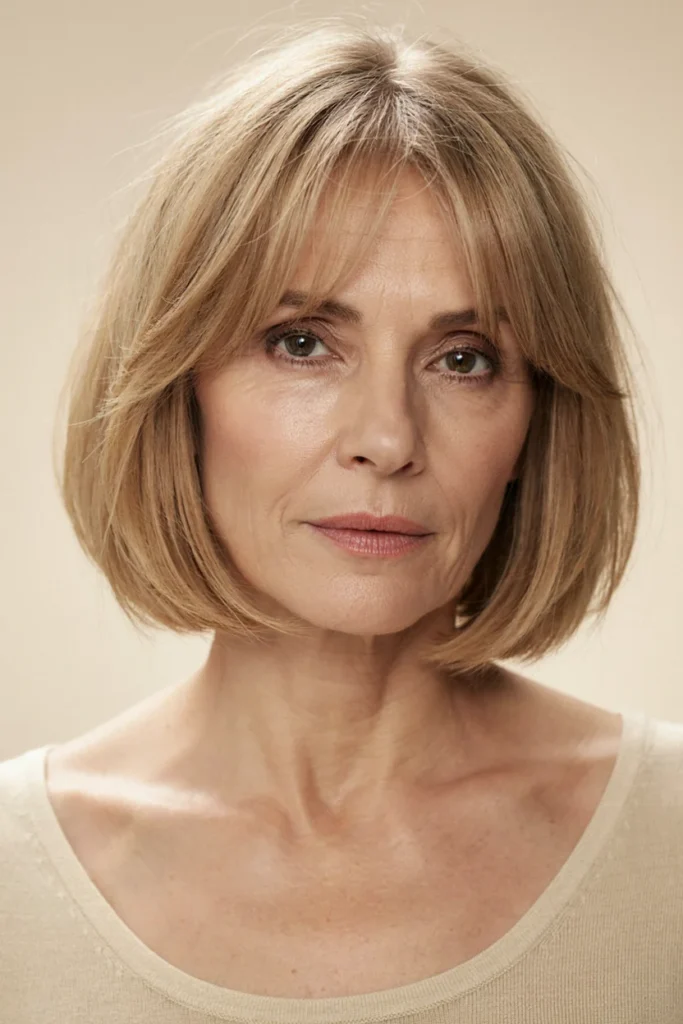
The French bob brings a compact, slightly sophisticated shape to chin-length hair. It typically features a strong jawline length with a fringe that can range from softly textured to more defined. The ends may remain straight or carry a slight natural bend for a less formal finish.
A French-inspired bob works particularly well for straight, fine, or naturally wavy textures. It can be styled with a simple blow-dry and a small amount of texturizing product. Because the cut relies on its short, deliberate shape, regular salon appointments are helpful if you want to maintain the original outline.
Curtain Bangs
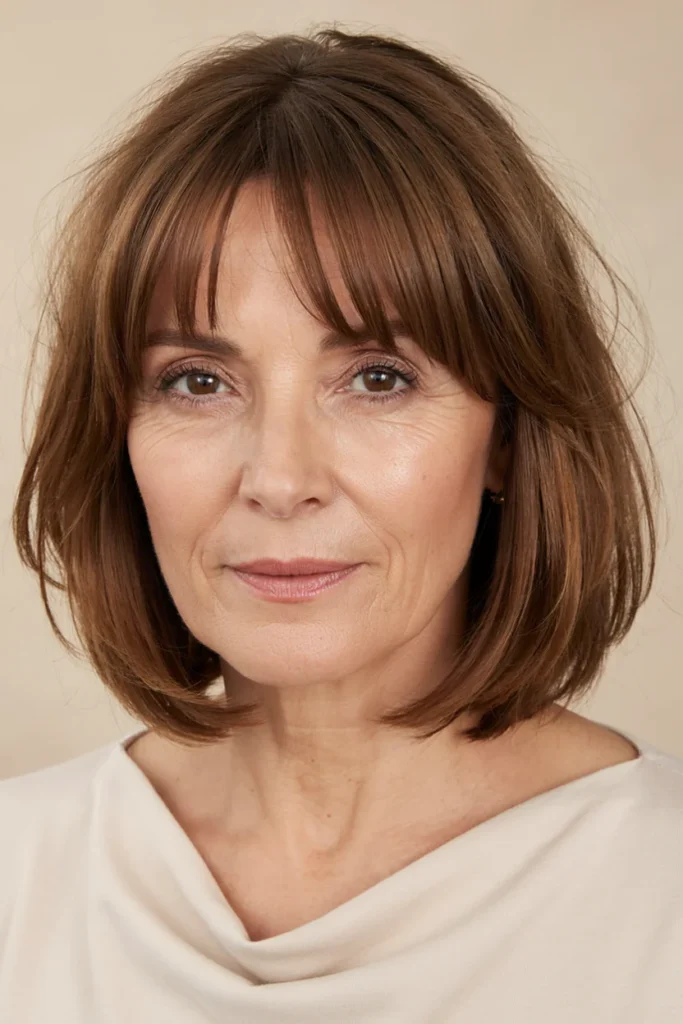
Do:
- Keep curtain bangs slightly shorter in the center and longer toward the cheekbones.
- Part the fringe naturally rather than forcing a perfectly symmetrical division.
- Use a round brush to direct each side away from the center.
- Let the chin-length ends retain enough weight to balance the softer fringe.
Don’t:
- Apply heavy styling cream directly to the roots of the bangs.
- Over-curl the fringe until it loses its natural movement.
- Cut the shortest section too aggressively without considering how it will grow out.
- Ignore your natural part when deciding where the curtain bangs should separate.
Curtain bangs can soften a chin-length bob by creating a gradual frame around the upper face. The most wearable version usually has movement rather than stiffness. If your hair has natural waves, allow some of that texture to remain instead of trying to make every strand perfectly uniform.
Textured Chin-Length Bob
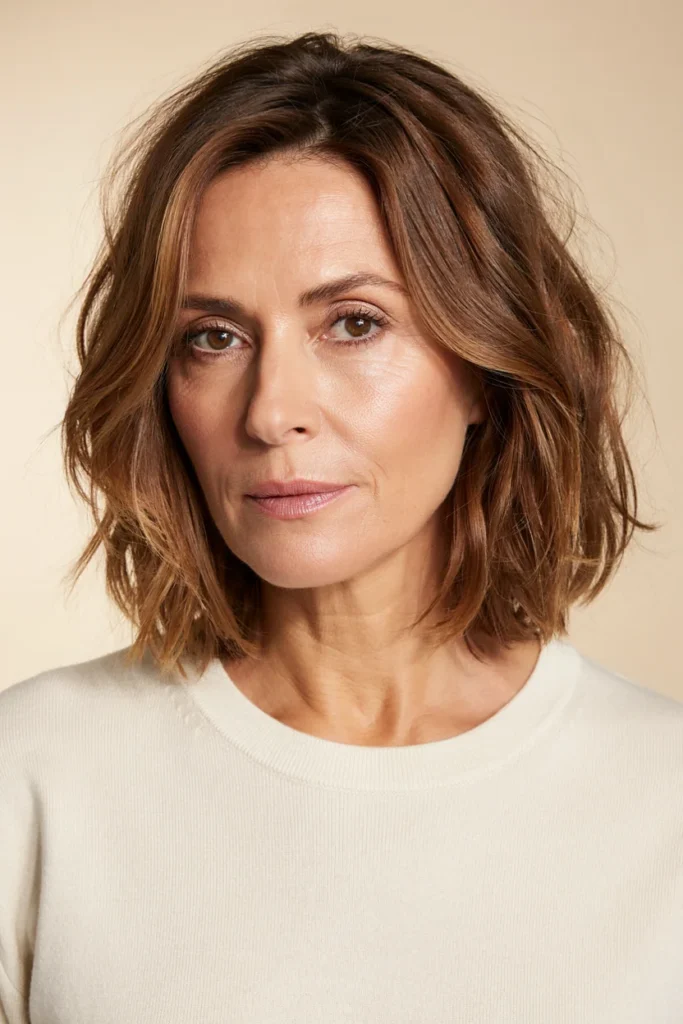
Hair Length: Around the chin, with slightly irregular-looking ends created through texture
Hair Type: Straight, wavy, or lightly textured hair
Texture: Piecey movement through the mid-lengths and ends
Styling Time: About 10 to 15 minutes
Best For: Casual everyday styling and relaxed evening looks
A textured bob does not require every strand to sit perfectly. After washing, apply a lightweight styling product and use your fingers or a diffuser to encourage natural movement. On straight hair, a few bends through the mid-lengths can create the same relaxed effect without making the style overly curly.
Inverted Bob
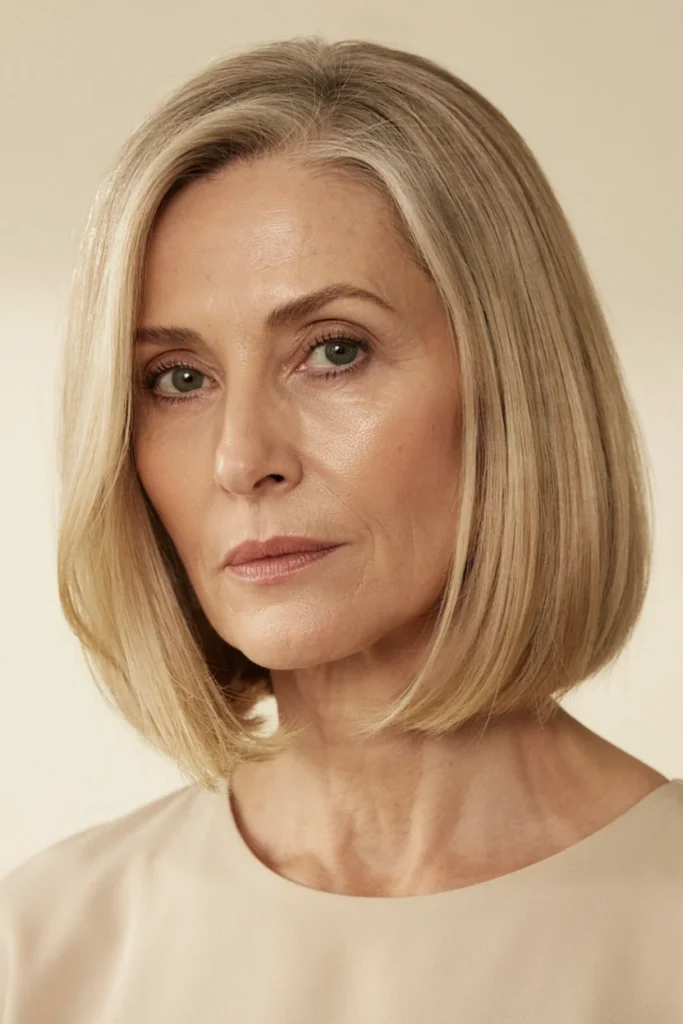
The inverted bob has a shorter shape toward the back with gradually longer sections toward the front. At chin level, the difference can be subtle, creating a clean angle rather than an extreme stacked effect. This gives the haircut a sense of direction and makes the front sections frame the face.
For thicker hair, the back may require carefully placed weight removal so the shape does not become bulky. Straight hair displays the graduated outline clearly, while waves create a softer interpretation. This style can be particularly useful if you like a defined haircut that still has movement around the face.
Wavy Chin-Length Bob
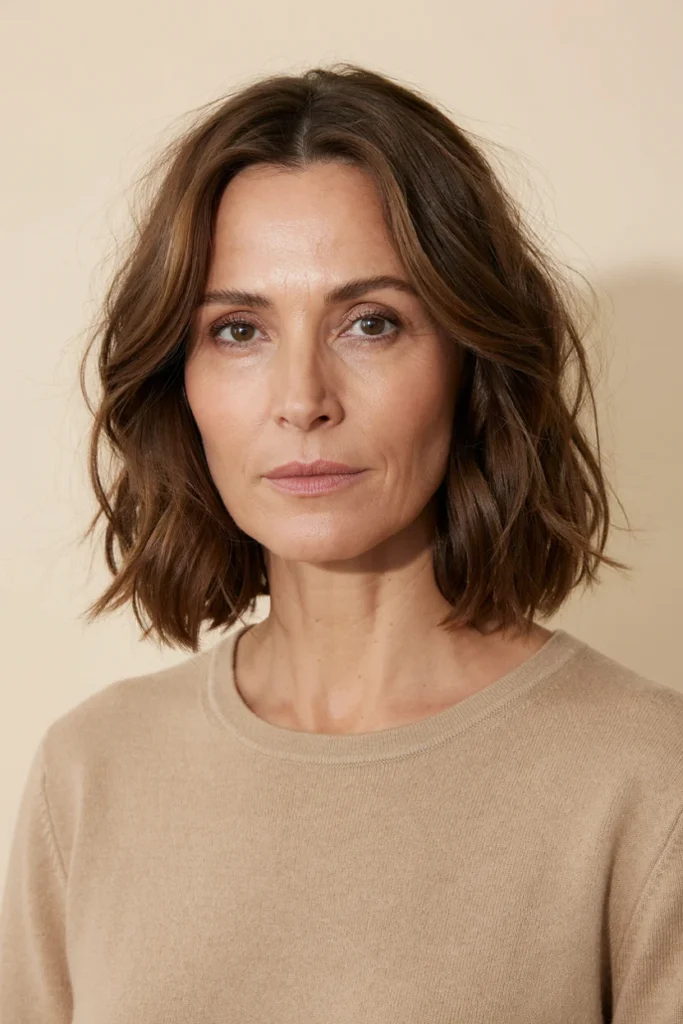
Quick Tip: For natural waves, apply a lightweight curl-enhancing product to damp hair and gently scrunch from the ends upward. Let the hair air-dry or use a diffuser on a low setting. Avoid brushing the waves once they are dry, as this can separate the curl pattern and create unnecessary frizz.
Loose waves give the chin-length bob a softer, less structured appearance. The movement can also make a simple haircut look more dimensional without requiring layers throughout. If your hair is naturally straight, create a few relaxed bends with a medium-barrel curling iron, then loosen them with your fingers.
Sleek Chin-Length Bob
BEFORE
Hair with frizz, uneven ends, or inconsistent direction can make a short bob lose its clean outline. Humidity can be particularly noticeable around the jawline because small flyaways stand out against the shorter silhouette.
AFTER
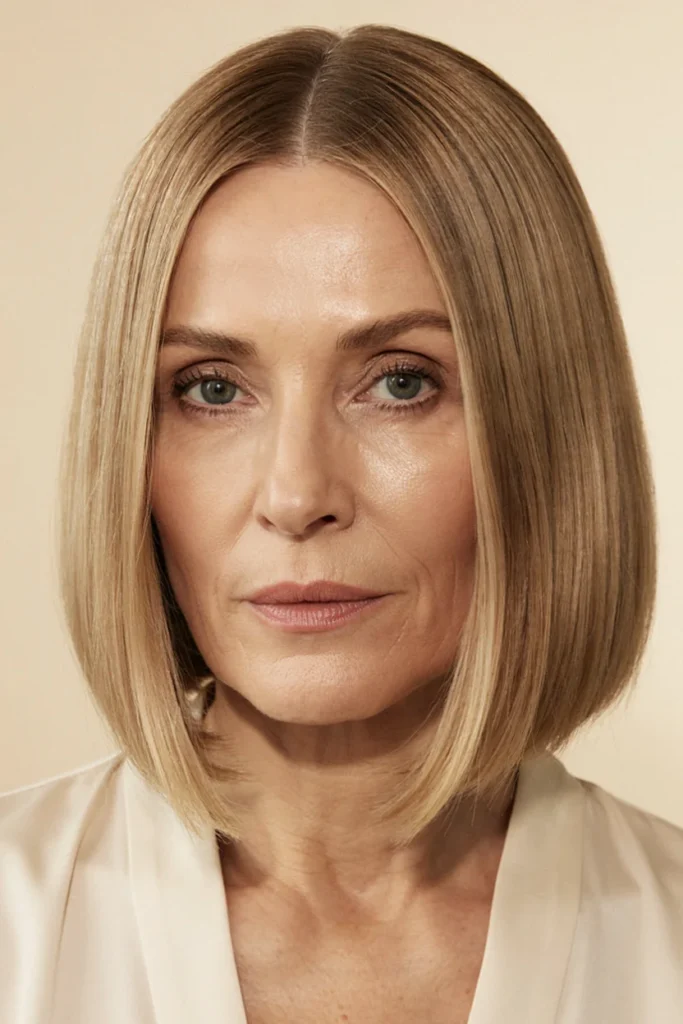
A sleek finish creates a smooth surface and allows the precise chin-length shape to become the main feature. The center part gives the look a modern appearance, while a side part can make it feel softer and less symmetrical.
For a smooth result, use heat protection before blow-drying and straightening. Finish with a very small amount of smoothing serum on the mid-lengths and ends. Keeping product away from the roots helps preserve movement and prevents the style from appearing flat.
Wispy Bangs
- Prepare the hair: Begin with clean, mostly dry hair and separate the fringe from the rest of the bob.
- Direct the bangs: Use a small round brush while blow-drying the fringe forward, then gently sweep it into place.
- Add separation: Once dry, use your fingertips to separate the wispy pieces instead of brushing them into one solid section.
- Finish lightly: Apply a tiny amount of lightweight finishing product to control stray hairs without making the fringe look greasy.
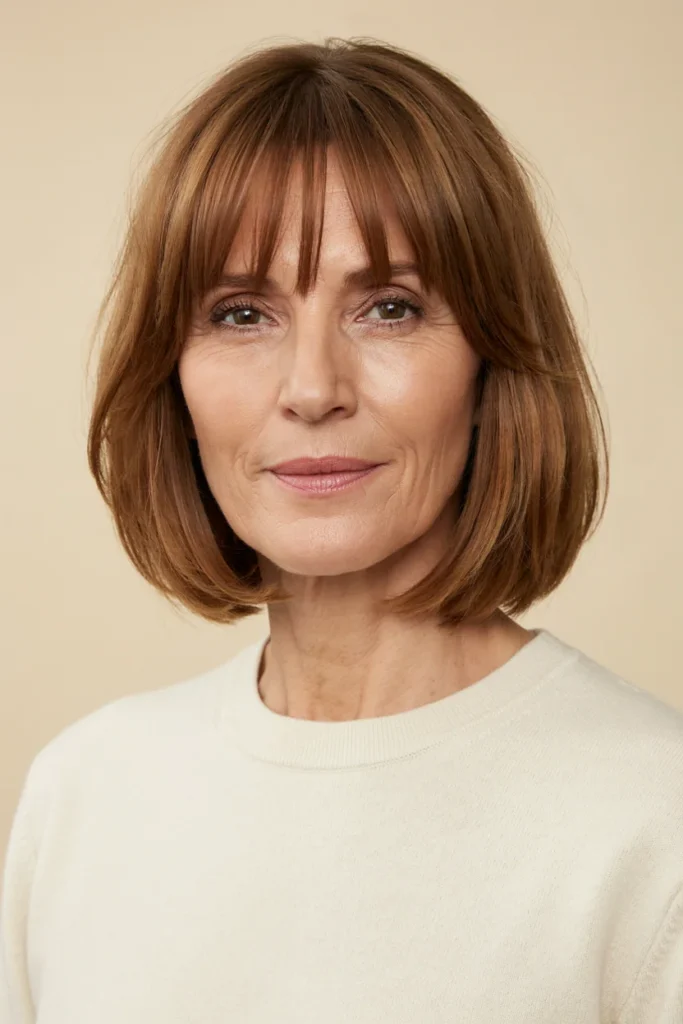
Wispy bangs work especially well when you want the softness of a fringe without the visual weight of a thick, blunt bang. They can complement straight and lightly wavy hair, although naturally textured hair may require a little extra shaping around the forehead.
Shaggy Chin-Length Bob
| Feature | Soft Shag Finish | More Defined Shag Finish |
| Layers | Gentle and blended | More noticeable |
| Texture | Loose movement | Piecey definition |
| Volume | Moderate | Higher at the crown |
| Styling | Air-dry friendly | Benefits from texture product |
| Overall feel | Relaxed | More edgy |
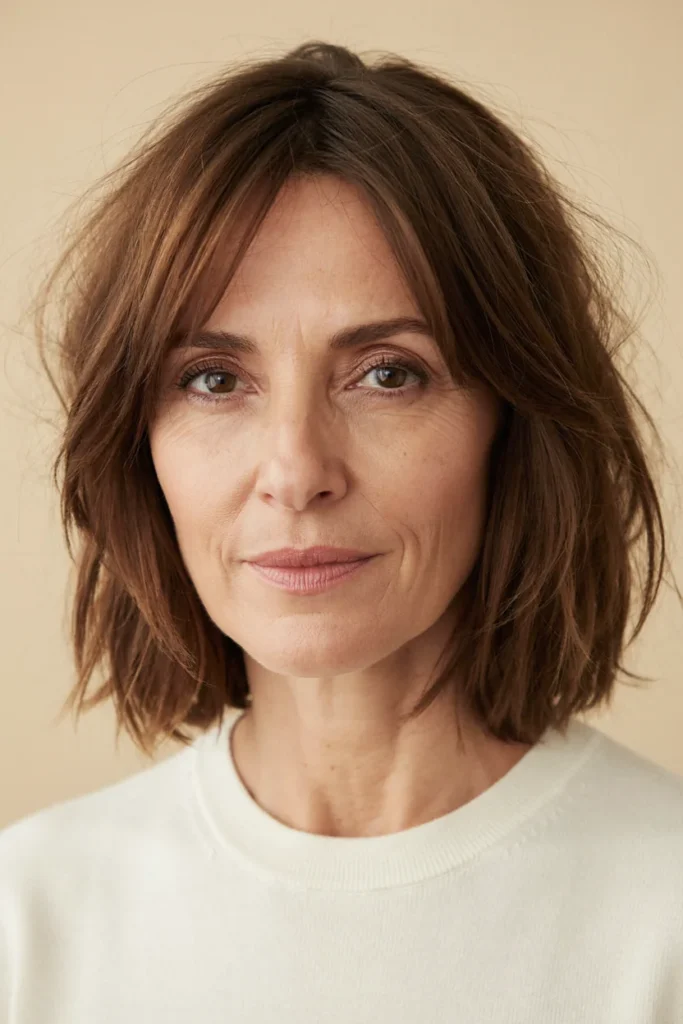
The two approaches create different versions of the same general haircut. A softer shag can suit someone who wants movement without a heavily layered appearance, while a more defined version emphasizes texture and volume. Your natural density and willingness to style your hair can help determine how much layering is practical.
A-Line Bob
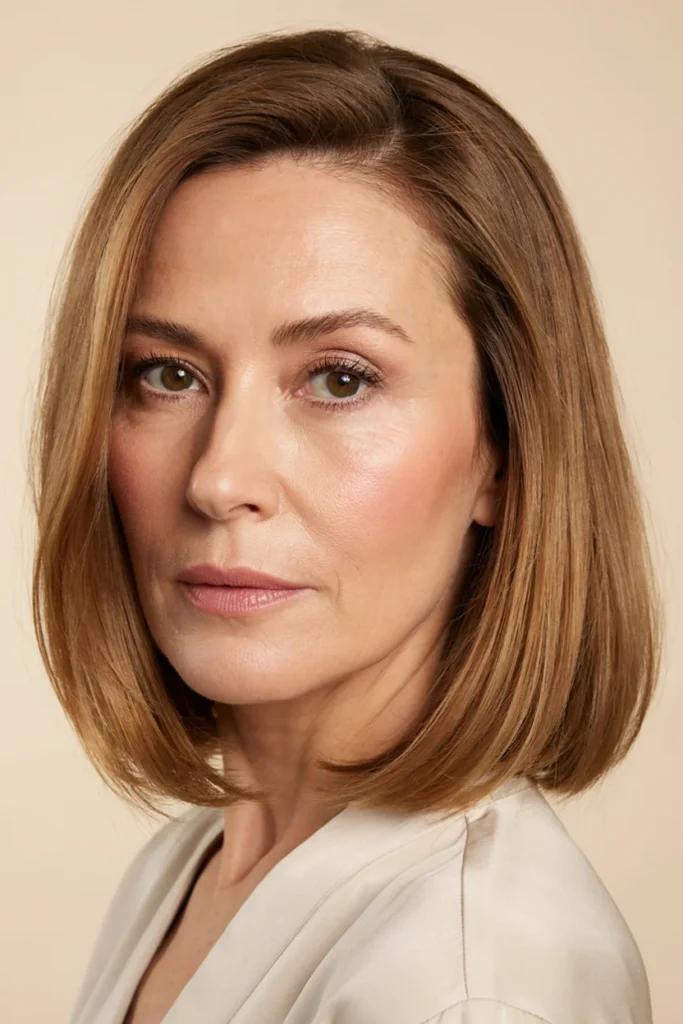
The A-line bob gradually becomes longer toward the front, creating a subtle diagonal line from the back toward the jaw. At chin length, the angle does not need to be dramatic. A small difference between the back and front can be enough to give the haircut structure.
Straight hair makes the angle especially visible, while waves soften the transition. If you have a rounder face, keeping the front sections slightly longer can provide additional framing around the sides of the face. Ask your stylist to adjust the angle according to your natural hair density and preferred styling routine.
Fine Hair Bob
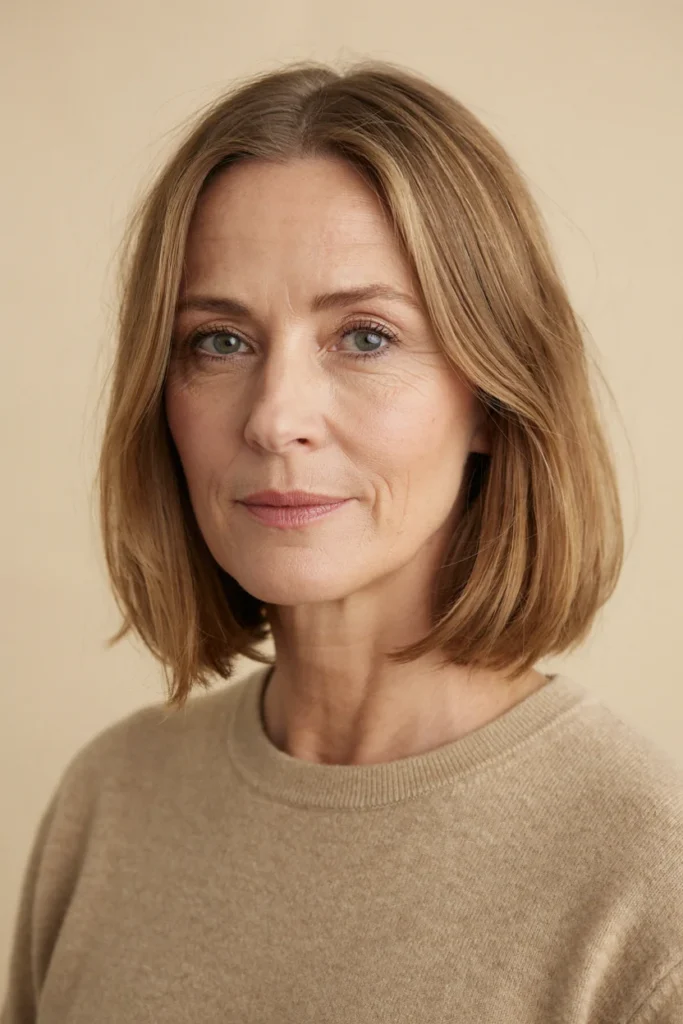
Do:
- Keep the perimeter relatively full to create the appearance of denser ends.
- Use lightweight mousse or root-lifting spray rather than heavy creams.
- Consider subtle internal layers instead of removing large amounts of hair.
- Blow-dry the roots upward or in the opposite direction of their natural fall for extra lift.
Don’t:
- Over-layer the entire haircut.
- Apply thick oils or heavy masks near the scalp before styling.
- Thin the ends excessively if they already appear delicate.
- Use high heat repeatedly without a heat protectant.
Fine hair can look fuller in a chin-length cut because the shorter length reduces the weight pulling the hair downward. The key is controlling where layers are placed. Keeping adequate density at the perimeter usually gives fine hair a stronger-looking shape while still allowing some movement through the upper sections.
Thick Hair Bob
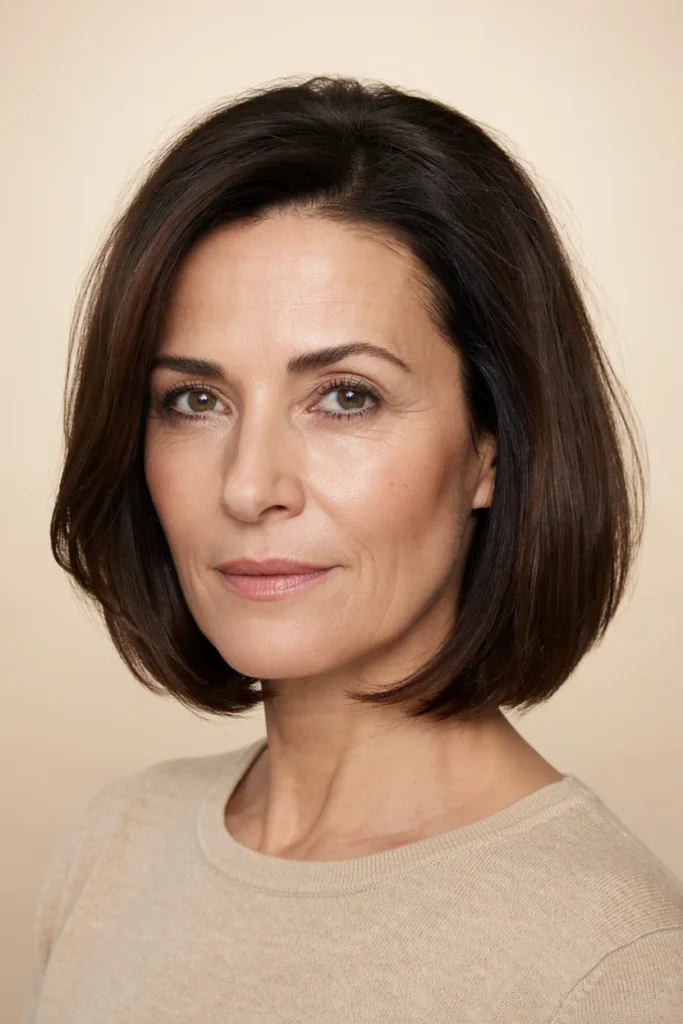
Hair Density: Medium to thick
Weight Control: Selective internal layering can reduce bulk
Best Texture: Straight, wavy, or curly depending on the cut
Styling Need: Moderate if the hair naturally holds its shape
Maintenance: Regular shaping helps prevent the perimeter from becoming too heavy
Thick hair can carry a chin-length haircut beautifully, but the cut needs to account for density. Removing some internal weight can help the hair sit closer to the head without making the outer edge look thin. If your hair is very dense, discuss how the shape will behave as it dries before choosing extensive layers.
Curly Chin-Length Bob
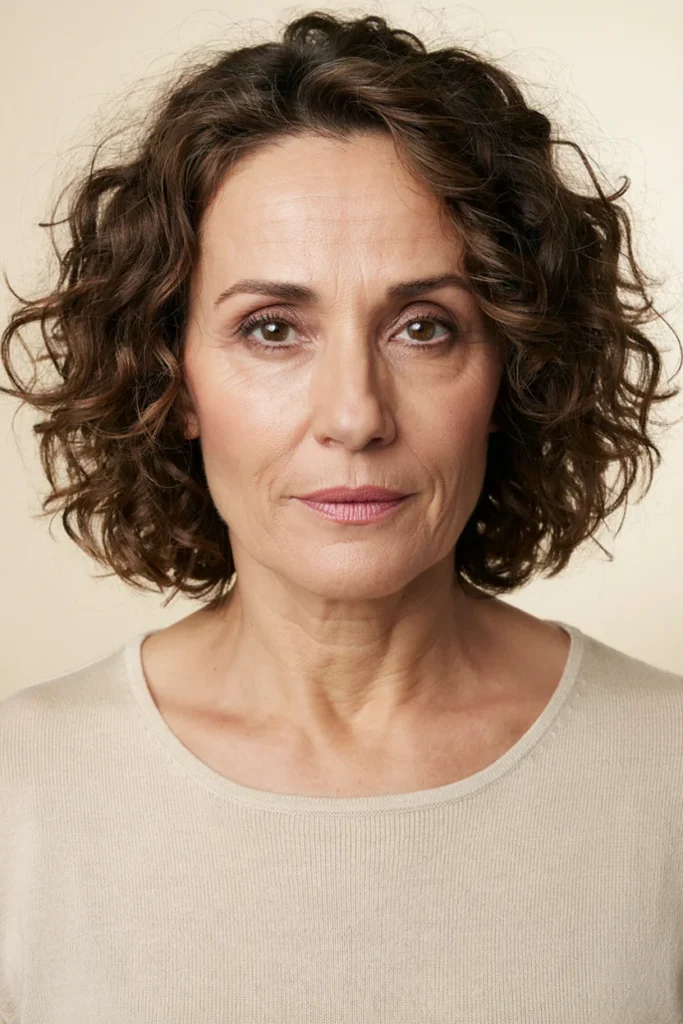
Quick Tip: Curly hair should generally be shaped with its natural curl pattern in mind because the visible length can change significantly as curls spring upward. Use a moisturizing curl product on damp hair and avoid repeatedly brushing the curls while they dry.
A chin-length curly bob can have a rounded, lively silhouette with curls framing the cheeks and jaw. The final appearance depends heavily on curl density and shrinkage, so the cut should be adjusted for your natural pattern. A diffuser can help preserve definition while adding gentle volume at the roots.
Gray Hair Bob
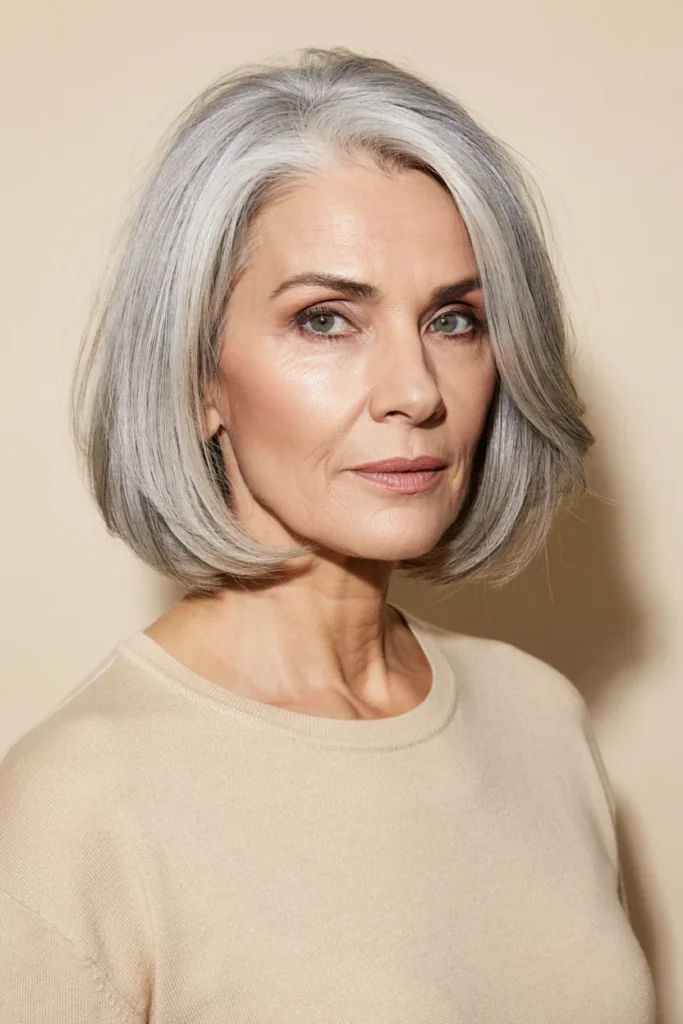
BEFORE
Growing out gray hair can sometimes make color appear uneven, especially when natural silver strands are mixed with previously colored sections. The hair may also have different textures across the roots and lengths.
AFTER
A well-shaped chin-length bob gives gray and silver hair a deliberate outline while letting the natural color variation become part of the look. A sleek finish highlights individual silver tones, while soft waves create more visual dimension.
Keep gray hair conditioned if it tends to feel dry or coarse. A purple-toned shampoo may be useful for some silver or gray hair, but frequency should depend on how your hair responds. Regular trims also keep the shorter shape looking intentional as the color grows.
Blonde Highlights
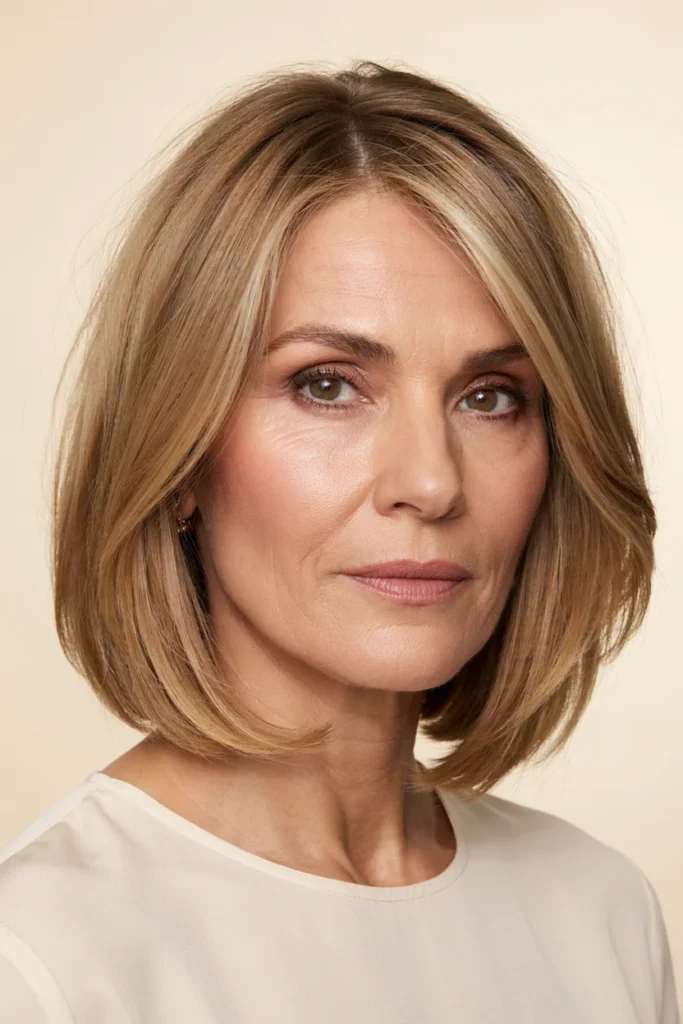
A chin-length bob with blonde highlights adds contrast without requiring an all-over color change. Fine ribbons of lighter color around the face can brighten the front sections, while more subtle highlights through the rest of the haircut add dimension when the hair moves.
The placement should reflect your natural base color and the amount of contrast you prefer. Highlights can be especially noticeable on sleek hair because the shorter layers remain clearly defined. Protect color-treated hair with suitable conditioning products and minimize unnecessary high-heat styling.
Chin-Length Balayage
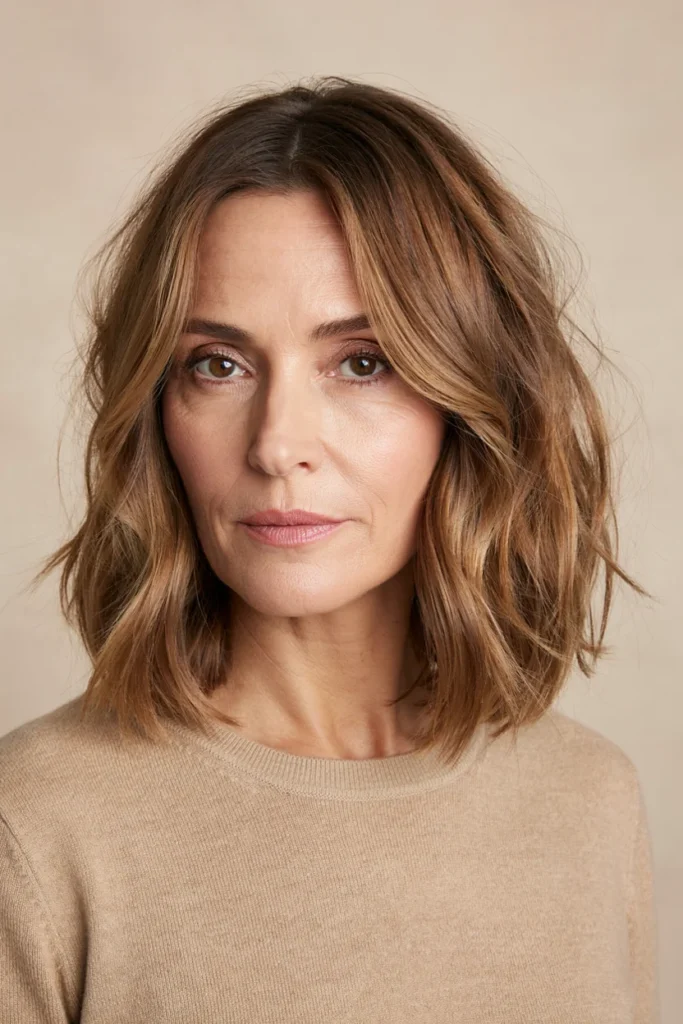
- Start with the cut: Establish the chin-length shape before deciding exactly where lighter pieces should sit.
- Frame the face: Consider slightly brighter balayage pieces around the front if you want additional dimension near the cheekbones and jaw.
- Blend through the ends: Gradually place lighter tones through selected sections rather than creating a uniform stripe.
- Style for movement: Loose waves can reveal the variation between the natural base and lighter pieces.
- Maintain the condition: Use color-friendly shampoo and conditioner and protect the hair from excessive heat.
Balayage can give a short bob depth without making the color look overly uniform. Because the haircut is compact, thoughtful placement matters more than covering every section with highlights. A softer transition between shades tends to preserve the natural-looking character of the technique as the hair grows.
Round Face Bob
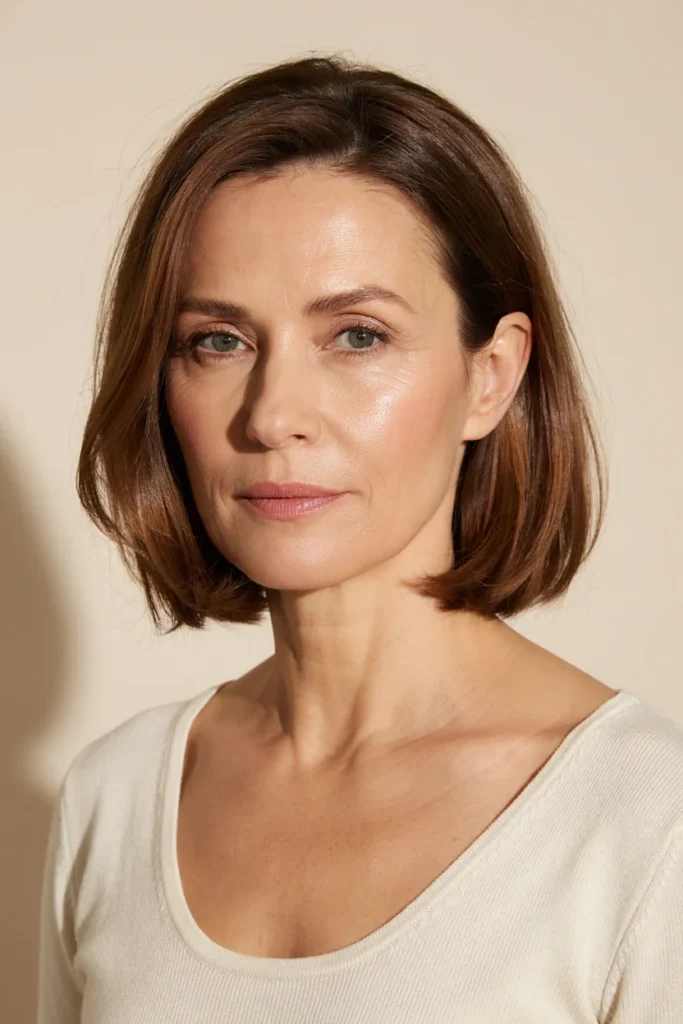
| Styling Direction | Jawline Effect | Texture | Useful Consideration |
| Side part | Adds diagonal movement | Sleek or softly waved | Keeps the front from looking too symmetrical |
| Longer front | Creates a little extra length visually | Straight or wavy | Useful when you prefer face-framing pieces |
| Soft waves | Adds movement around the sides | Loose waves | Keep volume controlled near the widest part of the cheeks |
| Subtle layers | Breaks up a solid outline | Light texture | Avoid removing too much density from fine hair |
A round face does not require one specific haircut, but proportions can influence how a chin-length bob looks. Side parting, controlled volume, and slightly longer front sections are ways to alter the visual balance. Your natural texture should also be considered because curls and waves can change the apparent width of the haircut.
Oval Face Bob
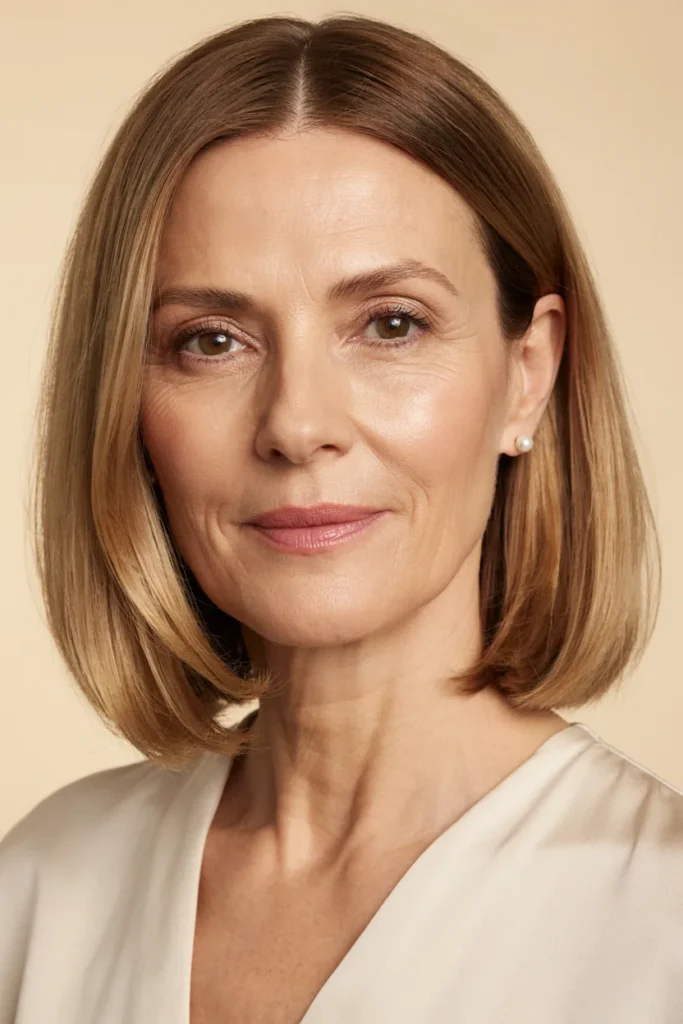
An oval face gives you plenty of flexibility with chin-length proportions. A straight center-parted bob can emphasize symmetry, while a side part introduces a softer diagonal line. Curtain bangs, wispy fringe, or no bangs can all work depending on the amount of forehead coverage you prefer.
For a more contemporary appearance, keep the ends crisp and add a slight bend through the mid-lengths. If you prefer a low-maintenance routine, ask for a shape that works with your natural texture rather than requiring daily straightening. The best version is the one that fits how you actually style your hair.
Soft Layered Bob
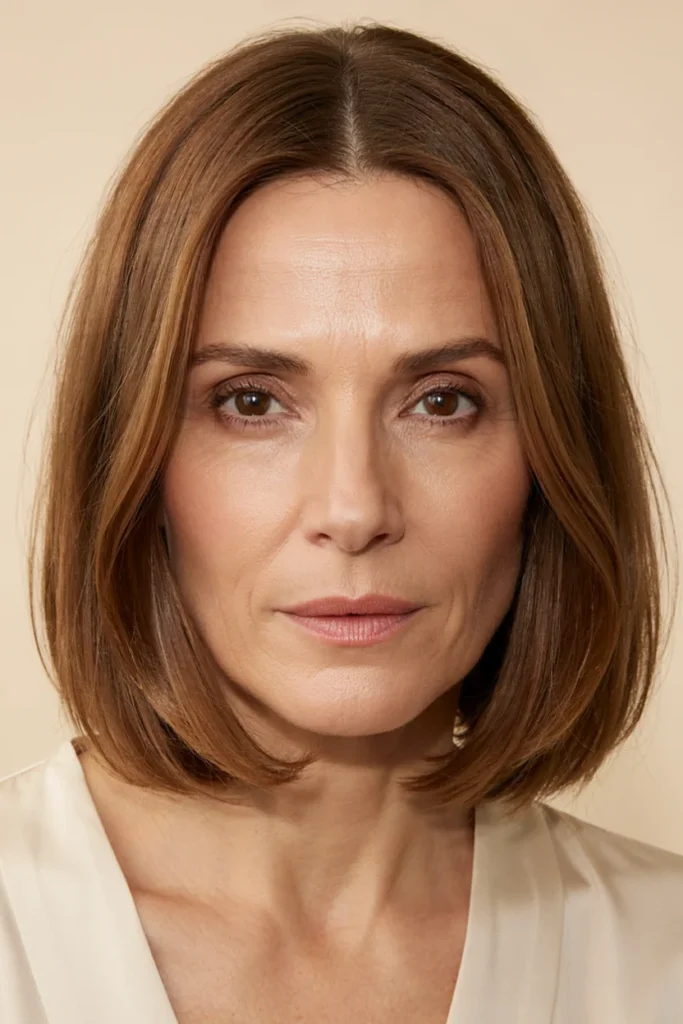
Hair Length: Around the chin
Layer Placement: Light layers around the sides and upper sections
Best Texture: Straight to wavy
Face Framing: Soft pieces that follow the natural contours of the face
Finish: Smooth, tousled, or gently waved
This softer version of the bob is useful when you want movement without losing the recognizable chin-length silhouette. A round brush can create a polished finish, while air-drying with a lightweight texture product can produce a more relaxed result. Keep the layering restrained if your ends are fine or prone to looking sparse.
Best Chin-Length Hairstyles for Different Hair Types
The most suitable chin-length haircut depends as much on hair behavior as it does on the reference photo you bring to the salon.
- Fine hair: A blunt or lightly layered perimeter can help the ends look fuller. Avoid excessive thinning and heavy layering.
- Thick hair: Strategic internal layers can reduce bulk while keeping the outer shape substantial.
- Straight hair: Blunt, sleek, A-line, and French bobs display their shapes clearly.
- Wavy hair: Layered, textured, and softly angled bobs can work with natural movement instead of fighting it.
- Curly hair: Allow extra room for curl shrinkage and choose a shape based on how the curls behave when dry.
- Gray hair: A clean haircut can give natural silver and gray tones a polished appearance while regular conditioning helps manage dryness.
- Color-treated hair: Focus on conditioning, heat protection, and a cut that does not require excessive daily styling.
Styling Tips for Chin-Length Hair After 40
1. Work with your natural texture.
A haircut that cooperates with your natural wave or curl pattern usually requires less heat and less daily manipulation.
2. Protect the ends.
Short hair can still become dry or damaged. Apply heat protectant before using a blow dryer, flat iron, or curling iron.
3. Keep fine hair lightweight.
Mousse, root-lifting sprays, and lightweight texture products are often more practical for fine hair than heavy creams or oils.
4. Control volume strategically.
Where volume is placed can change the appearance of a chin-length haircut. Crown lift can add height, while excessive volume directly around the widest part of the cheeks may alter the overall balance.
5. Give bangs their own routine.
Bangs often need more frequent trimming than the rest of the haircut. Blow-drying them while damp also makes them easier to direct.
6. Use loose waves for quick texture.
If your bob looks too flat, add a few bends through the mid-lengths rather than curling every section tightly.
7. Consider your growing-out plan.
Before choosing a dramatic angle or short fringe, think about how you want the haircut to look several weeks later. A slightly softer shape can be easier to maintain between appointments.
8. Match the haircut to your schedule.
A sleek blunt bob may require regular styling to maintain its crisp finish, while a textured or softly layered version can be more forgiving on busy mornings.
Conclusion
Chin-length hair offers a useful balance between a short haircut and enough length for styling variety. The 23 chin-length hairstyles for women over 40 above range from precise blunt bobs and French-inspired cuts to soft layers, waves, curls, bangs, and color-enhanced looks. The right choice depends on your hair density, natural texture, face shape, maintenance preferences, and how much time you want to spend styling.
Save your favorite ideas to Pinterest before your next salon visit, and use the details about layers, bangs, texture, and length to explain exactly what you want. A good haircut should not only look appealing in a photo, but also work with your everyday hair routine.
Frequently Asked Questions
1. Is chin-length hair flattering for women over 40?
Yes. Chin-length hair can be adapted to many hair textures and face shapes. The key is choosing the right combination of length, layers, bangs, and styling for your individual features and hair behavior.
2. Does chin-length hair make you look younger?
Hair length alone does not determine how youthful or mature a hairstyle appears. Soft movement, healthy-looking ends, suitable face framing, and a haircut that complements your natural texture can all influence the overall appearance.
3. What chin-length hairstyle is best for fine hair?
A blunt chin-length bob or a lightly layered bob can work well for fine hair because retaining density around the perimeter helps the ends look fuller. Excessive layering or thinning can make fine ends appear less substantial.
4. Is a bob good for women over 40?
A bob can be adapted to many preferences and hair types. Options include sleek, textured, layered, wavy, curly, angled, and bang-enhanced versions, making it possible to choose a shape that fits your styling routine.
5. What face shape looks best with chin-length hair?
Chin-length hair can be adapted for oval, round, heart, square, and other face shapes. Adjusting the part, front length, bangs, layers, and volume can change how the haircut frames the face.