23 Short Curly Hairstyles for Women Over 40
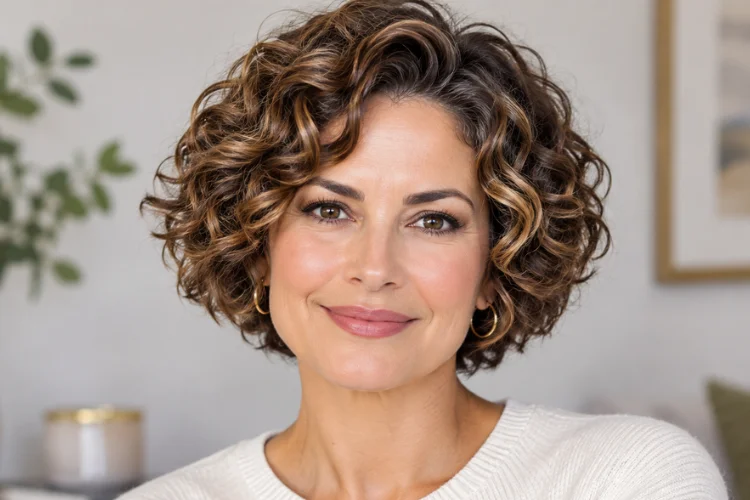
Short curly hairstyles for women over 40 can be both practical and stylish, especially when the cut works with your natural curl pattern rather than against it. From softly layered bobs and French-inspired cuts to cropped pixies and defined ringlets, there are plenty of lengths and shapes to consider.
The right short haircut can also make daily styling easier while giving curls better shape and movement. Your hair density, curl type, face shape, preferred volume, and maintenance routine all matter when choosing a cut. Below, you will find 23 wearable ideas, along with practical details about styling, texture, bangs, layers, and upkeep so you can find a look that fits your everyday routine.
1. Short Curly Bob
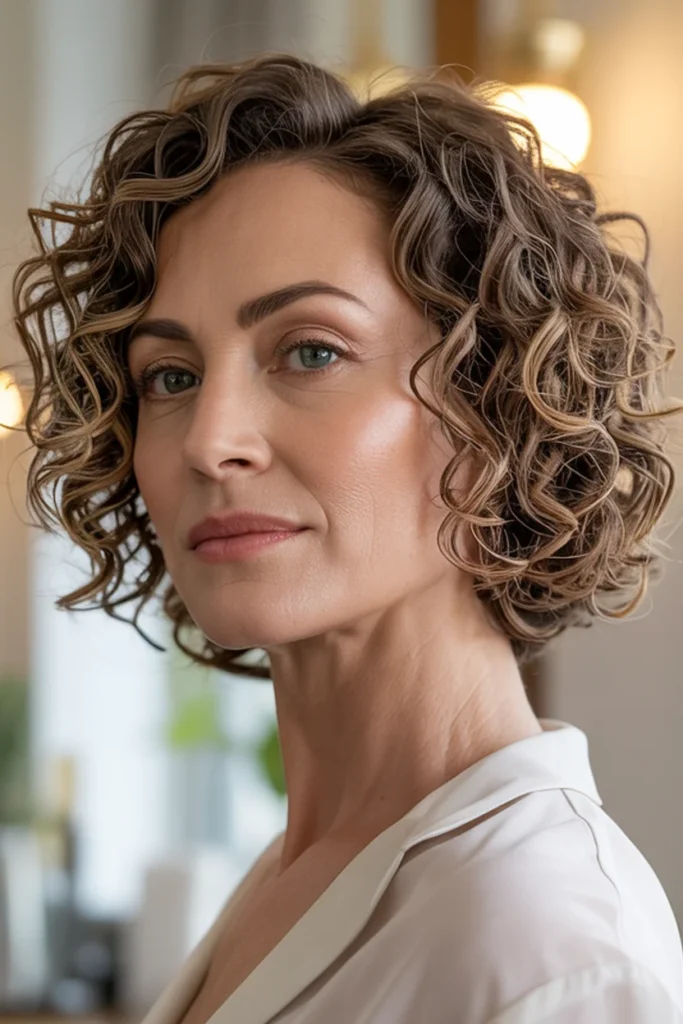
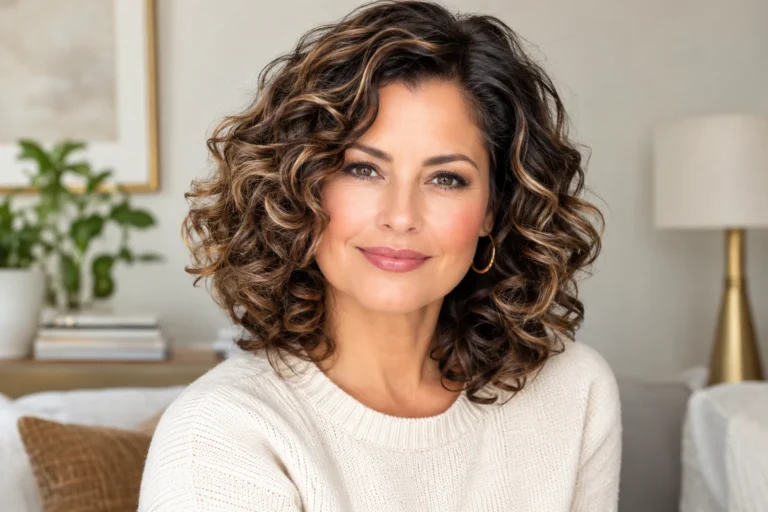
A classic short curly bob sits around the jawline or slightly above the shoulders, allowing curls to create a naturally rounded silhouette. Keeping the perimeter fairly clean gives the haircut definition, while natural curls soften the overall shape. A side part can add extra movement and prevent the style from looking too uniform.
This cut suits women who want a manageable length without going as short as a pixie. It works particularly well with medium-density curls and can be adapted for different face shapes by adjusting the length. For a softer finish, ask for subtle internal layers rather than removing too much weight from the ends.
2. Layered Curly Bob
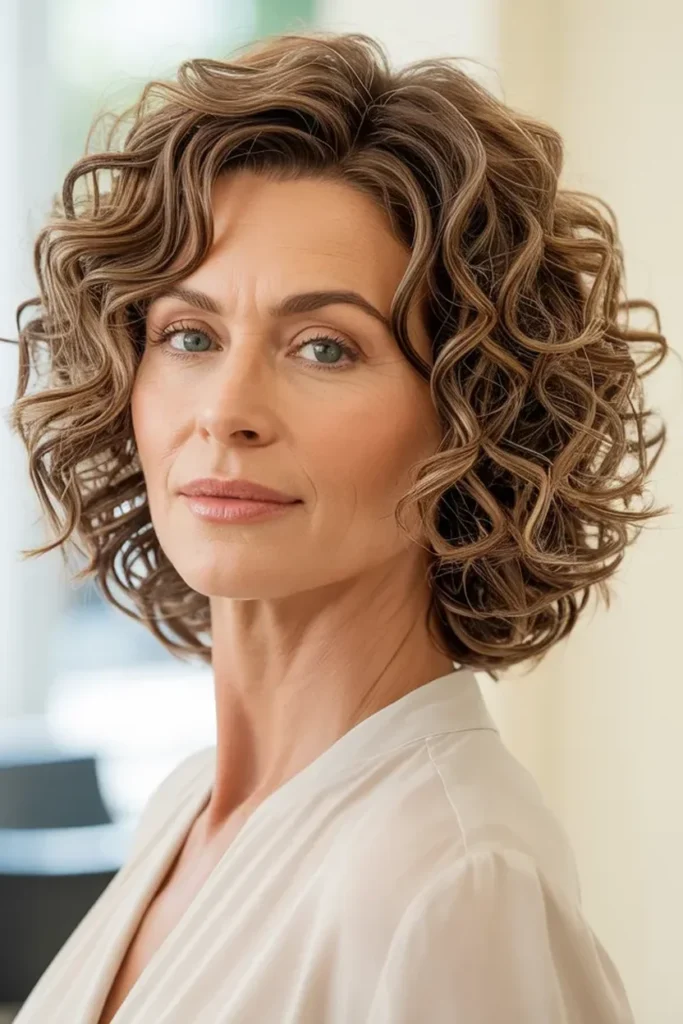
- Length: Usually chin to neck length, depending on curl shrinkage.
- Layers: Soft layers throughout the interior help curls stack naturally.
- Volume: Layers can create more lift around the crown.
- Hair type: Particularly useful for medium to thick curly hair.
- Maintenance: Regular shaping helps preserve the intended silhouette.
The layered version gives a traditional bob more movement and dimension. Ask your stylist to consider your curl pattern in its natural state, since curls can spring up considerably after cutting. A lightweight curl cream can help define individual sections without making the layers feel heavy.
3. Curly Pixie Cut
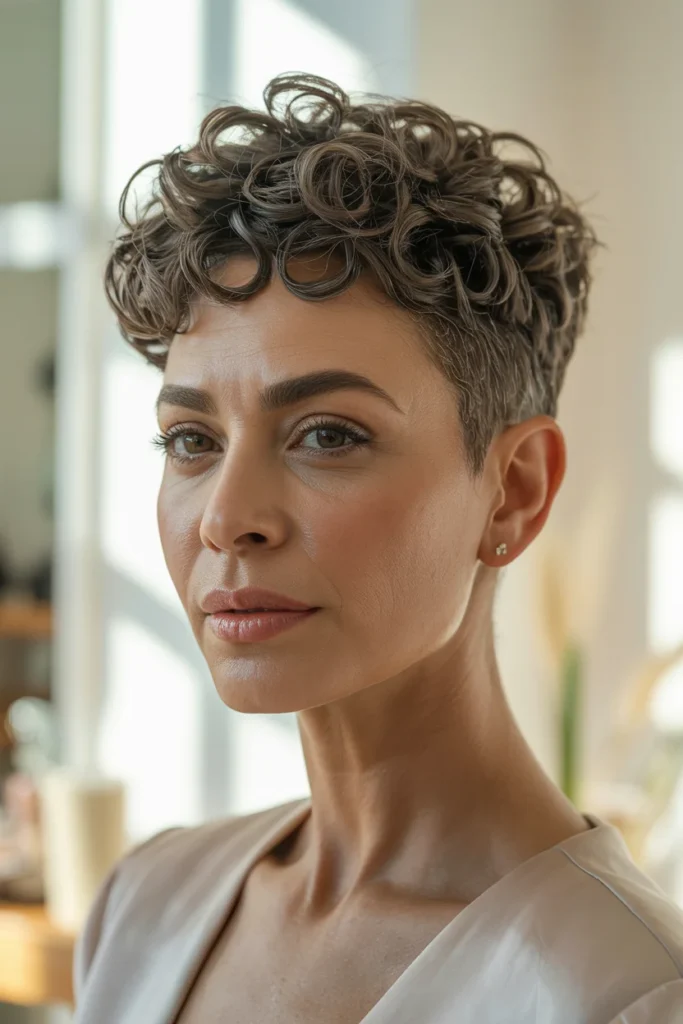
Quick Tip: Apply a small amount of curl cream to damp hair, then scrunch upward toward the roots. Let the curls dry naturally or use a diffuser on low heat and low airflow to preserve their shape.
A curly pixie keeps the sides and back relatively short while allowing the curls to create texture on top. The result can feel light around the face while still retaining enough height and movement to showcase natural texture. It is especially convenient for anyone who prefers a shorter wash-and-style routine.
4. Curly Pixie with Longer Top
BEFORE
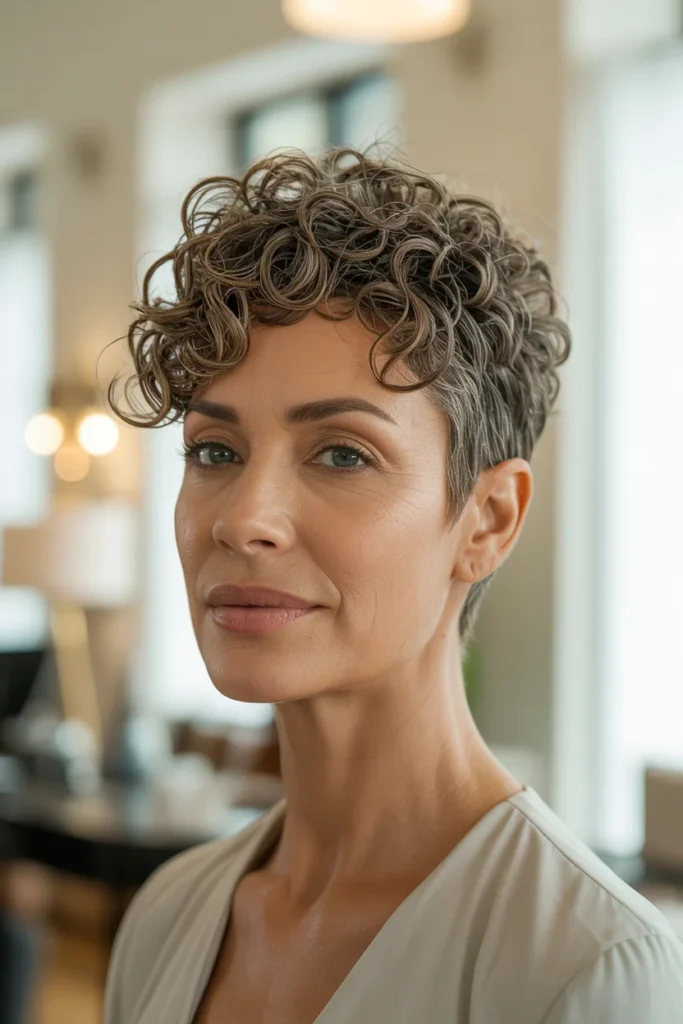
Short curly hair can sometimes lose its personality when the top is cut too close to the head. Fine curls may appear flat, while tighter curls can look compact without enough length to form their natural pattern.
AFTER
Leaving extra length through the crown allows curls to spring upward and create visible texture. The sides can remain neatly tapered while the longer top provides a softer, more feminine shape.
Use a lightweight mousse or curl foam at the crown, then gently lift the roots while drying. Avoid brushing the curls once they have dried because this can disturb definition and create unwanted frizz.
5. Short Curly Shag
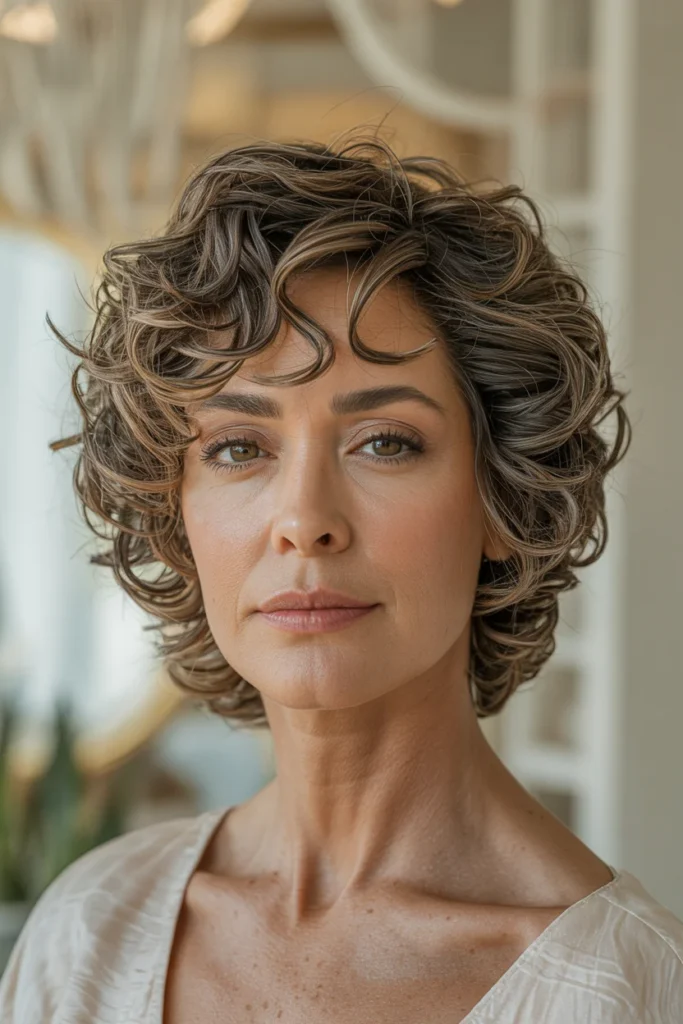
- Start with damp curls: Gently blot excess water with a microfiber towel or soft cotton T-shirt.
- Add lightweight styling product: Work curl cream or mousse through the mid-lengths and ends.
- Encourage the layers: Scrunch individual sections upward so the shag layers form their natural shape.
- Dry with a diffuser: Use low heat and low airflow, especially around the crown.
- Finish carefully: Separate only a few curls with your fingertips if additional volume is needed.
The short curly shag is particularly interesting for women who like texture rather than a polished, uniform finish. Its varied layers can help thick curls feel lighter while creating movement around the face. For a softer appearance, keep the shortest layers slightly longer around the cheekbones.
6. Curly French Bob
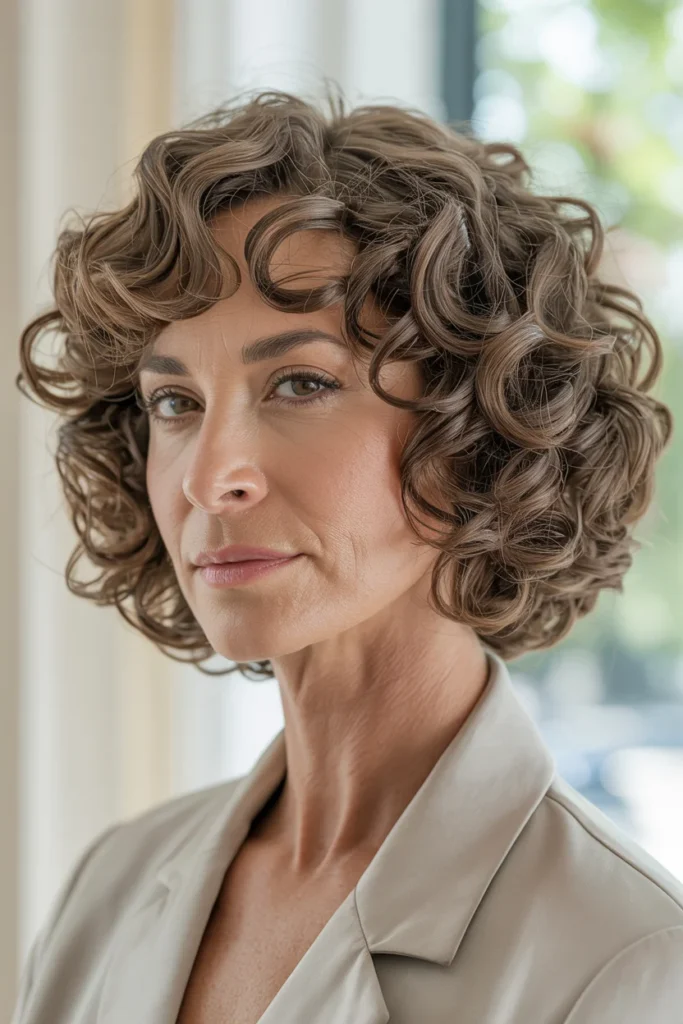
| Feature | Classic Finish | Textured Finish |
| Length | Around the jaw | Slightly above or around the jaw |
| Texture | Defined curls | Looser, tousled curls |
| Bangs | Optional | Often soft and textured |
| Styling | More controlled | More natural-looking |
A curly French bob can be adapted in several directions depending on how polished or relaxed you prefer your hair. A defined finish emphasizes the rounded shape, while a tousled approach brings out natural texture. The shorter length draws attention toward the face, so curl placement and bang length can be adjusted accordingly.
7. Chin-Length Curly Bob
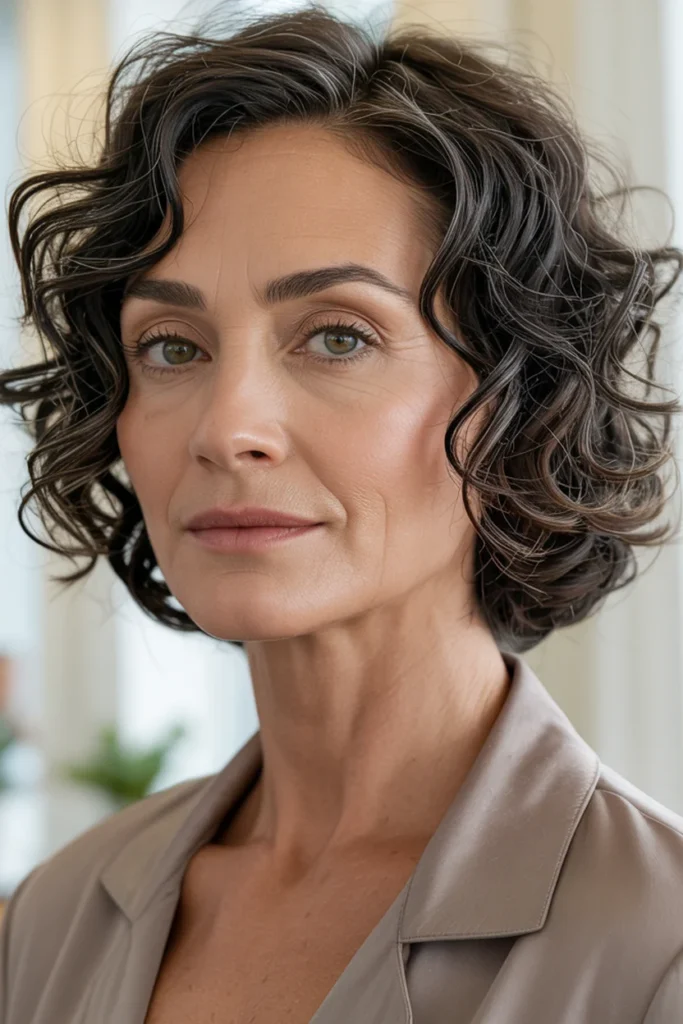
DO:
- Keep the ends shaped enough to prevent a triangular silhouette.
- Consider subtle layers if your curls are dense.
- Use a side or slightly off-center part for added movement.
- Apply styling product while the hair is still damp.
DON’T:
- Remove excessive weight from already fine curls.
- Over-brush the hair after the curls have formed.
- Apply heavy oils directly to the roots.
- Cut the bob based only on wet hair length because curls may shrink significantly.
A chin-length bob works best when its shape accounts for natural curl shrinkage. The goal is a defined outline without making the lower section look overly wide. Your stylist can determine the appropriate length by considering how your curls spring up after drying.
8. Side-Swept Curly Bangs
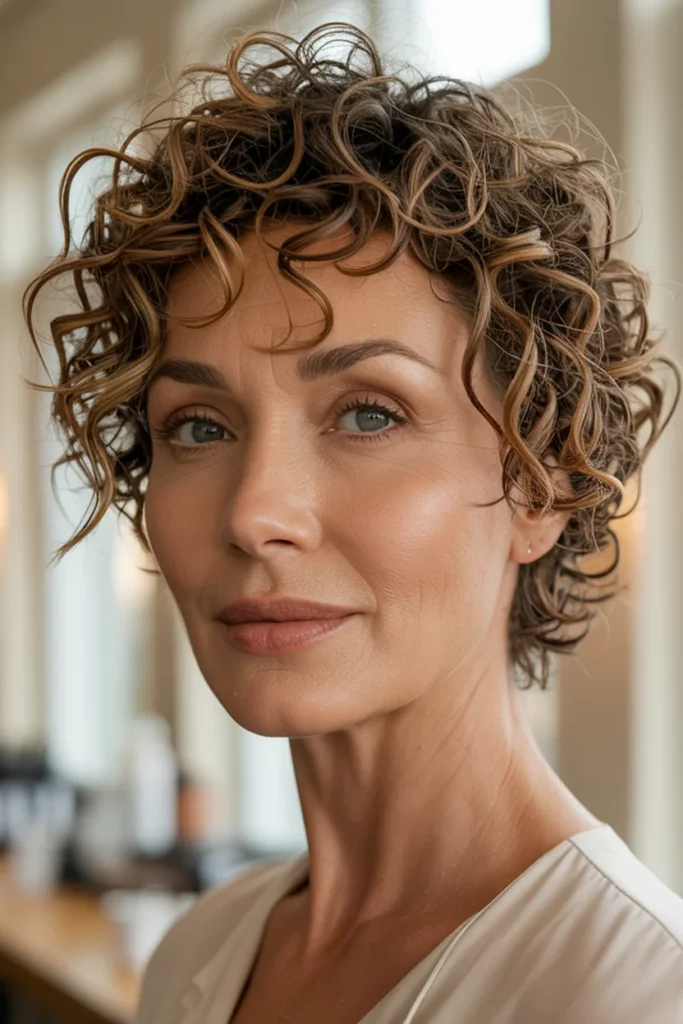
Hair Length: Short bob, crop, or pixie length
Curl Pattern: Loose curls through tighter ringlets
Face Framing: Sweeping the fringe diagonally creates an open side of the forehead
Styling Time: Usually quick once the bangs have been trained into place
Side-swept bangs can change the balance of a short curly haircut without requiring a dramatic change in overall length. They are especially useful when you want curls around the forehead but prefer them to fall in one direction. A small amount of curl cream and gentle finger shaping can keep the fringe soft rather than stiff.
9. Curly Bob with Curtain Bangs
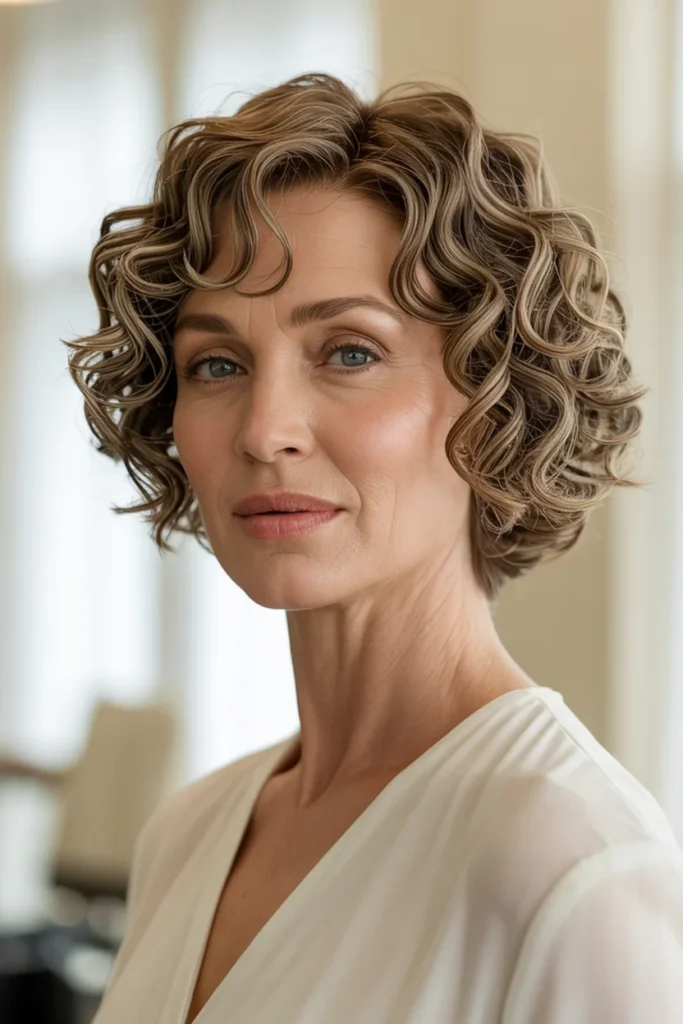
Curtain bangs bring a softer center-framed detail to a curly bob. The shortest point generally sits near the center of the forehead, with the sides becoming gradually longer toward the cheekbones. On curly hair, the finished length should account for shrinkage so the fringe does not end up much shorter than expected.
This option can be adapted for looser waves as well as defined curls. For everyday styling, part the bangs while damp and guide each side outward with your fingers. A diffuser can help preserve the curl pattern while keeping the center part visible.
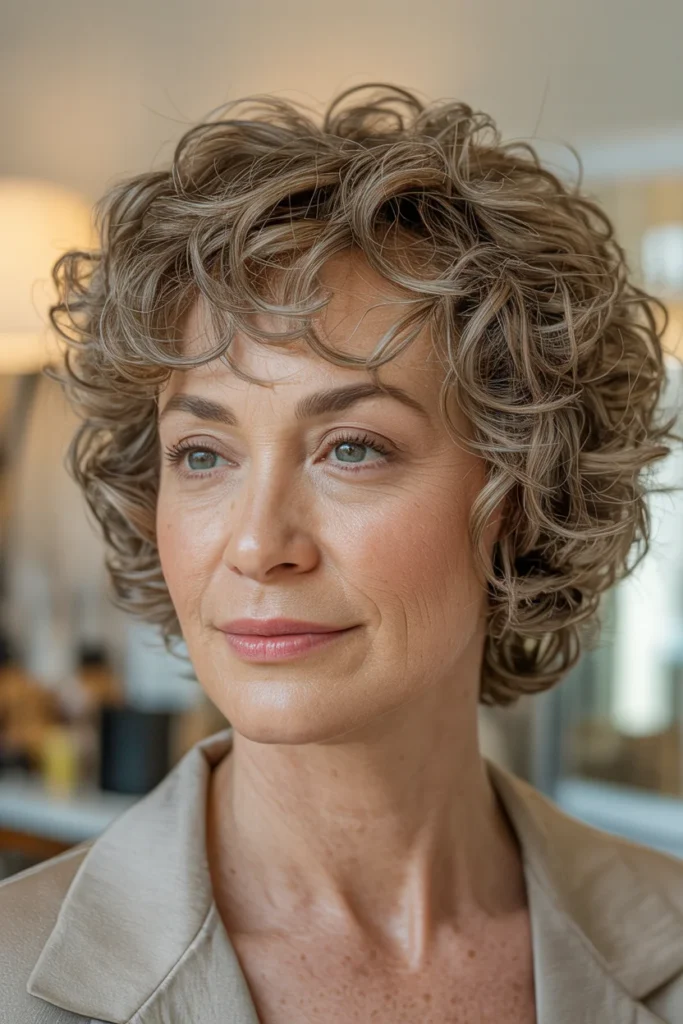
10. Short Curly Shag with Bangs
BEFORE
A short curly shag can become bulky when the layers are not balanced with the natural density of the hair. Bangs may also separate unevenly if they are styled without enough moisture.
AFTER
Well-positioned layers create separation through the crown and sides, while curly bangs add texture around the forehead. The finished look has movement without requiring every curl to sit perfectly.
To maintain the shape, refresh the bangs and front layers with a little water and styling cream between wash days. This is often easier than restyling the entire haircut.
11. Voluminous Short Curly Cut
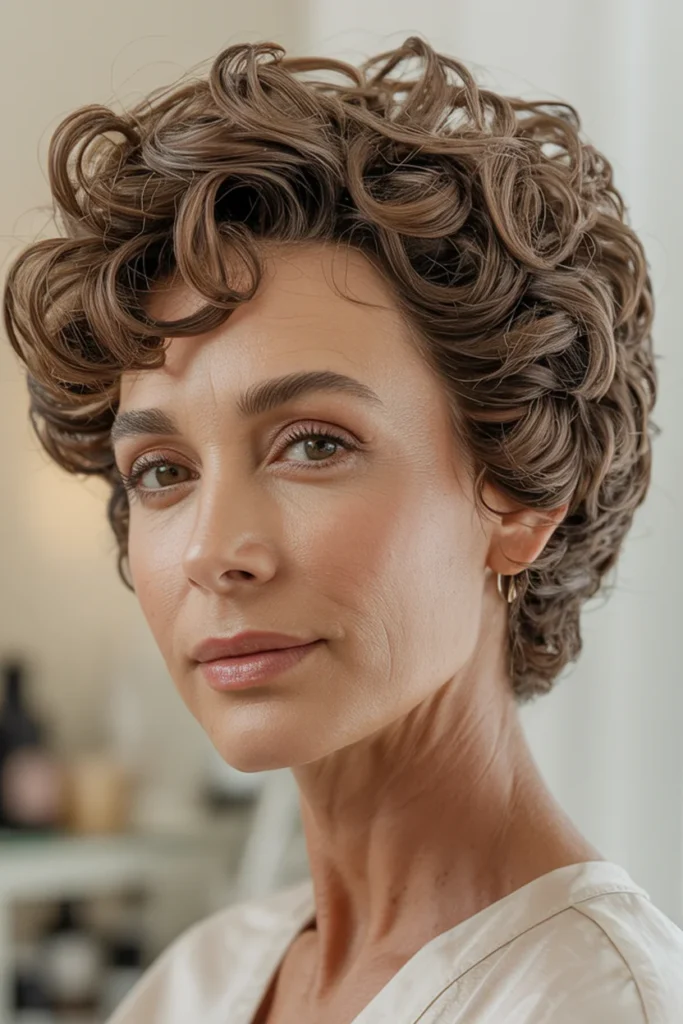
- Crown: Keep enough length at the top for natural lift.
- Roots: Use lightweight mousse rather than heavy creams if your hair tends to fall flat.
- Sides: Slightly shorter sides can emphasize the volume above.
- Drying: Diffuse while gently lifting the roots with your fingertips.
- Finish: Shake the roots lightly after the hair is completely dry.
A voluminous cut works especially well for curls that naturally spring upward. Rather than trying to make every section perfectly controlled, the haircut uses the natural expansion of curly hair as part of its shape. It can be dressed up with defined curls or worn more casually with a soft, airy finish.
12. Short Curly Cut for Fine Hair
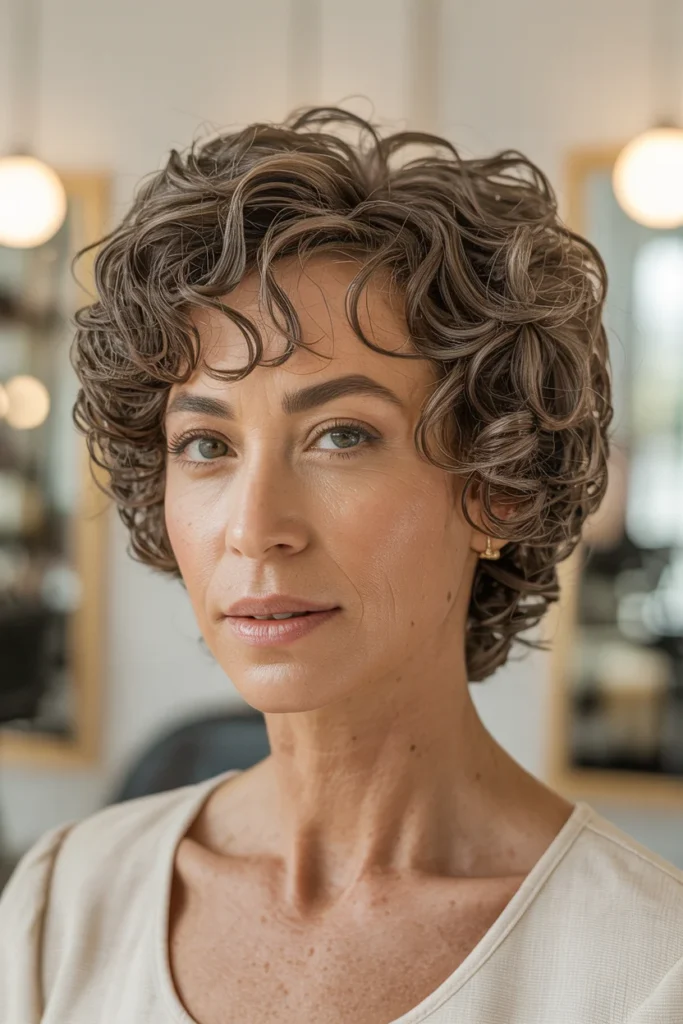
Quick Tip: Fine curly hair generally benefits from careful layering rather than aggressive thinning. Apply a lightweight volumizing mousse close to the roots, then scrunch the product through the lengths. Drying with the head slightly tilted can also encourage lift without teasing.
The key with fine curls is preserving enough density at the ends so the haircut does not appear sparse. A shorter shape can make the hair look fuller because less length is pulling the curls downward. Keep the layers controlled and concentrate texture near the crown.
13. Short Curly Cut for Thick Hair
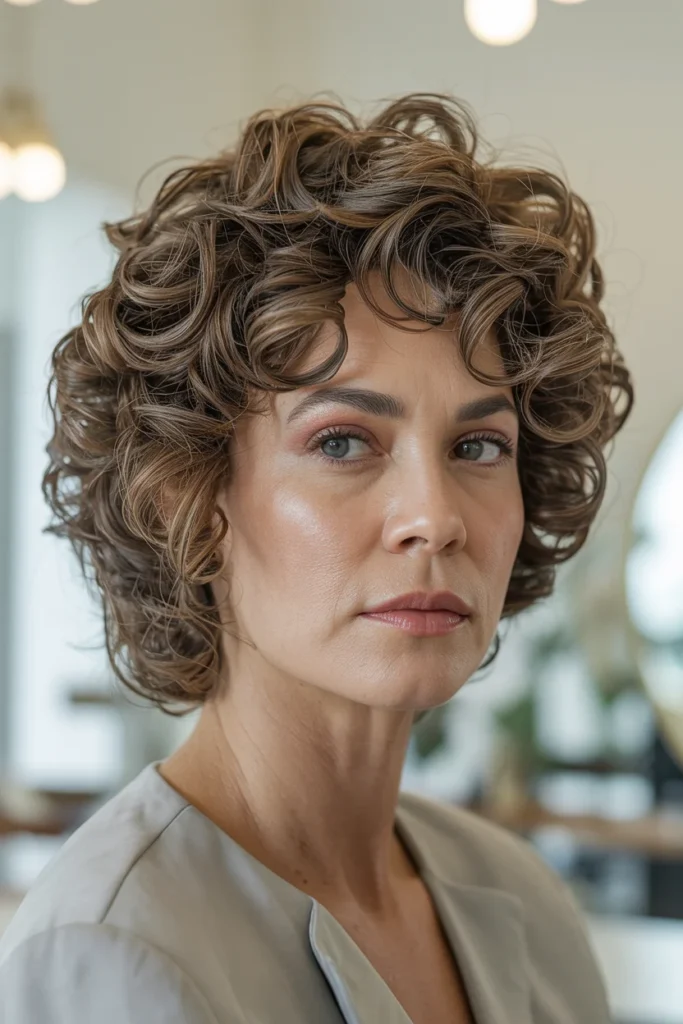
| Feature | Controlled Shape | Fuller Shape |
| Layering | More internal weight removal | Fewer layers |
| Volume | Concentrated around the crown | More evenly distributed |
| Finish | Defined and shaped | Full and textured |
| Maintenance | Regular shaping recommended | Can grow out more softly |
Thick curls often need strategic weight management rather than simply adding lots of layers. Internal shaping can reduce bulk while keeping the outer silhouette intact. If you prefer a fuller appearance, fewer layers may be preferable. The ideal approach depends on your curl density and how much volume you enjoy.
14. Salt-and-Pepper Short Curls
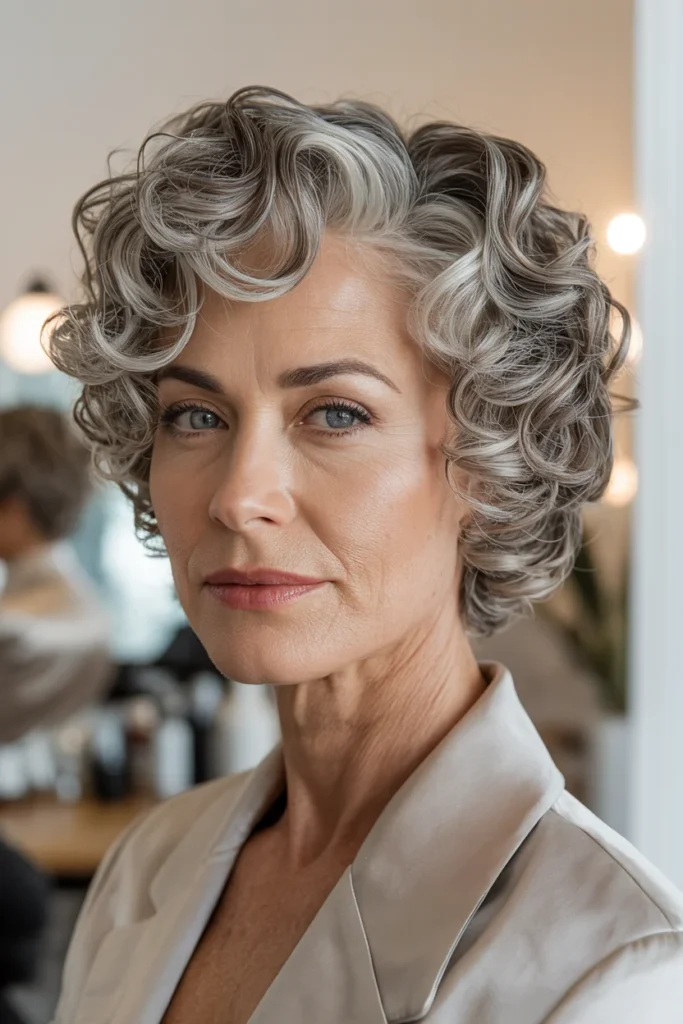
Natural gray and silver strands can look especially dimensional when worn with defined curls because the texture catches light across different sections of the hair. A short cut keeps the overall shape neat while allowing the natural color variation to remain visible.
For a polished finish, focus on moisture and curl definition rather than trying to make every strand completely smooth. Gray hair can sometimes feel drier or more wiry, so a moisturizing leave-in product can help improve softness. A diffuser on moderate or low heat can preserve the curl pattern without excessive heat exposure.
15. Short Curly Crop
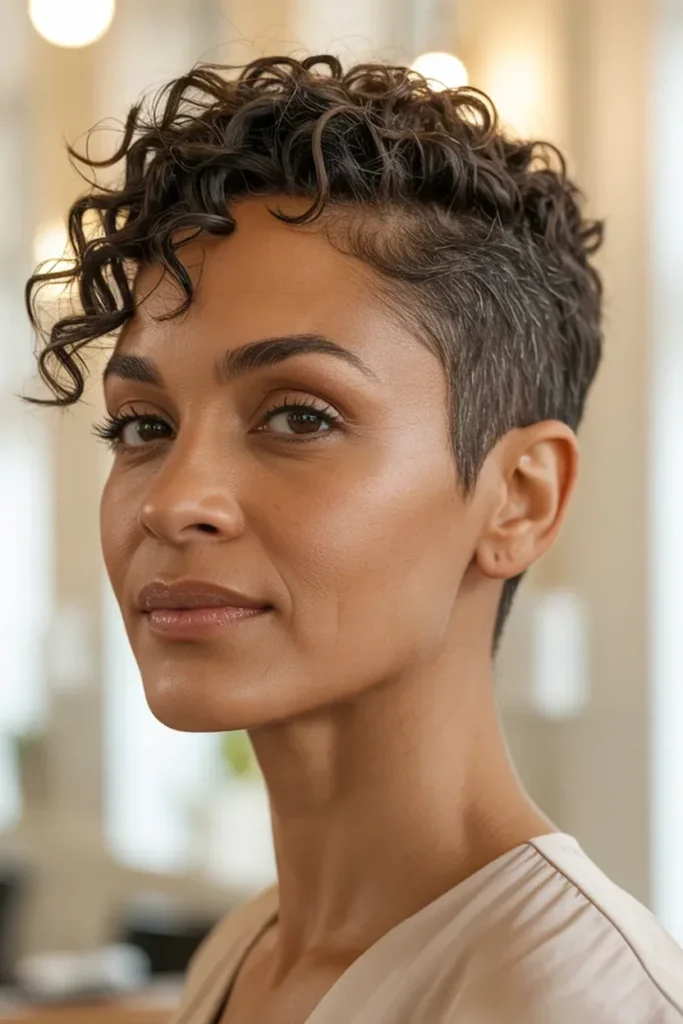
- Dampen the hair: Start with evenly damp curls rather than soaking-wet hair.
- Apply curl foam: Distribute a small amount through the top and sides.
- Shape the crop: Use your fingertips to guide curls into the desired direction.
- Diffuse gently: Concentrate on the roots first, then allow the ends to dry.
- Finish with definition: Pinch a few curls into place if certain areas need extra separation.
A short crop is a practical choice for women who enjoy a noticeably shorter haircut. It exposes more of the neckline and ears than a bob while keeping texture visible across the top. It can be especially convenient for active lifestyles because there is less hair to manage after washing.
16. Rounded Short Curly Cut
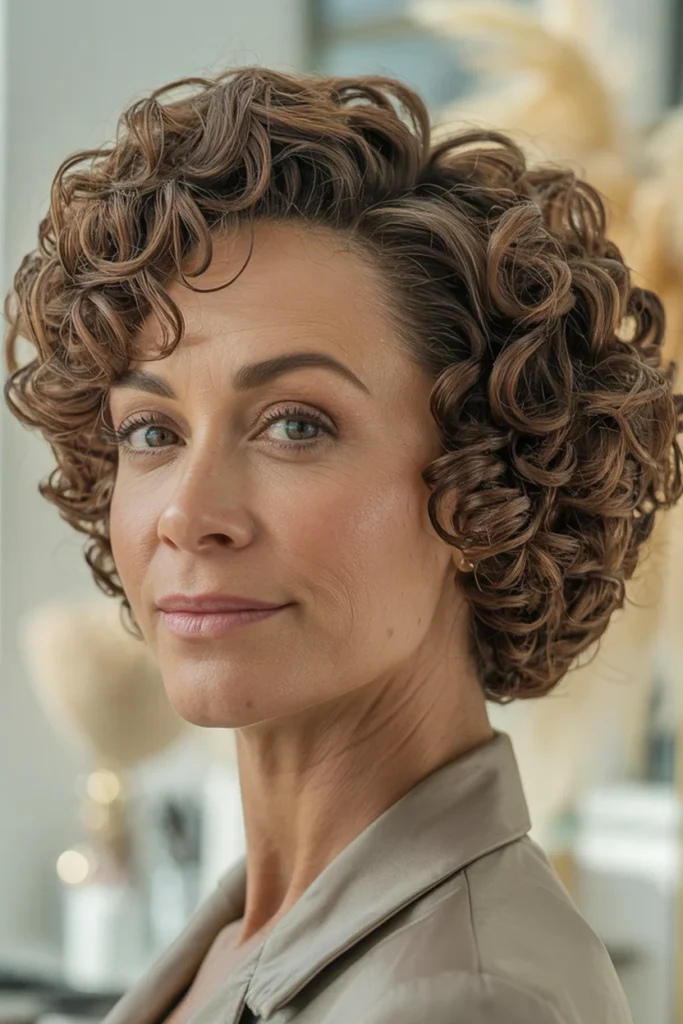
Hair Shape: Rounded silhouette with balanced volume around the crown and sides
Best Texture: Naturally curly or coily hair that holds its shape
Parting: Center, off-center, or natural part can work
Styling Level: Moderate, depending on curl definition
Finish: Soft, full, and sculpted
A rounded cut can beautifully showcase curls when the shape is balanced from every angle. The important detail is controlling excessive width at the sides while retaining enough height on top. If your hair is very dense, strategic internal shaping can help maintain the rounded form without making the perimeter too thin.
17. Face-Framing Curly Bob
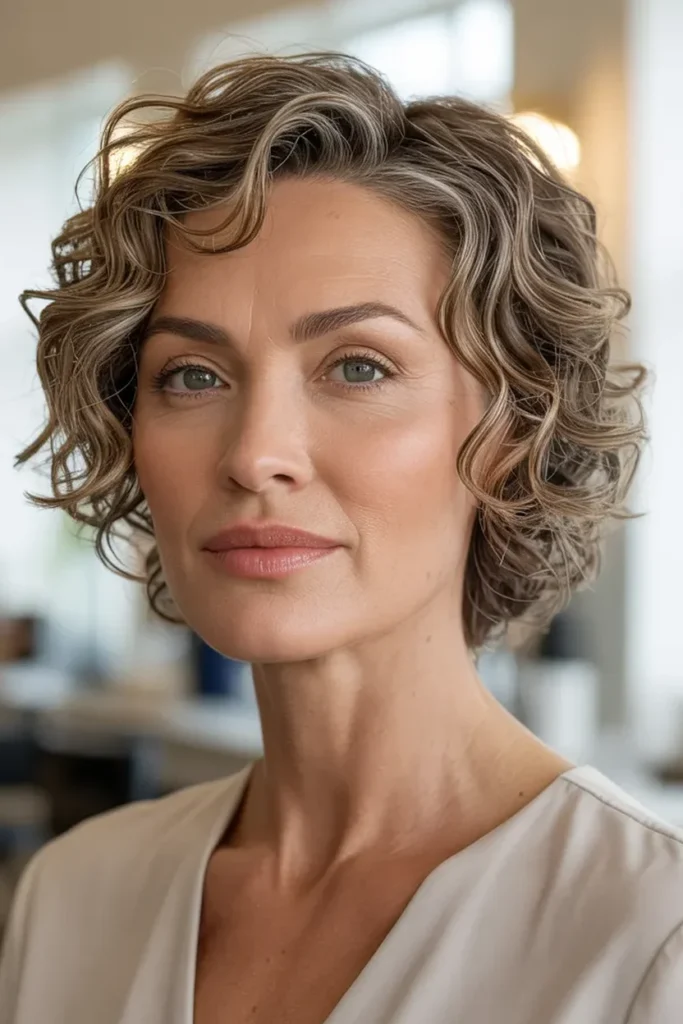
Face-framing layers bring attention toward the eyes, cheekbones, and jawline while keeping the main bob shape intact. The layers should follow the natural curl pattern rather than creating harsh steps, especially around the cheeks.
This haircut is useful when you want more movement near the face without committing to a heavily layered bob. Looser curls can be styled with a curl cream for separation, while tighter curls may need a little extra moisture to keep the shorter face-framing pieces defined. Adjusting the starting point of the layers can also change how much attention is placed around the cheekbones.
18. Tousled Short Curls
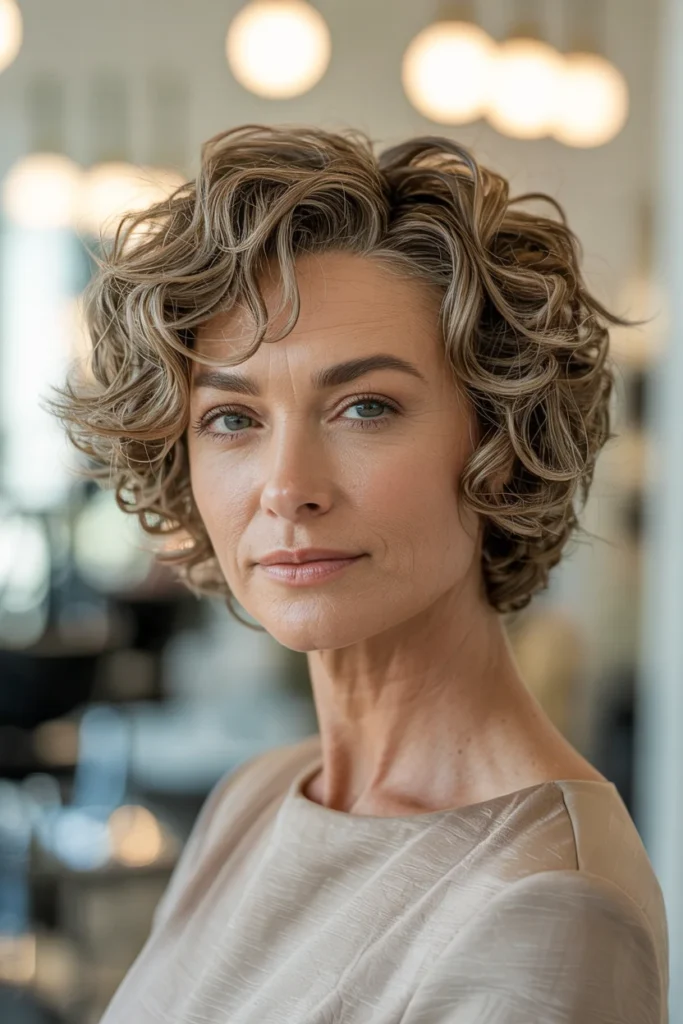
Quick Tip: For a deliberately tousled finish, use a lightweight curl mousse and scrunch the hair in different directions instead of arranging every curl into a uniform pattern. Once dry, gently loosen the roots with your fingertips.
Tousled curls give a short haircut a relaxed, lived-in character. The shape works particularly well when the haircut already contains enough layering to create movement. It can transition from everyday wear to casual evening styling with only a small amount of extra definition around the front.
19. Defined Short Ringlets
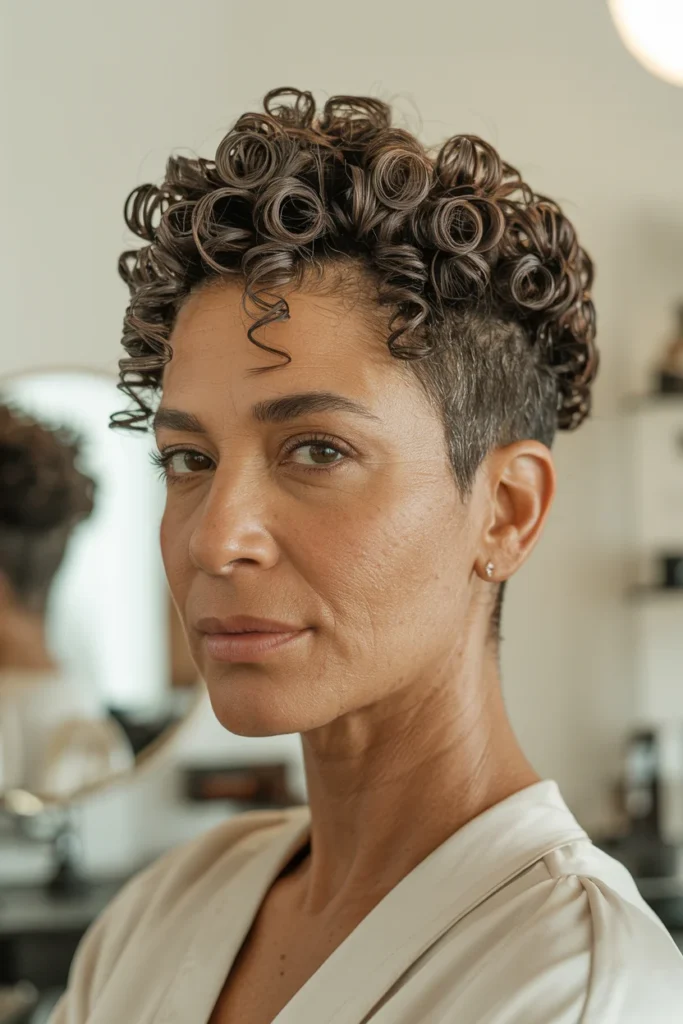
BEFORE
Loose, undefined curls can make a short haircut appear wider and less structured. Excess moisture, unsuitable products, or excessive brushing can also break apart individual curl groups.
AFTER
Defined ringlets create clearer sections throughout the haircut, making the shape look more intentional. The curls can remain soft and touchable while still having enough definition to show their natural pattern.
For better definition, apply styling product to small sections while the hair is damp. Avoid disturbing the curls until they are fully dry, then gently soften any stiffness with clean hands.
20. Deep Side-Part Curly Style
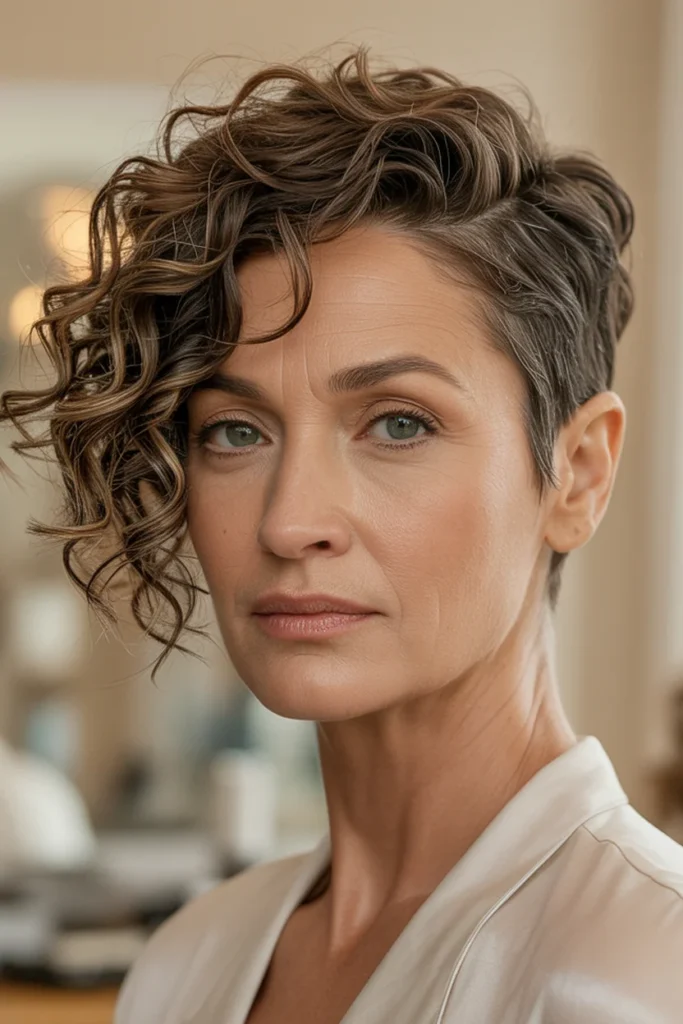
A deep side part changes the visual balance of a short curly haircut by creating more height on one side and allowing curls to cascade diagonally across the forehead. It can make a simple bob or crop feel noticeably different without changing the cut itself.
| Styling Choice | Result |
| Deep side part | More asymmetrical volume |
| Natural part | Softer, relaxed shape |
| Defined curls | More polished finish |
| Tousled curls | Casual texture |
Switching the part is also a useful way to refresh short curls between salon appointments. If your hair naturally resists the new direction, train the part while the hair is damp and use clips briefly at the roots while drying.
21. Short Curly Undercut
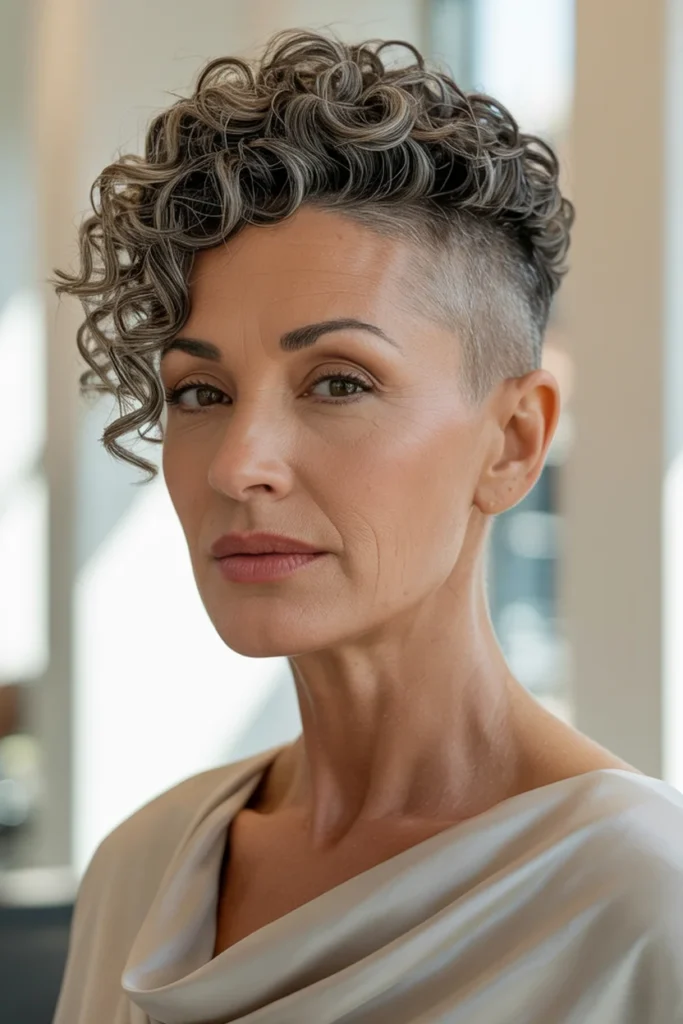
DO:
- Keep the upper curls long enough to create contrast with the shorter sides.
- Discuss how much of the undercut will be visible before cutting.
- Use the longer top section to create height and texture.
- Consider how quickly the shaved or closely clipped area grows back.
DON’T:
- Choose an extremely short undercut without considering maintenance.
- Remove too much support from the upper section.
- Ignore your natural curl direction.
- Expect the undercut to remain sharply defined without regular trims.
A curly undercut creates a strong difference between the closely cropped lower section and the textured curls above. It can reduce bulk for very dense hair while giving the haircut a distinctly modern shape. The maintenance level depends largely on how closely the undercut is clipped.
22. Soft Curly Bob for Women Over 40
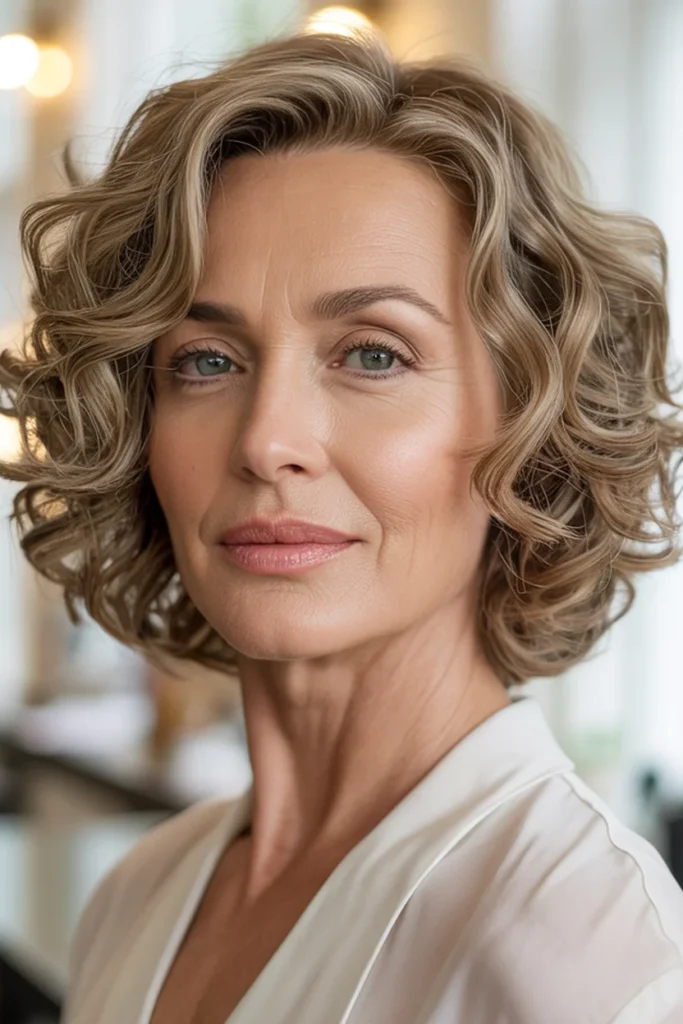
Length: Jawline to upper neck
Texture: Soft curls with moderate definition
Volume: Balanced rather than highly lifted
Finish: Natural and touchable
Maintenance: Moderate, with periodic shaping
The appeal of a soft curly bob comes from its controlled shape without looking overly rigid. A moisturizing curl cream can help maintain separation while keeping the curls flexible. If your hair is prone to dryness, prioritize conditioning and limit unnecessary heat styling so the shorter curls retain their natural movement.
23. Wispy Bangs with Short Curls
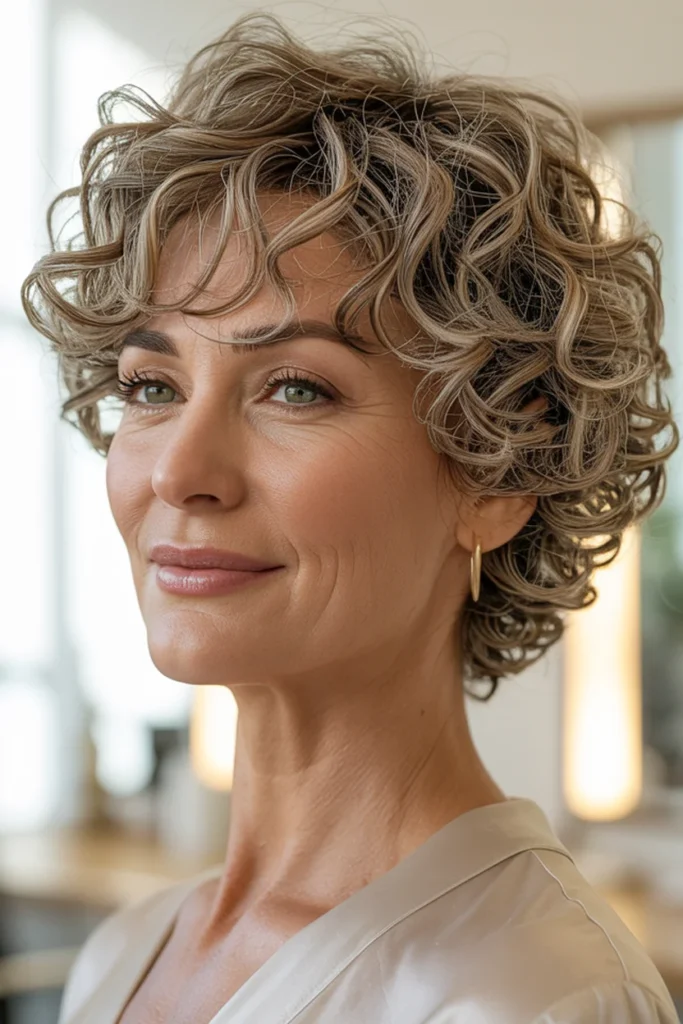
Wispy bangs create a lighter alternative to a full curly fringe. Instead of forming a dense block across the forehead, the shorter curls are separated into soft, airy sections. This can work particularly well when you want some forehead coverage without making the front of the haircut feel heavy.
The bangs should be cut with your natural curl shrinkage in mind. Keep a small amount of styling product nearby for quick morning refreshes, especially if the fringe becomes flattened overnight. Because bangs grow out visibly, regular trims can help preserve their delicate shape.
How to Choose the Right Short Curly Hairstyle After 40
Choosing a short curly haircut is easier when you consider how your hair behaves naturally rather than selecting a style based only on a photograph.
Start with your curl pattern. Loose waves and curls may need more layering to create visible movement, while tighter curls can produce plenty of volume without extensive layering.
Consider density. Fine hair often benefits from preserving weight at the ends, while thick hair may need strategic internal shaping to reduce excess bulk.
Think about your face shape. The position of layers and volume can change the visual balance of a haircut. Height at the crown, width at the sides, and face-framing pieces can all be adjusted to complement your features.
Factor in maintenance. Pixies, undercuts, and short bangs generally require more frequent shaping to retain their intended form. A curly bob may offer a little more flexibility as it grows.
Consider your daily routine. If you prefer air-drying, choose a cut that already works with your natural curl pattern. If you enjoy diffusing and defining your curls, you have more flexibility with layered shapes and textured styles.
Account for shrinkage. Curly hair can appear considerably shorter once dry. A stylist should consider the natural spring of your curls before deciding the final length.
Tips for Styling Short Curly Hair
- Style while damp: Applying products while curls are still damp can help encourage better curl grouping and reduce unnecessary frizz.
- Choose products according to density: Fine curls often respond well to lightweight mousse or foam, while denser curls may need a moisturizing cream.
- Avoid excessive brushing: Brushing dry curls can separate the curl pattern and create a puffier finish.
- Diffuse gently: Low to moderate heat and airflow can help dry curls while maintaining their shape.
- Protect against heat: If you regularly use a diffuser or other heated tool, use an appropriate heat-protective product.
- Refresh instead of restyling: On non-wash days, mist curls lightly with water and add a small amount of styling product where definition has been lost.
- Watch humidity: Moisture in the air can encourage curls to expand and frizz. A suitable anti-frizz product can help maintain definition.
- Keep bangs maintained: Curly bangs can change shape noticeably as they grow, so regular trims are useful when the fringe is an important part of the haircut.
- Sleep thoughtfully: A loose pineapple, satin pillowcase, or other curl-friendly routine can help reduce overnight friction and preserve definition.
- Trim according to your shape: Short curly cuts can lose their silhouette as they grow, particularly around the neckline, sides, and fringe.
Conclusion
The right short curly haircut can make natural texture easier to manage while giving your overall look plenty of personality. From a classic bob and soft French bob to a curly pixie, shag, crop, or defined ringlets, these 23 short curly hairstyles for women over 40 offer different approaches to length, volume, layering, and styling.
Focus on your curl pattern, hair density, face shape, preferred maintenance level, and everyday routine before choosing a cut. A good haircut should work with the way your curls naturally move. Save this article on Pinterest for your next salon visit, then use your favorite ideas as visual references when discussing the shape and styling details with your hairstylist.
FAQs
Are short curly hairstyles good for women over 40?
Yes. Short curly cuts can work across many ages because the shape can be adjusted to suit different curl patterns, densities, face shapes, and maintenance preferences. Bobs, pixies, shags, and crops all offer different levels of length and styling commitment.
What is the easiest short curly hairstyle to maintain?
A simple curly bob or short crop can be relatively straightforward to style, particularly when the cut follows your natural curl pattern. Your individual curl density and styling routine will determine how much daily work is required.
Is short curly hair suitable for fine hair?
Yes, but the haircut should be designed to preserve density. Too many layers or excessive thinning can make fine curls look less full. A shorter length can help prevent the curls from being weighed down.
What short curly haircut works well for thick hair?
Layered bobs, short shags, and carefully shaped crops can all work with thick curls. The important consideration is managing weight strategically so the hair has movement without becoming excessively bulky.
Should curly bangs be cut wet or dry?
Curly hair can shrink as it dries, so many stylists consider the natural curl pattern and expected dry length when shaping bangs. The exact cutting method depends on the curl type, density, and stylist’s technique.
How can I make short curly hair look more defined?
Apply a suitable curl product to damp hair, encourage curl groups by scrunching, and avoid disturbing the hair while it dries. Once completely dry, gently separate or soften the curls with your fingertips if needed.
How often should short curly hair be trimmed?
The timing depends on the haircut. Short pixies, undercuts, and bangs generally need more frequent shaping, while a curly bob can often grow out for longer before its overall silhouette changes significantly. Your preferred length and shape should guide the schedule.