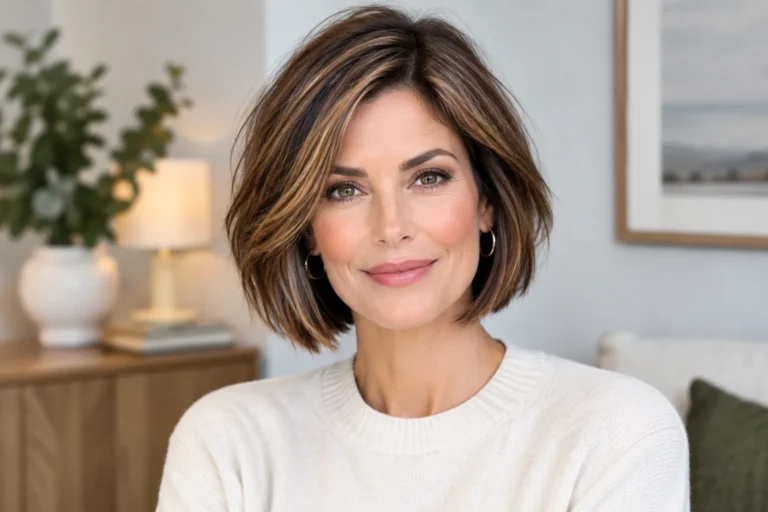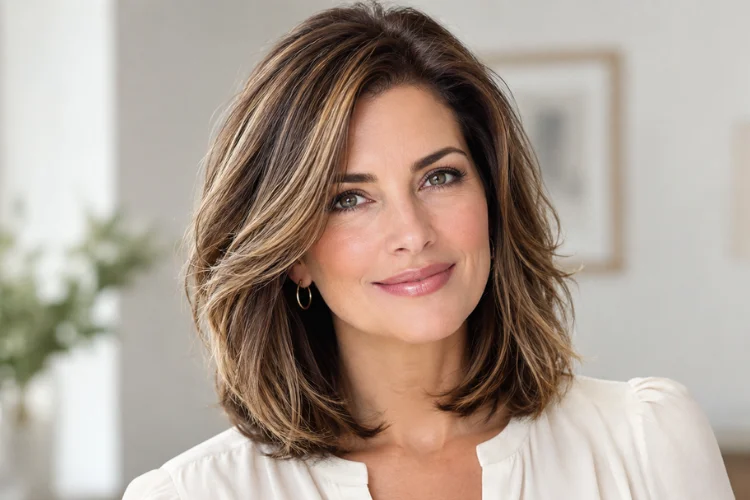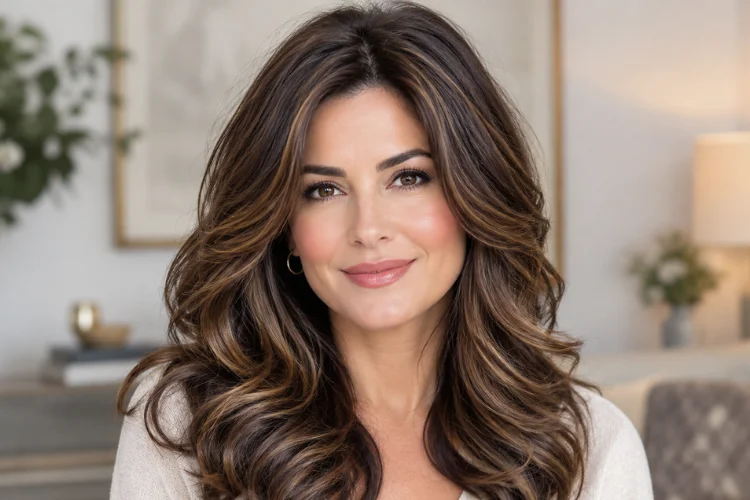
25 Stunning Hairstyles for Thick Hair for Women Over 40
Hairstyles for Thick Hair for Women Over 40 can be both stylish and practical when the cut works with your natural density instead of fighting against it. Thick hair offers plenty of volume, but too much weight can sometimes make a haircut feel bulky, difficult to style, or wider around the sides.
The right combination of layers, length, texture, and face-framing pieces can make thick hair easier to manage while keeping its natural fullness. From polished bobs and shoulder-length cuts to textured pixies, soft shags, and long layered styles, there are plenty of options for different hair textures and lifestyles.
Below are 25 wearable ideas, along with practical styling details to help you choose a cut that suits your hair density, face shape, preferred maintenance level, and everyday routine.
1. Soft Layered Bob
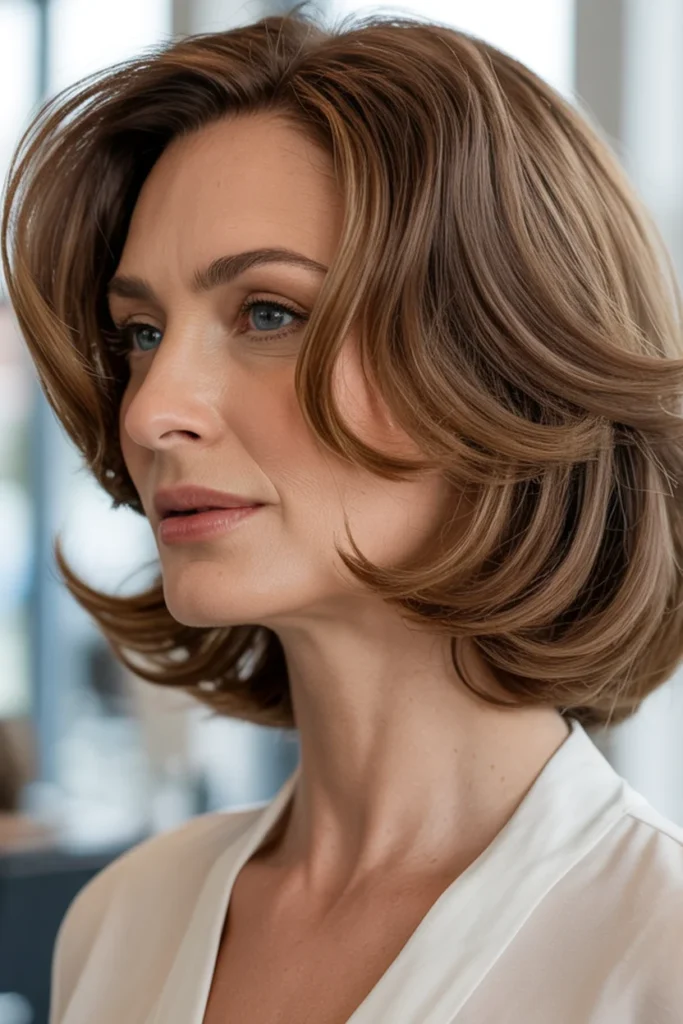
A layered bob gives thick hair a lighter, more controlled shape without removing its natural character. The cut typically sits around the chin or just above the shoulders, with graduated or blended layers through the interior. Face-framing pieces can soften the outline while subtle movement keeps the ends from looking overly heavy.
This shape works particularly well for straight, wavy, or moderately textured hair. Ask for internal weight removal rather than extremely short layers if your hair tends to expand at the sides. A smooth blowout creates a polished finish, while loose waves bring out the layers for a more relaxed everyday style.
2. Shoulder-Length Layered Cut
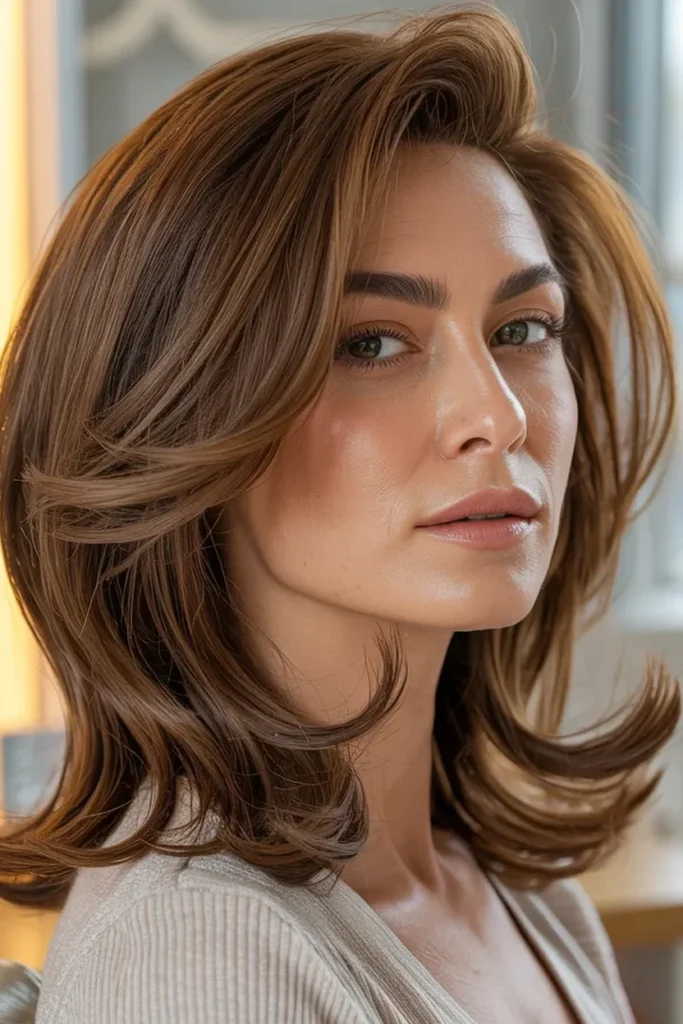
- Length: Around the shoulders or slightly below.
- Layers: Medium layers through the mid-lengths help distribute thickness.
- Texture: Works well with straight, wavy, and softly curly hair.
- Styling: A round brush can create movement without making the ends overly rounded.
- Maintenance: Regular trims help keep the layers balanced as the hair grows.
Keeping thick hair around shoulder length gives you enough weight for a controlled silhouette while still allowing movement. Blow-drying the roots upward and directing the ends slightly inward can create a neat finish. For casual days, natural waves can be left loose, making this a practical choice for women who want flexibility.
3. Long Bob With Soft Layers
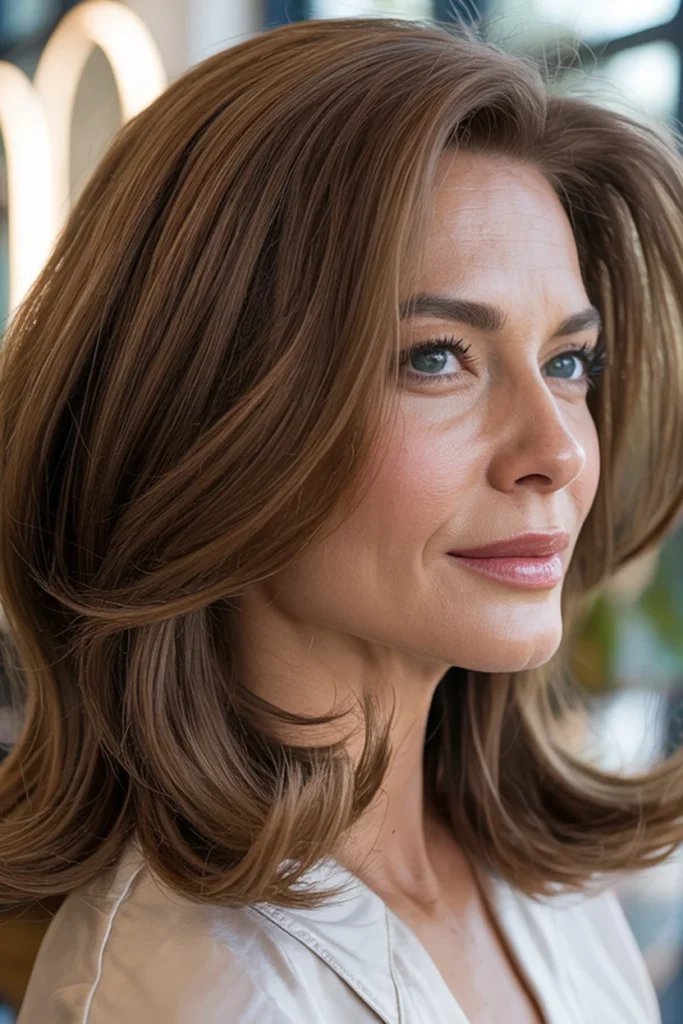
Quick Tip: Ask your stylist to keep the longest layer close to the perimeter while adding softer internal layers. This preserves the fullness at the ends without leaving the entire haircut feeling dense. When styling, lift the roots with a brush and bend the mid-lengths slightly away from the face.
A long bob, or lob, usually falls between the chin and collarbone. On thick hair, soft layering prevents this length from becoming visually heavy. The style can be worn straight for a cleaner appearance or shaped into loose waves for added movement. It is also long enough for a low ponytail on busy mornings.
4. Textured Pixie Cut
BEFORE
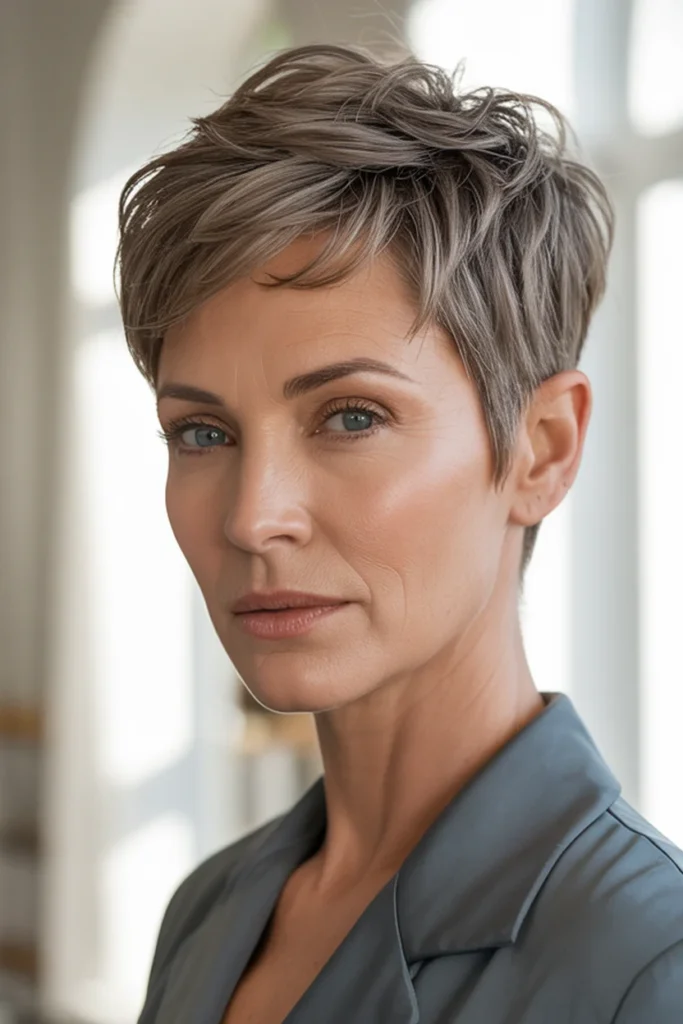
Thick short hair can sometimes sit heavily around the crown and sides when it lacks internal shaping. Without enough texture, a short cut may appear wider than intended and require extra styling to control the silhouette.
AFTER
A textured pixie uses shorter layers and carefully shaped sections to distribute bulk. The crown can retain controlled height while the sides remain neat. Choppy texture around the top adds definition and makes the haircut feel lighter without sacrificing the natural density of thick hair.
For styling, apply a small amount of lightweight texturizing cream to damp hair and shape the layers with your fingers. Avoid using too much product, especially near the roots, because dense hair can quickly look weighed down.
5. Chin-Length Bob
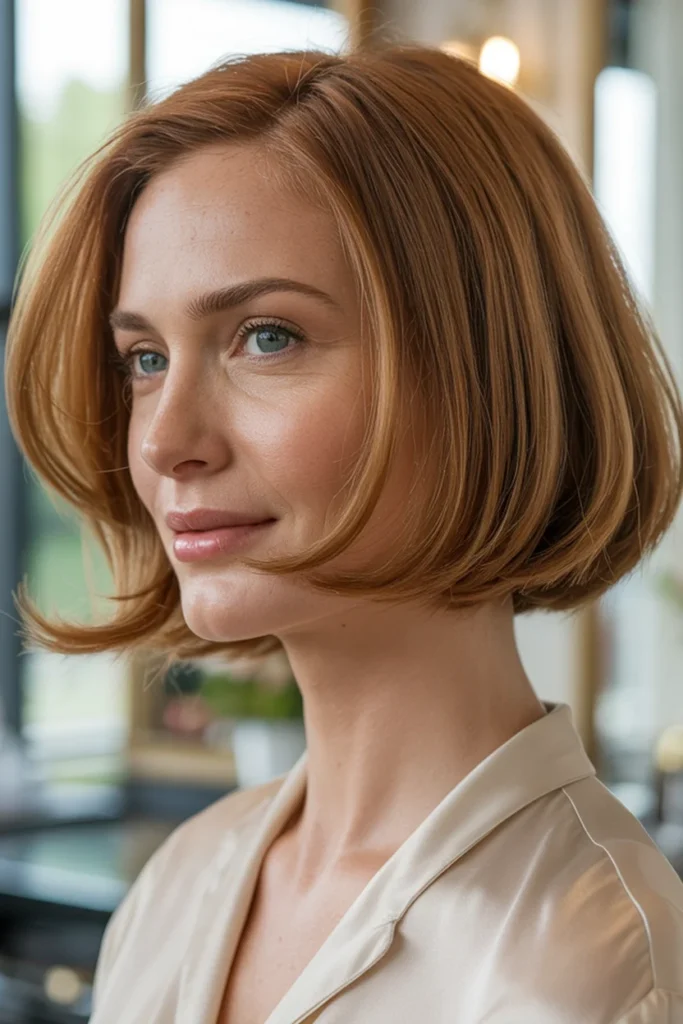
Styling Steps
- Prepare the hair: Apply heat protectant to damp hair, especially if you plan to use a blow dryer or flat iron.
- Create your part: A center part gives the bob a symmetrical appearance, while a side part adds softer movement.
- Smooth the shape: Use a medium round brush to direct the ends underneath or slightly outward.
- Refine the finish: Use a small amount of smoothing cream on the ends to control flyaways.
- Add movement: For a softer result, create a few loose bends through the front sections.
A chin-length bob makes thick hair look structured and polished while keeping the overall length short enough for manageable styling. It can suit straight hair particularly well, while naturally wavy hair can give the cut a more relaxed finish. A slightly longer front section can also provide gentle face framing.
6. Side-Swept Layers
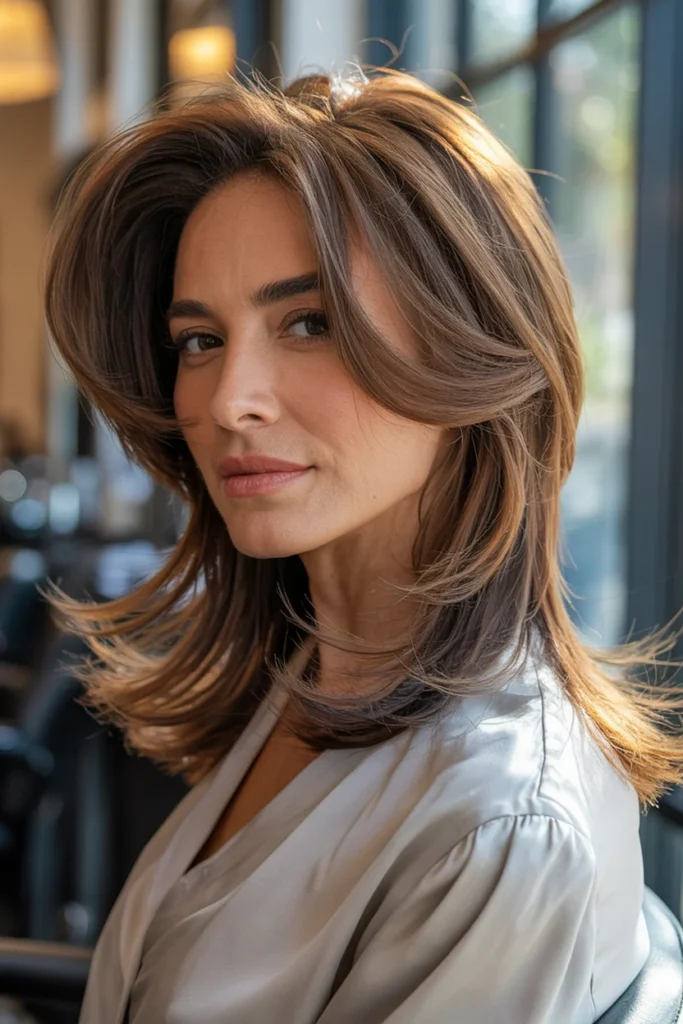
| Feature | Soft Side Sweep | Defined Side Sweep |
| Parting | Deep or moderate side part | Clearly defined side part |
| Texture | Loose and natural | Smooth and polished |
| Volume | Moderate crown lift | More noticeable root volume |
| Best Setting | Everyday wear | Dinners and formal occasions |
Side-swept layers can be adapted according to how much movement you want around the face. A softer version works nicely with naturally wavy hair, while a smoother finish can look polished for an evening event. Keeping the shorter front layers long enough to blend into the rest of the haircut helps the style grow out gracefully.
7. Feathered Shoulder-Length Hair
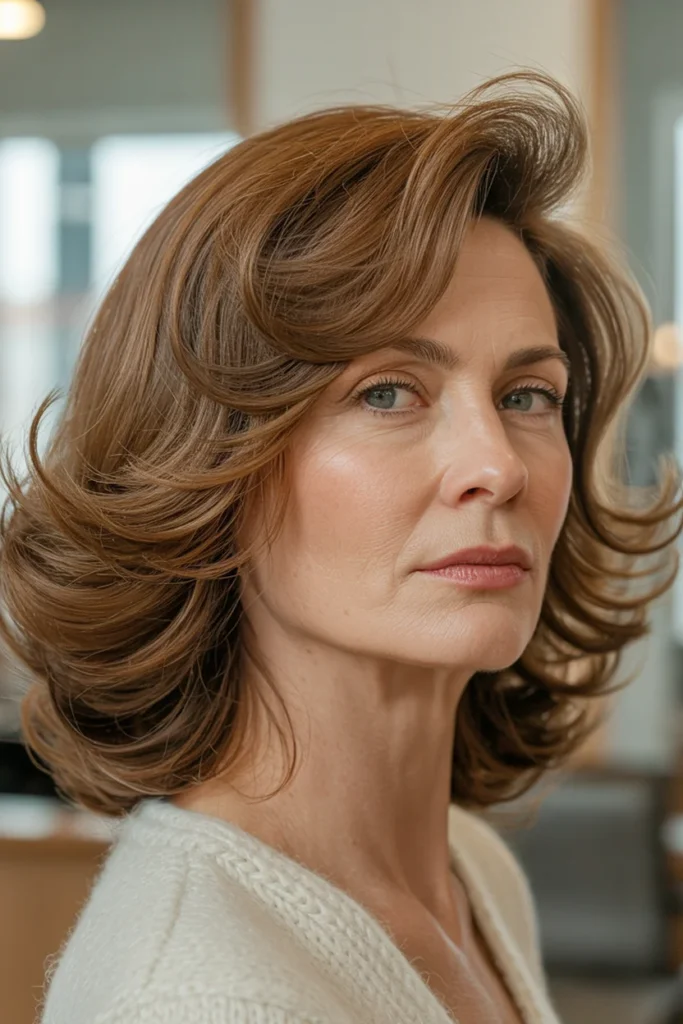
DO
- Keep the shortest feathered pieces around the cheekbones or jawline.
- Direct the ends outward with a round brush for a classic feathered effect.
- Use lightweight mousse when you want additional movement.
- Keep the perimeter slightly longer so thick hair retains a balanced shape.
DON’T
- Create too many short layers throughout very dense hair.
- Apply heavy oils at the roots before styling.
- Overuse a flat iron, especially on already dry ends.
- Make every layer the same length, which can reduce the feathered effect.
The main principle is controlled movement. Feathered layers help distribute thick hair while giving the ends a softer appearance. The shoulder-length perimeter provides structure, while the feathered sections around the face create direction and movement. This combination can work particularly well for women who want a classic cut with a lighter visual finish.
8. Long Layers With Face-Framing Pieces
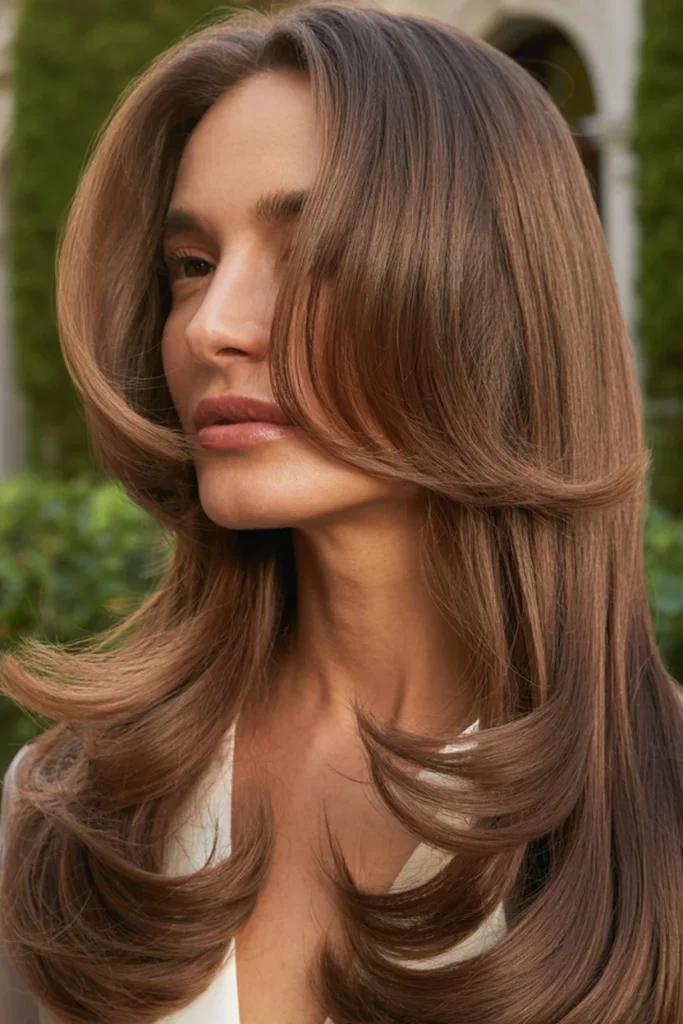
Hair Length: Long, usually below the shoulders
Layer Placement: Mostly through the lower lengths and around the face
Texture: Straight, wavy, or softly curly
Styling Time: Moderate, depending on length and density
Long thick hair does not always need dramatic layering. Carefully placed face-framing pieces can remove visual heaviness around the front while keeping plenty of length behind the shoulders. For a polished finish, use a large round brush around the front sections and allow the longer layers to fall naturally. This cut also works well with a simple ponytail.
9. Shaggy Bob
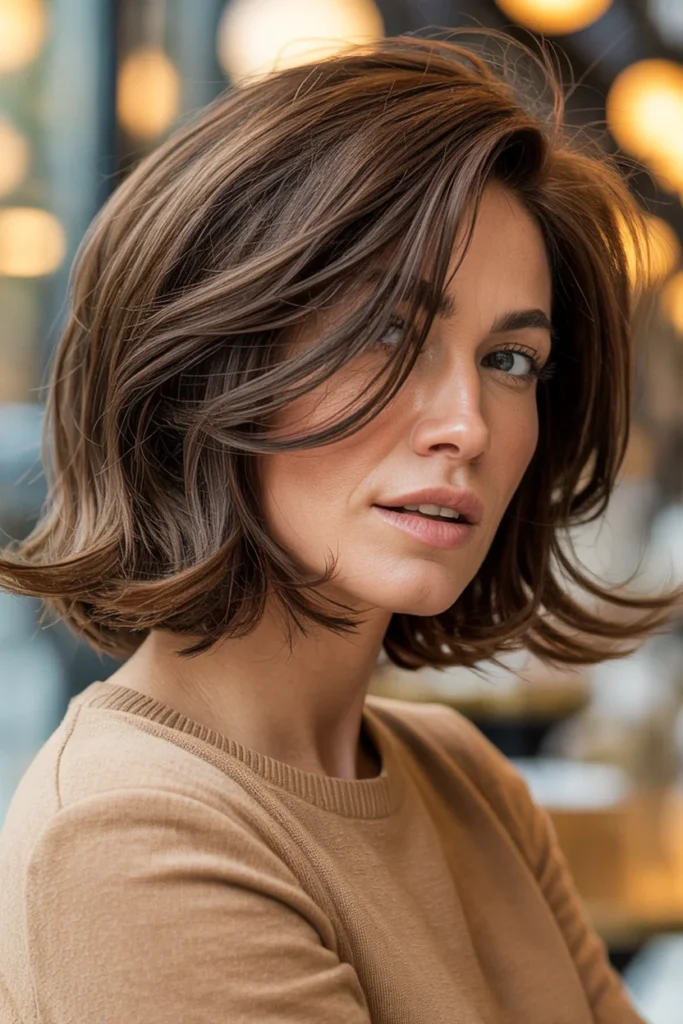
A shaggy bob brings movement into dense hair through uneven, textured layers rather than a completely uniform shape. The ends can be slightly piecey, while the crown receives enough texture to prevent the haircut from appearing heavy. Curtain-style fringe or soft face-framing layers can complement the shaggy outline.
For naturally wavy hair, scrunch a lightweight styling cream through damp lengths and allow the texture to develop as the hair dries. Straight thick hair may benefit from a few loose bends created with a curling iron. The result should look intentionally textured rather than overly styled.
10. Wavy Lob
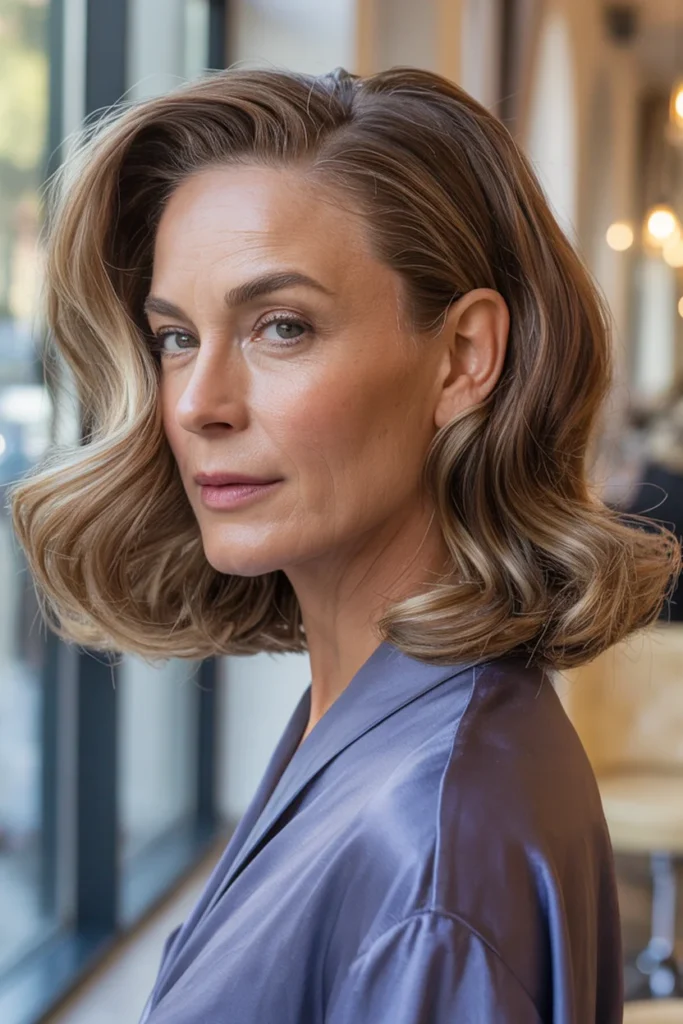
Quick Tip: Start with a lightweight mousse on damp hair, then create loose bends rather than tight curls. Alternate the direction of a few waves so the finished lob has natural-looking movement. Leave the last inch of the ends slightly straighter to prevent the style from becoming too rounded.
A wavy lob gives thick hair enough length to balance its density while allowing waves to distribute volume. A center part creates a balanced appearance, while a side part can add more height at the crown. For women with naturally wavy hair, this style can require relatively little daily shaping.
11. Classic Blunt Bob
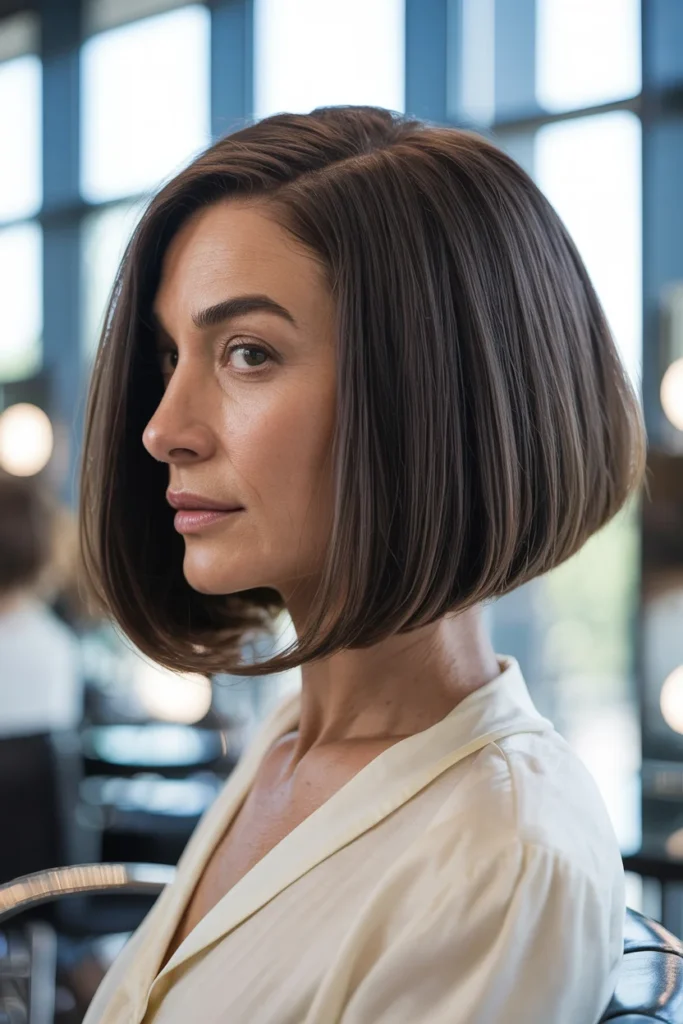
BEFORE
Very thick hair with a one-length shape can sometimes create excessive fullness around the sides, particularly when the hair is cut too short.
AFTER
A carefully tailored blunt bob creates a strong, clean perimeter. The ends appear deliberately shaped, while subtle internal weight removal can help prevent unwanted bulk without taking away the defining blunt line.
Ask your stylist to consider your natural hair texture before choosing the exact length. Straight hair tends to show the crisp perimeter clearly, while wavy hair creates a softer interpretation of the same cut. A smooth finish emphasizes the graphic shape.
12. Layered Hair With Curtain Bangs
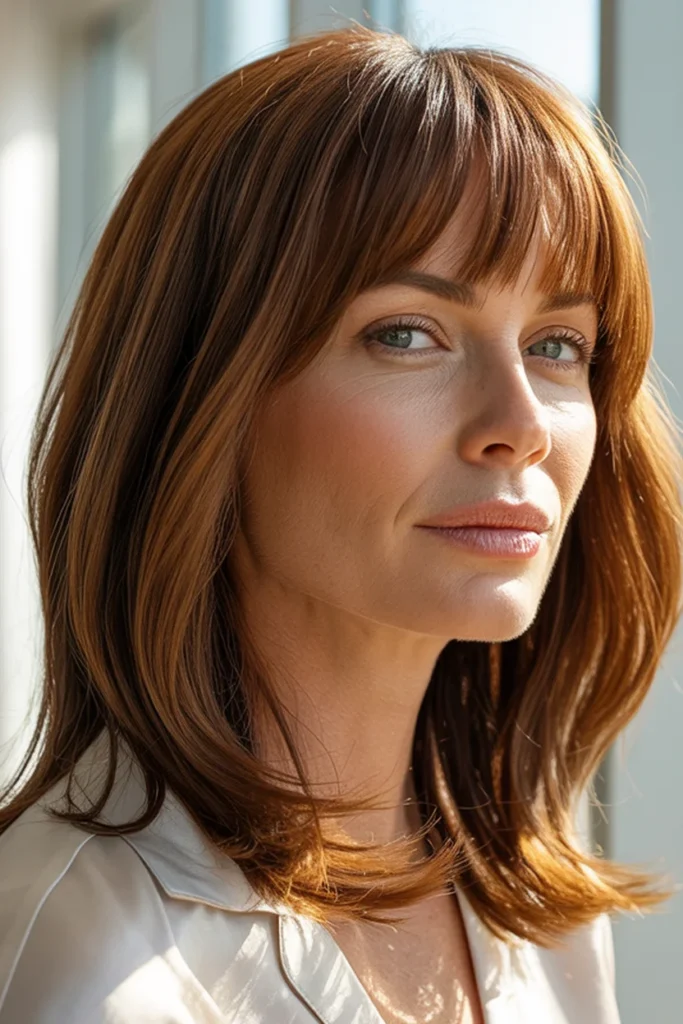
Styling Steps
- Separate the fringe: Divide the bangs from the remaining hair and keep the sections slightly wider toward the temples.
- Dry the roots: Use a round brush to direct each side away from the center.
- Shape the layers: Blow-dry the surrounding face-framing pieces in the same outward direction.
- Blend the finish: Use your fingers to soften the transition between bangs and longer layers.
- Set lightly: Finish with a flexible hairspray if your bangs tend to fall forward.
Curtain bangs can make thick layered hair feel more open around the face. They are especially useful when you want fringe without the compact appearance of a heavy straight-across bang. Because bangs grow out quickly, regular trims are helpful, but the longer curtain shape can transition into face-framing layers relatively naturally.
13. Soft Feathered Pixie
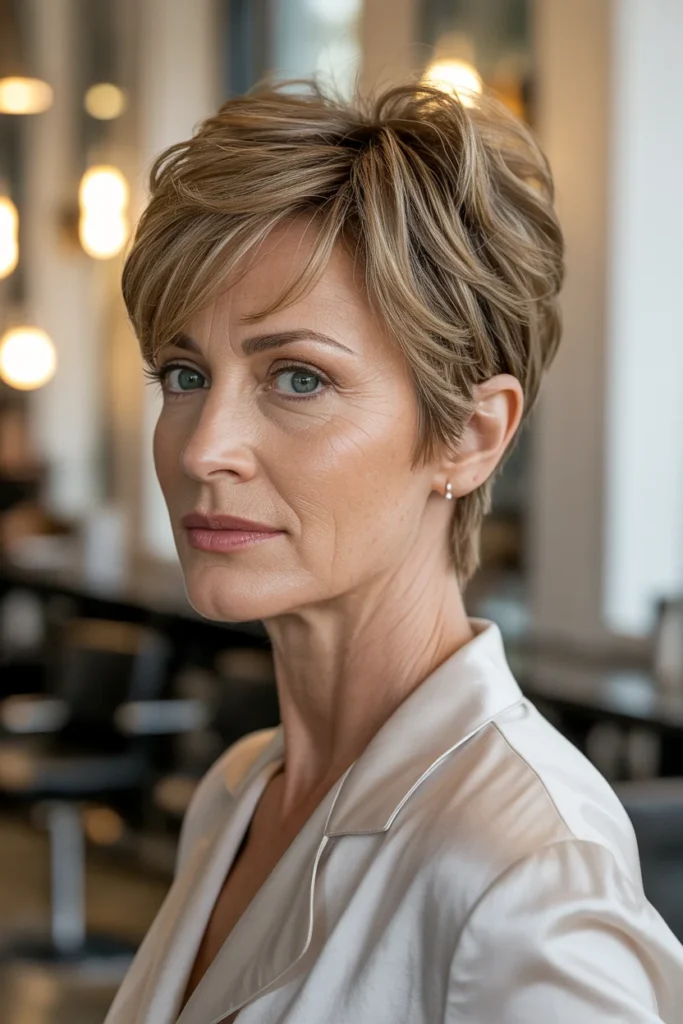
| Feature | Natural Finish | Polished Finish |
| Texture | Finger-shaped layers | Smoothly defined layers |
| Volume | Light crown lift | More controlled crown volume |
| Styling Tool | Fingers or diffuser | Small round brush |
| Best For | Casual everyday wear | Work or evening styling |
A feathered pixie can be adjusted to match different textures and styling habits. A natural finish emphasizes the softness of the layers, while a polished finish creates a more structured silhouette. Thick hair gives the pixie plenty of material for shaping, although the stylist may need to remove internal weight to keep the sides from becoming too full.
14. Medium-Length Hair With Side Bangs
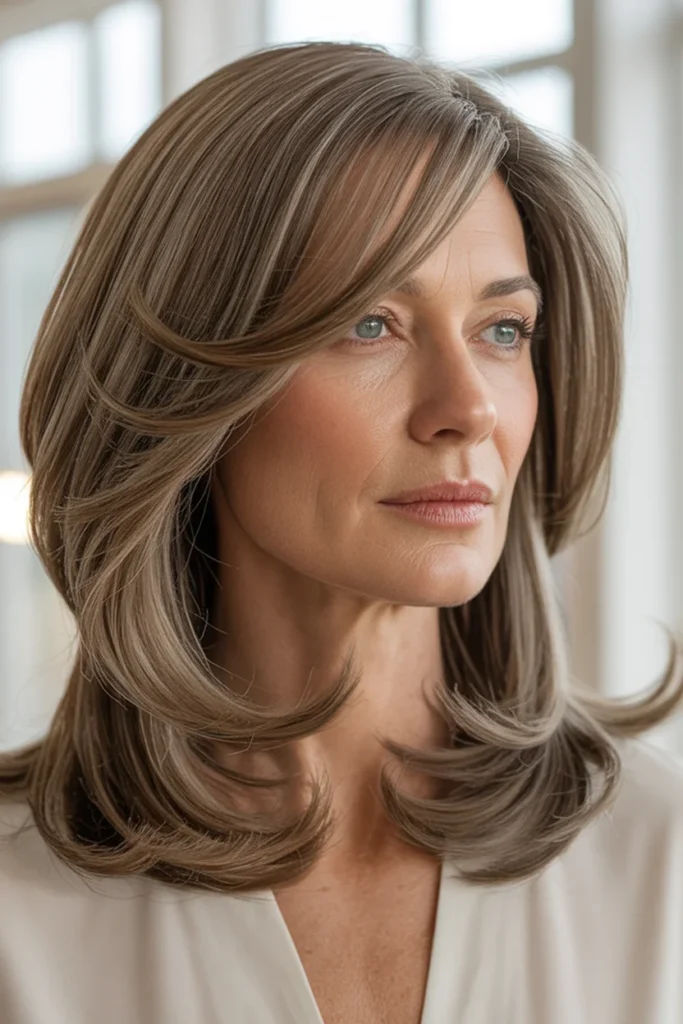
DO
- Keep the side bang longer toward the cheekbone or jaw.
- Blend the fringe gradually into the surrounding layers.
- Use a round brush to sweep the bangs away from the face.
- Add volume at the crown rather than concentrating fullness beside the cheeks.
DON’T
- Cut the fringe too thick if your hair already has substantial density.
- Flatten the crown completely when the sides are full.
- Use excessive styling product near the bang roots.
- Create an abrupt transition between the bangs and layers.
Side bangs provide a flexible way to change the appearance of medium-length thick hair without committing to a full fringe. The sweeping direction creates movement across the forehead, while the surrounding layers help the bangs blend into the haircut. This style can be especially convenient when you want fringe that can be moved aside.
15. Choppy Layered Bob
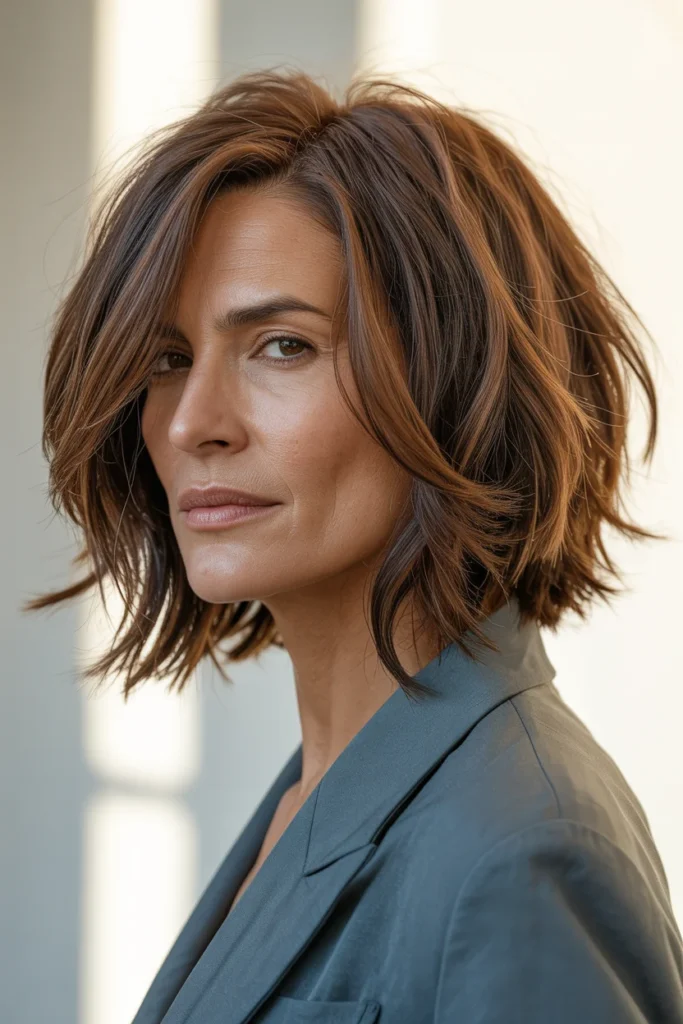
Quick Tip: Ask for texture mainly through the interior and mid-lengths rather than removing too much from the perimeter. This keeps the bob substantial while allowing individual pieces to move. A small amount of matte styling cream can separate the layers without making thick hair feel greasy.
The choppy bob has a more relaxed appearance than a perfectly polished bob. Shorter pieces create visible separation, while the thicker perimeter keeps the haircut from looking thin. It works especially well with slightly wavy or straight hair, and the texture can be emphasized with fingers instead of a precise blowout.
16. Long Wavy Layers
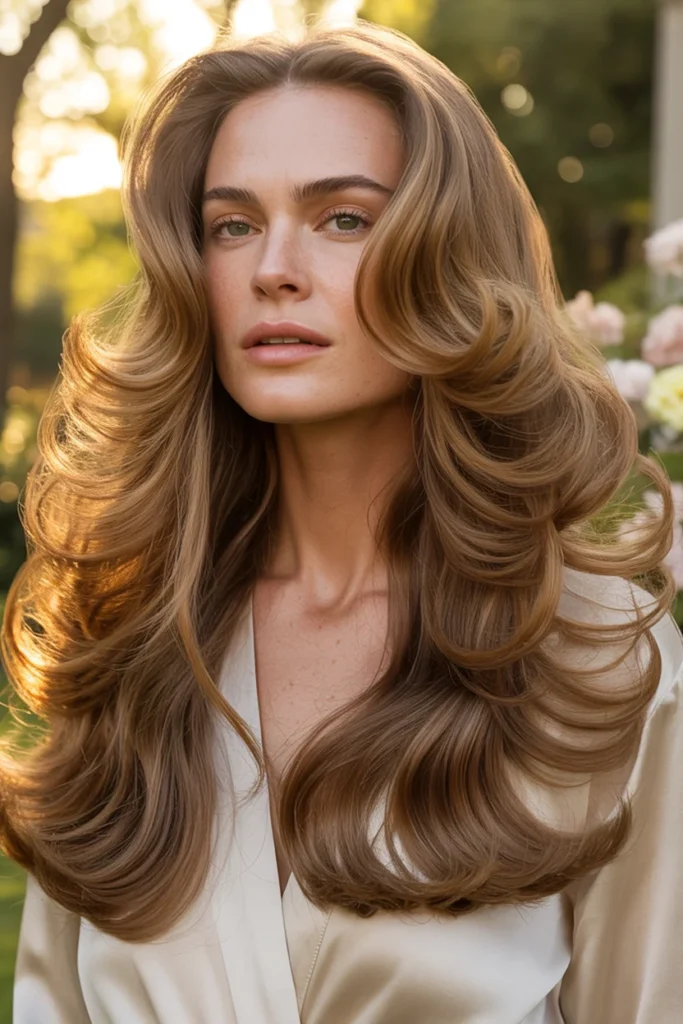
BEFORE
Long, dense hair can sometimes feel heavy from the crown through the ends, especially when it is cut at one length. Waves may also lose their shape when there is too much weight pulling downward.
AFTER
Long layers distribute some of that weight and give waves room to form. The upper layers remain long enough to blend naturally, while face-framing sections create direction around the front.
To maintain the shape, apply a lightweight curl-enhancing product to damp hair and avoid brushing through the waves once they begin drying. A diffuser can help preserve natural texture without flattening the roots.
17. Collarbone-Length Haircut
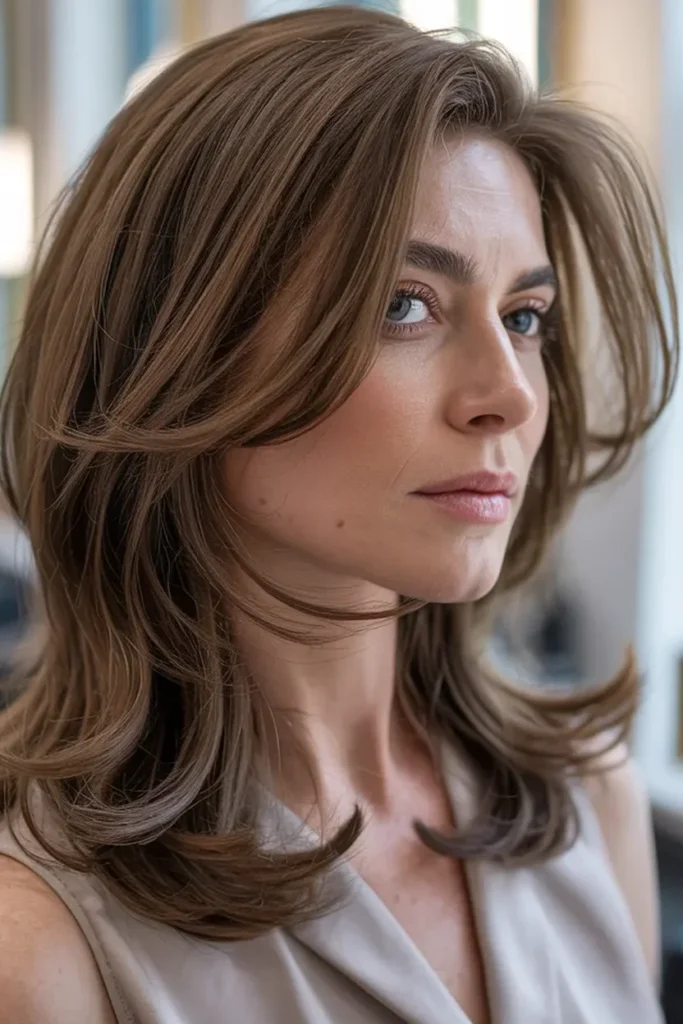
Quick Facts
Hair Length: At or slightly below the collarbone
Best Texture: Straight, wavy, or loose curls
Shape: Balanced with subtle long layers
Maintenance: Moderate, with regular perimeter trims
Collarbone length is a useful middle ground for thick hair because it provides enough weight to keep the shape controlled without the commitment of very long hair. Soft face-framing pieces can prevent the front from feeling dense. Wear it smooth for a refined look or add loose waves for extra movement.
18. Angled Bob
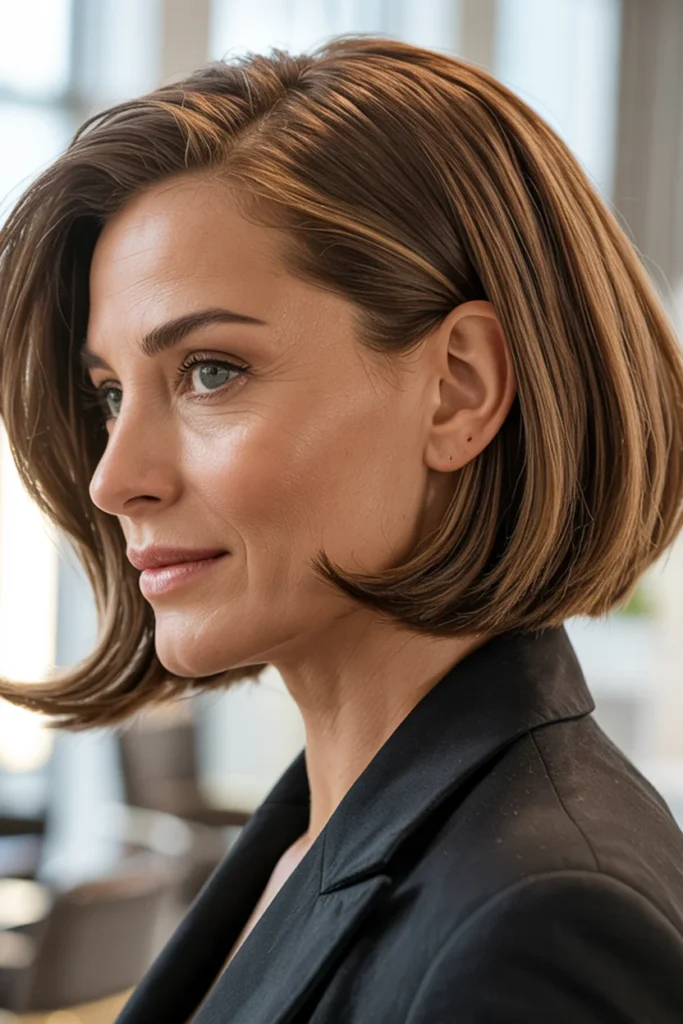
Styling Details
- Front length: Slightly longer than the back to create the angled outline.
- Back shape: Carefully graduated to keep thick hair from forming a heavy shelf.
- Texture: Smooth styling emphasizes the angle, while waves soften it.
- Parting: A side part can make the front appear more sweeping.
- Maintenance: The angle is most noticeable when the perimeter is trimmed regularly.
An angled bob gives thick hair a clearly defined direction. The longer front creates face-framing length, while the shorter back removes some weight from the neckline. For a sleek finish, blow-dry the hair downward with a paddle brush. For a softer look, introduce gentle bends through the longer front pieces.
19. Layered Hair With Wispy Bangs
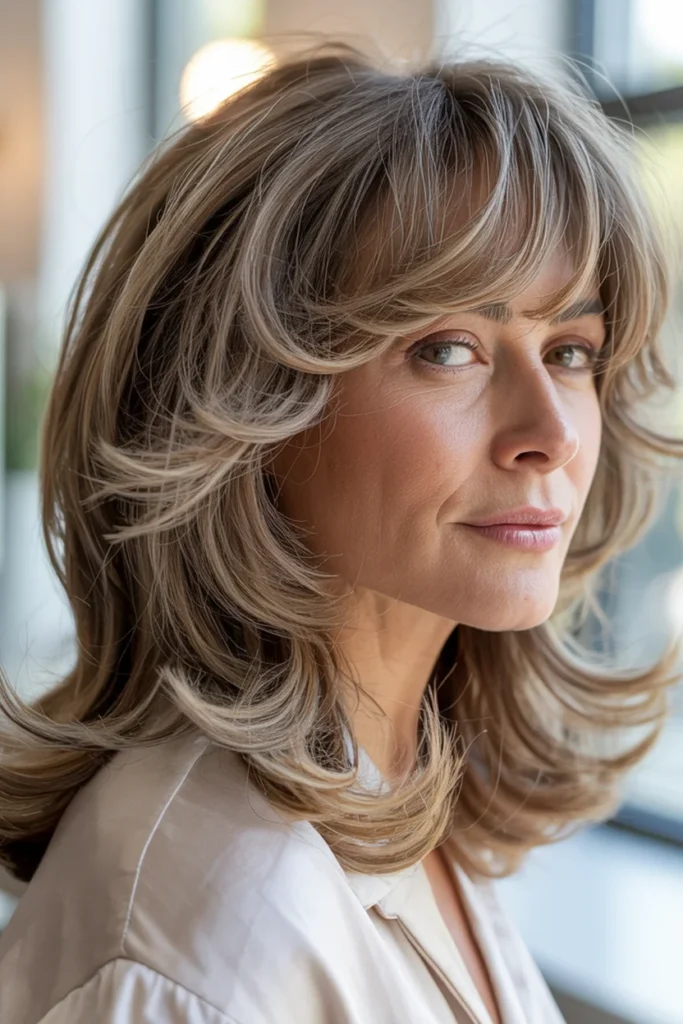
DO
- Keep wispy bangs light and separated rather than cutting a dense block.
- Blend the outer bang sections into face-framing layers.
- Use a small round brush for gentle movement.
- Apply only a small amount of flexible styling product.
DON’T
- Overload the fringe with wax or heavy creams.
- Cut the shortest pieces too close to the eyebrows without considering growth.
- Use high heat repeatedly on delicate bang ends.
- Remove excessive weight from the entire haircut just to lighten the fringe.
Wispy bangs offer a softer alternative to heavier fringe for thick hair. Their lighter density allows some forehead visibility and can make the overall haircut feel less visually crowded. The surrounding layers are important because they create a gradual transition from the shorter fringe into the rest of the hairstyle.
20. Voluminous Shoulder-Length Cut
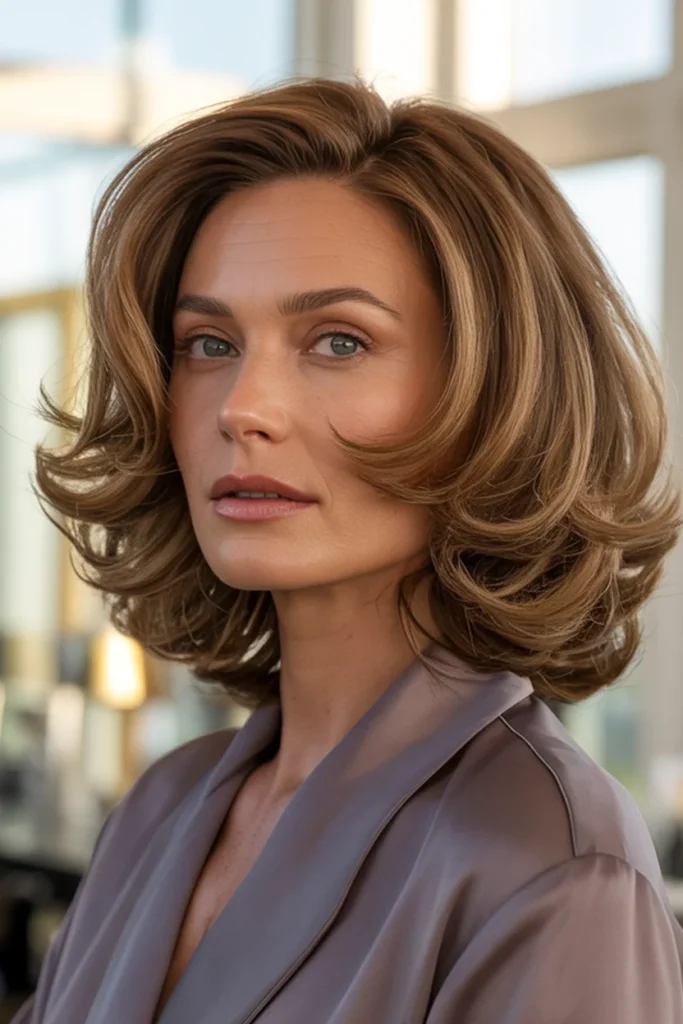
Hair Length: Shoulder length
Volume: Full through the crown and mid-lengths
Best Texture: Straight to wavy
Styling Time: Around 10 to 20 minutes depending on density
Result: Full, shaped, and controlled
Rather than trying to flatten thick hair, this haircut works with its natural fullness. Soft layers prevent the volume from becoming one solid mass, while a shaped perimeter keeps the ends tidy. For extra lift, blow-dry the roots in the opposite direction from the final part and then gently settle them into place.
21. Textured Lob With Side Part
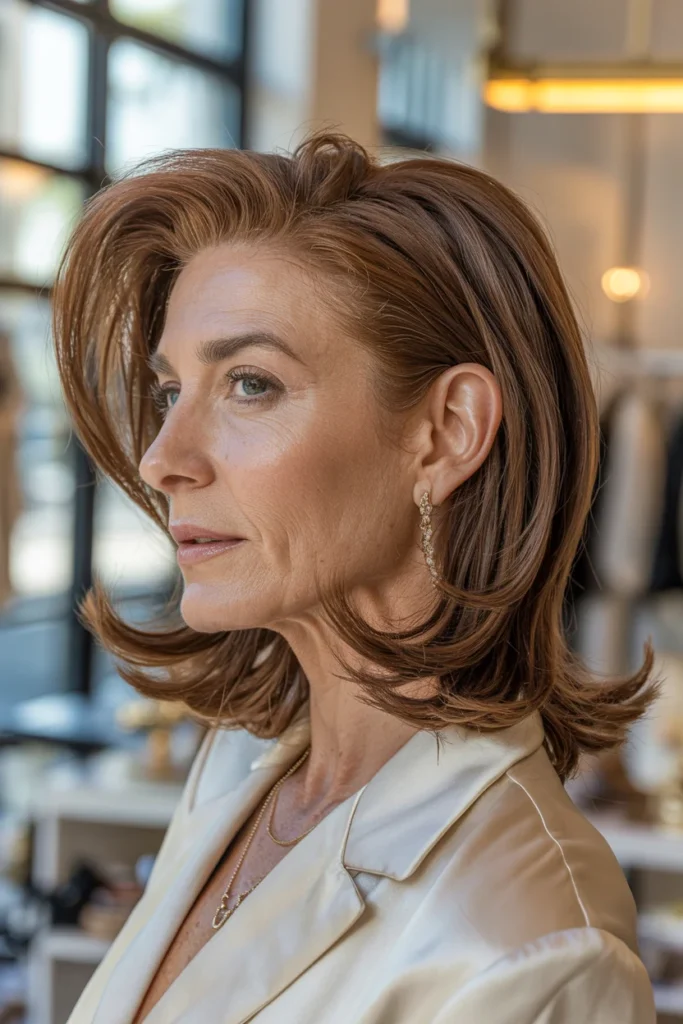
Soft Finish vs. Sleek Finish
| Feature | Textured Finish | Sleek Finish |
| Surface | Loose bends and separation | Smooth and polished |
| Volume | Moderate | Lower at the sides |
| Part | Relaxed side part | Defined side part |
| Occasion | Everyday and casual | Office or evening |
The same textured lob can look quite different depending on the finishing technique. Loose bends highlight the layers and create movement, while a smoother finish emphasizes the shape of the cut. A side part can also be adjusted slightly higher or lower to change where the hair naturally gains volume.
22. Face-Framing Layers
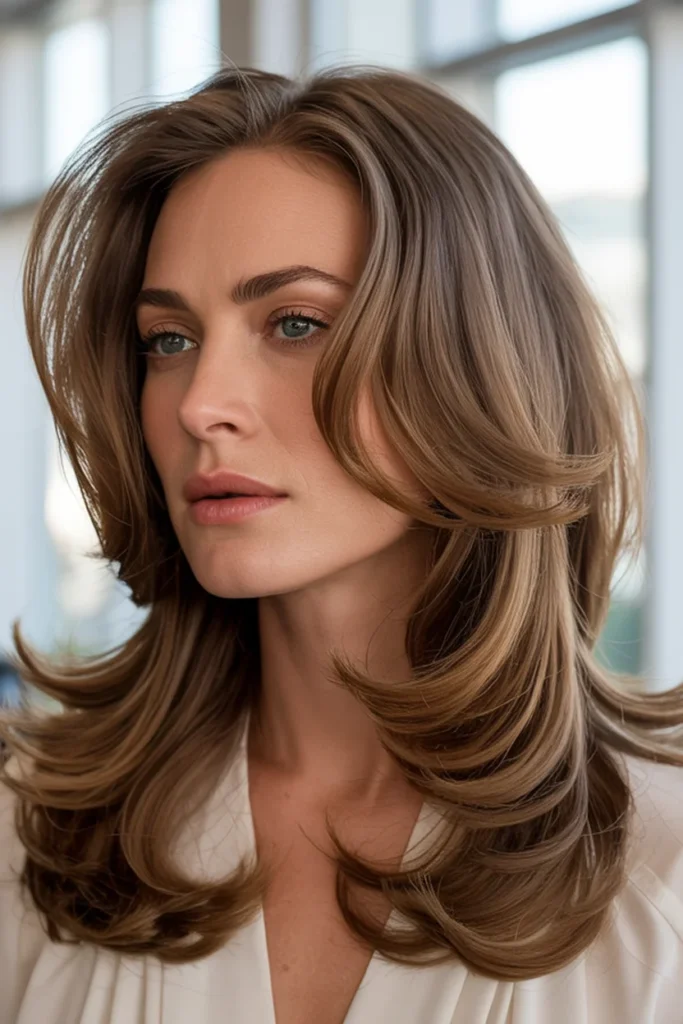
Face-framing layers can be particularly useful when thick hair feels too heavy around the front. The shortest section can begin around the cheekbone, jaw, or another point chosen according to the overall haircut and preferred framing effect. Longer pieces then blend into the remaining length.
For a subtle result, keep the transitions long and blended. For more visible movement, the layers can become progressively shorter toward the face. A round brush helps turn the front pieces away from the face, while natural texture can be left more relaxed for everyday styling.
23. Soft Curly Bob
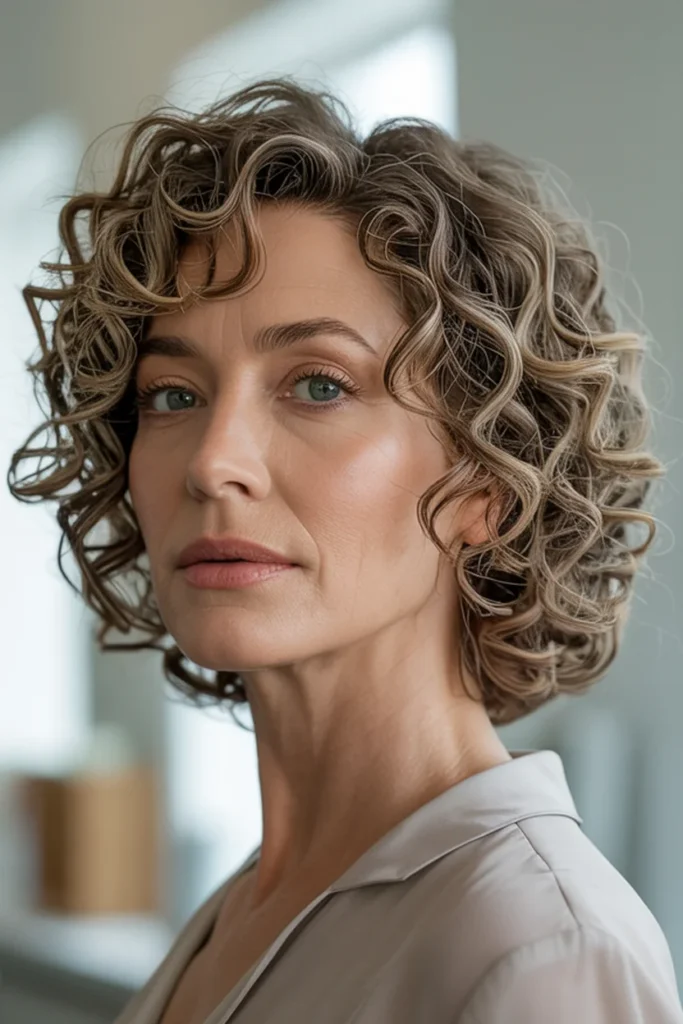
Quick Tip: Thick curly hair usually benefits from preserving enough length to prevent excessive shrinkage while removing selected internal weight. Apply curl cream to soaking-wet or very damp hair, scrunch gently, and allow the curls to dry without repeatedly disturbing them.
A soft curly bob has a rounded shape created by natural curl pattern rather than aggressive styling. The ideal length depends on curl tightness because curls can appear considerably shorter once dry. Keeping the perimeter balanced helps maintain shape, while strategically placed layers can prevent the curls from forming an overly triangular silhouette.
24. Long Layered Hair With Curtain Bangs
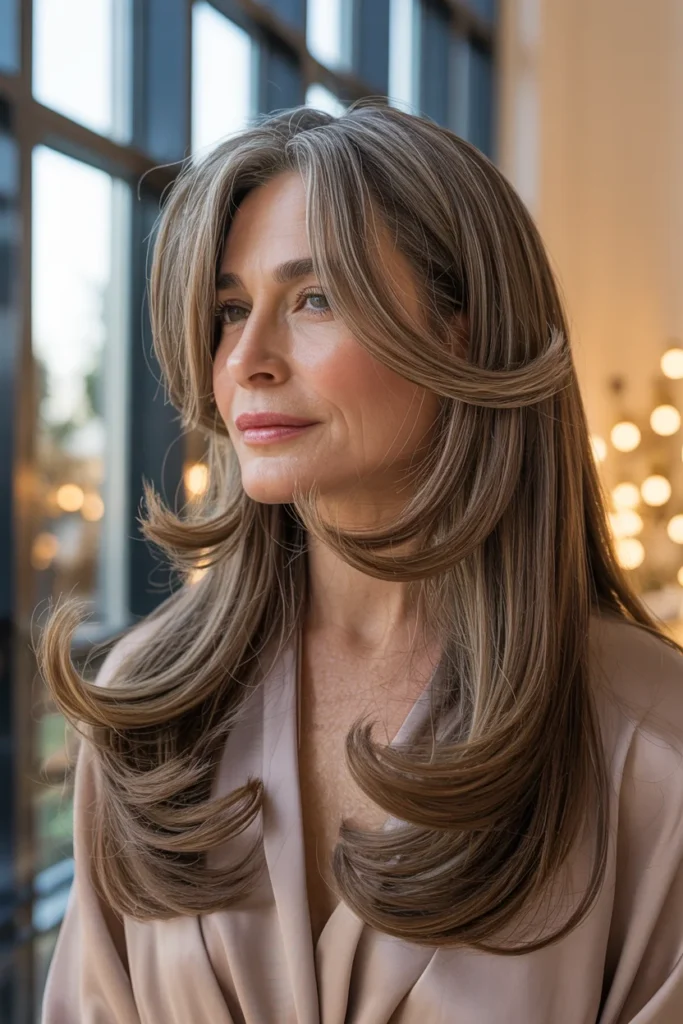
Styling Steps
- Prep the lengths: Apply heat protectant and a lightweight smoothing product through the mid-lengths and ends.
- Shape the curtain bangs: Blow-dry each side away from the face using a medium round brush.
- Build movement: Create loose bends in the long layers, focusing on the mid-lengths rather than tight curls.
- Blend the front: Brush the curtain pieces into the first long layers so the transition looks natural.
- Finish lightly: Use flexible hairspray only where extra hold is needed.
This combination gives long thick hair movement without sacrificing length. Curtain bangs add definition around the face, while long layers distribute density through the rest of the haircut. It is especially useful for women who enjoy longer hair but want more shape than a one-length cut provides.
25. Modern Layered Shag
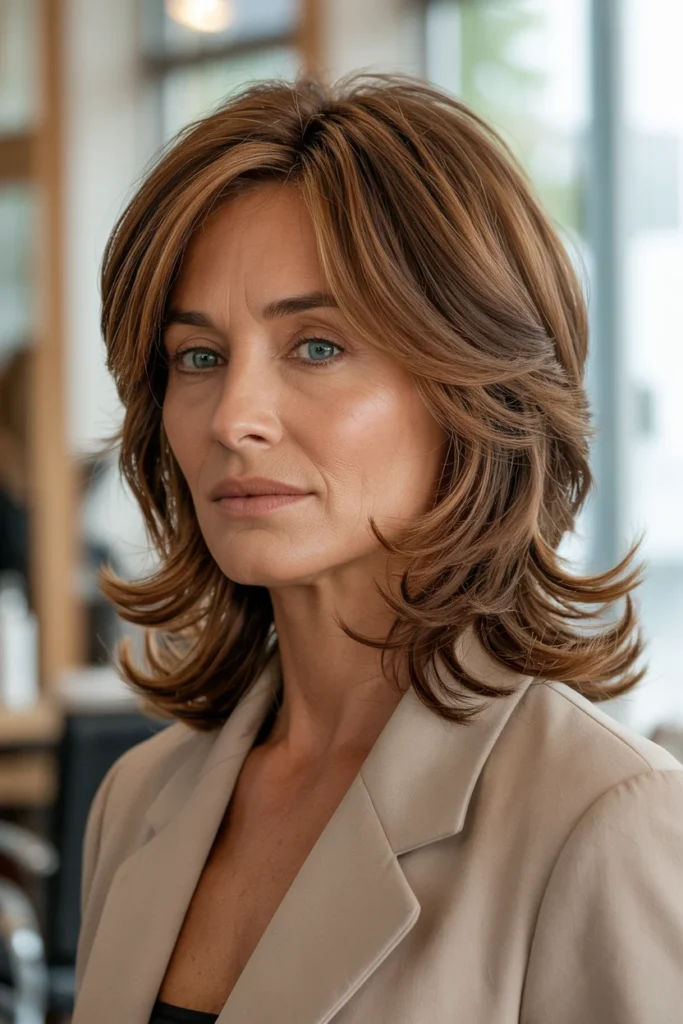
Hair Length: Short to medium or medium to long, depending on preference
Layering: Noticeable throughout the crown and sides
Texture: Best suited to naturally wavy or textured hair, but can be styled on straight hair
Volume: Focused around the crown with lighter ends
Best For: Casual, textured everyday styling
A modern layered shag gives thick hair plenty of movement through strategically placed layers. Unlike a traditional uniform cut, the shape intentionally allows different sections to move independently. The result can be especially appealing when natural waves or curls are present.
For straight hair, use a texturizing spray or lightweight cream and create a few loose bends around the mid-lengths. Avoid excessive product because the shag depends on separation and movement. A stylist can also adjust the amount of crown layering according to your hair density and preferred silhouette.
How to Choose the Best Hairstyle for Thick Hair After 40
Start with your natural hair texture rather than choosing a haircut based only on a photograph. Straight thick hair can usually support clean lines and polished bobs, while wavy and curly textures often benefit from layers that allow movement.
Length also matters. Short cuts can make styling faster, but they may require more frequent trims to maintain their shape. Shoulder-length and collarbone styles provide flexibility, while longer layered cuts preserve length and offer more options for ponytails and updos.
Consider where your hair feels heaviest. If the sides become bulky, internal weight removal or strategically placed layers may help. If the ends feel dense, a stylist can reshape the perimeter without necessarily making the entire haircut heavily layered.
Face shape can guide the placement of layers and bangs. Instead of following strict rules, consider where you want movement around the cheekbones, jaw, and forehead. Side-swept bangs can change the direction of the hairstyle, while curtain bangs create a softer opening around the face.
Finally, think about your daily routine. A haircut that looks attractive after a long salon blowout may not be practical if you prefer air-drying. Choose a shape that works with the amount of time, heat styling, and product you realistically want to use.
Styling Tips for Thick Hair Over 40
1. Ask about internal weight removal.
Thick hair does not always need many visible layers. A stylist can sometimes reduce excess interior weight while keeping the outer shape intact.
2. Use heat protection consistently.
Frequent blow-drying, straightening, and curling can make the ends feel dry or fragile. A suitable heat protectant can help reduce unnecessary heat exposure.
3. Avoid heavy products at the roots.
Thick hair already has substantial density. Heavy creams, oils, or waxes near the scalp can make the roots appear flat or greasy.
4. Style according to your natural texture.
Wavy and curly hair often looks better when the natural pattern is supported rather than repeatedly straightened. A diffuser and curl-friendly product can help preserve definition.
5. Be strategic with bangs.
Bangs can change the overall appearance of a haircut, but they usually need more frequent trimming than the rest of the hair. Consider how much maintenance you are comfortable with before choosing a shorter fringe.
6. Use the right brush for the finish.
A paddle brush is useful for smoothness, while a round brush can add lift and shape. For curls, a wide-tooth comb or fingers may be preferable to preserve definition.
7. Pay attention to humidity.
Humid weather can increase frizz and expand thick hair. Lightweight smoothing products and flexible finishing sprays can help control the surface without making the hairstyle stiff.
8. Do not remove too much length just to reduce bulk.
Length itself can help control volume because the weight pulls the hair downward. The better solution may be selective layering or internal shaping rather than a dramatically shorter cut.
Conclusion
The best hairstyles for thick hair for women over 40 are not limited to one length or haircut. A layered bob, collarbone cut, textured pixie, wavy lob, long layered style, or modern shag can all work when the shape is adapted to your natural density and texture.
Think about how your hair behaves before choosing a cut, including where it becomes bulky, how much styling you enjoy, and how often you want salon maintenance. Small changes in layer placement, bangs, parting, and finishing technique can make a noticeable difference in everyday manageability. Save this article on Pinterest for your next salon visit and compare the ideas that best match your hair type, face shape, lifestyle, and preferred level of styling.
Frequently Asked Questions
What is the best haircut for thick hair over 40?
There is no single haircut that suits every woman. Layered bobs, shoulder-length cuts, lobs, pixies, collarbone styles, and long layered hair can all work well when the shape is adjusted to the person’s hair texture, density, face shape, and styling routine.
Is layered hair good for thick hair?
Layers can be useful for thick hair because they can distribute weight and create movement. The amount and placement matter, though. Too many short layers can sometimes create unwanted fullness, so the layering technique should match the density and texture of the hair.
What short hairstyles work best for thick hair?
Textured pixies, feathered pixies, chin-length bobs, layered bobs, and angled bobs are practical options to consider. Shorter cuts generally require more regular shaping, so maintenance should be part of the decision.
Should women over 40 with thick hair have bangs?
Bangs are a personal styling choice rather than an age requirement. Curtain bangs, side bangs, and wispy bangs can all be adapted to thick hair. Consider your natural texture, forehead coverage preference, styling time, and willingness to schedule regular trims.
What is the easiest hairstyle for thick hair?
A shoulder-length layered cut, collarbone-length style, or long layered haircut can be relatively easy to manage because the length provides some natural weight while layers reduce a heavy appearance. The easiest choice depends on whether your hair is straight, wavy, or curly and whether you prefer air-drying or heat styling.