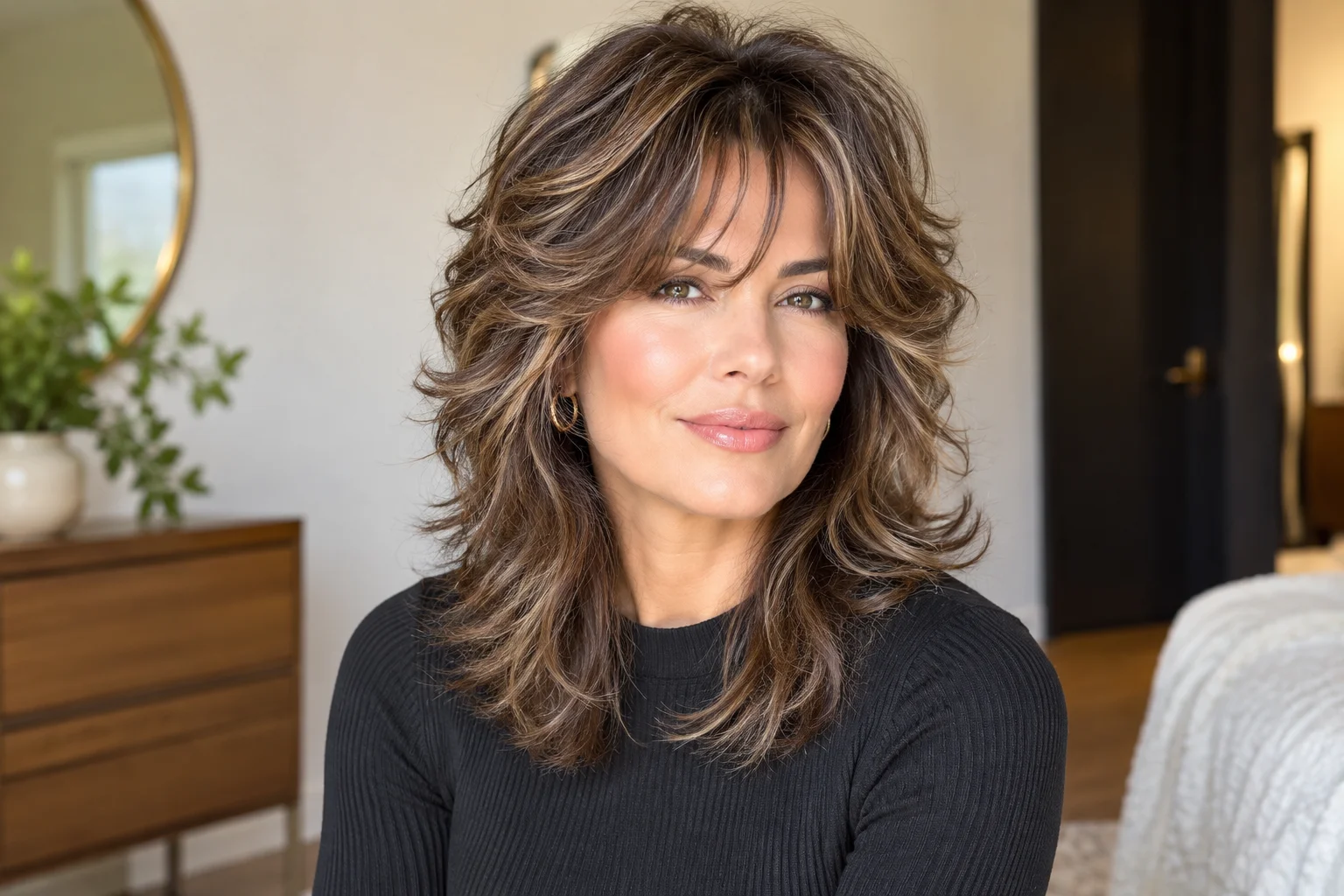
15 Wolf Cut Hairstyles for Women Over 40 to Try
Wolf Cut Hairstyles for Women Over 40 can be a stylish way to add movement, texture, and personality without committing to a completely short haircut. The wolf cut blends shaggy layers with a more defined shape, making it adaptable to different hair lengths, textures, and styling preferences.
The key is choosing the right amount of layering for your hair density and natural texture. Fine hair may benefit from strategically placed layers that create movement without making the ends look sparse, while thick hair can handle more internal texture. Bangs, face-framing pieces, and the overall length can also be adjusted to complement your features.
Below are 15 wearable wolf cut ideas, including soft, wavy, curly, gray, highlighted, and more textured versions. Each style offers a different approach, so you can find a cut that fits your everyday routine and personal style.
1. Classic Wolf Cut
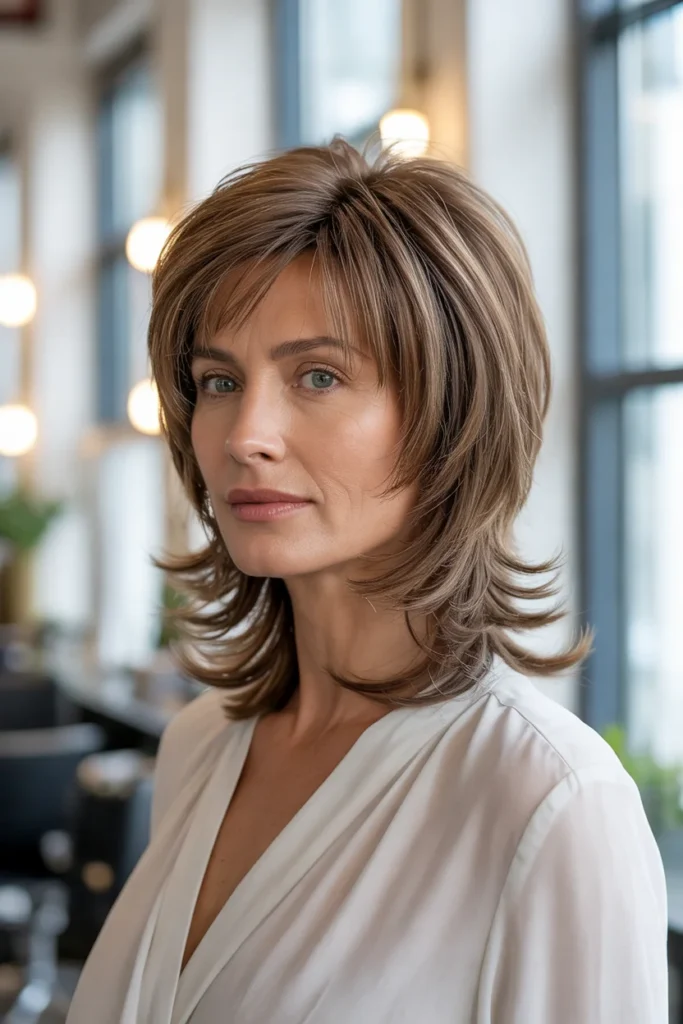
A classic wolf cut combines shorter layers around the crown with longer, textured lengths through the back. The result has noticeable volume at the top while the lower sections remain long enough to create movement around the shoulders.
This version works particularly well for medium to thick hair that naturally holds shape. A slightly off-center part can soften the overall silhouette, while loose bends through the lengths make the layers easier to see. It is a versatile choice for casual outfits and everyday styling.
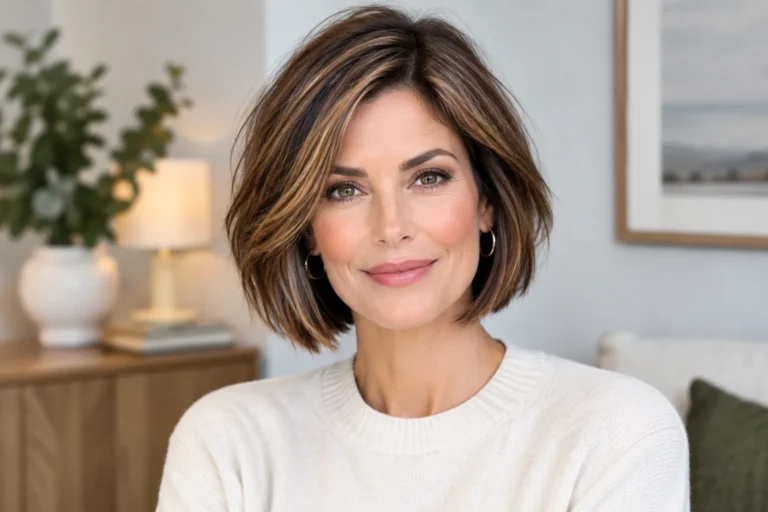
2. Short Wolf Cut With Wispy Layers
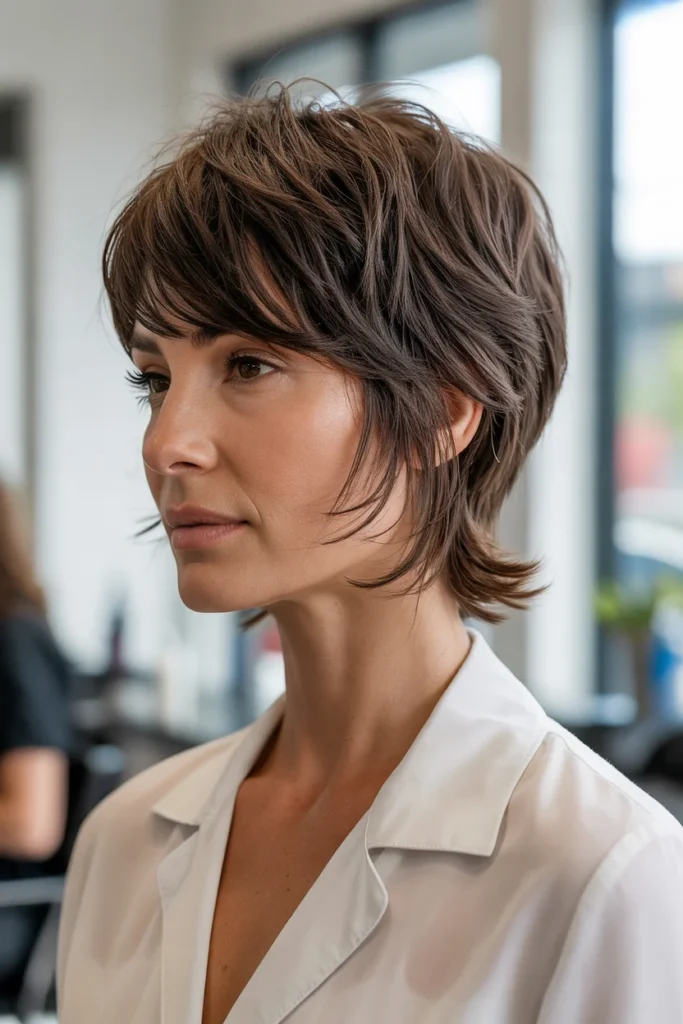
- Length: Short to medium, generally sitting around the jawline or neck.
- Layers: Light, separated layers create movement without making the haircut look overly choppy.
- Bangs: Wispy pieces can be swept across the forehead or parted slightly in the center.
- Texture: A tousled finish works especially well with this shorter shape.
- Maintenance: The shorter layers may need occasional shaping to keep the silhouette balanced.
The lighter layering gives this haircut a softer appearance than a heavily textured shag. For fine hair, use a lightweight volumizing mousse at the roots and avoid applying heavy creams throughout the crown. A quick blow-dry with the fingers can preserve the airy texture.
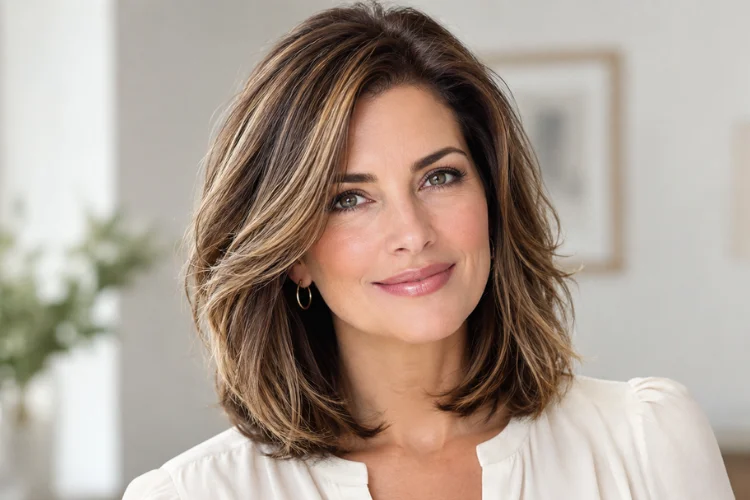
3. Medium-Length Wolf Cut
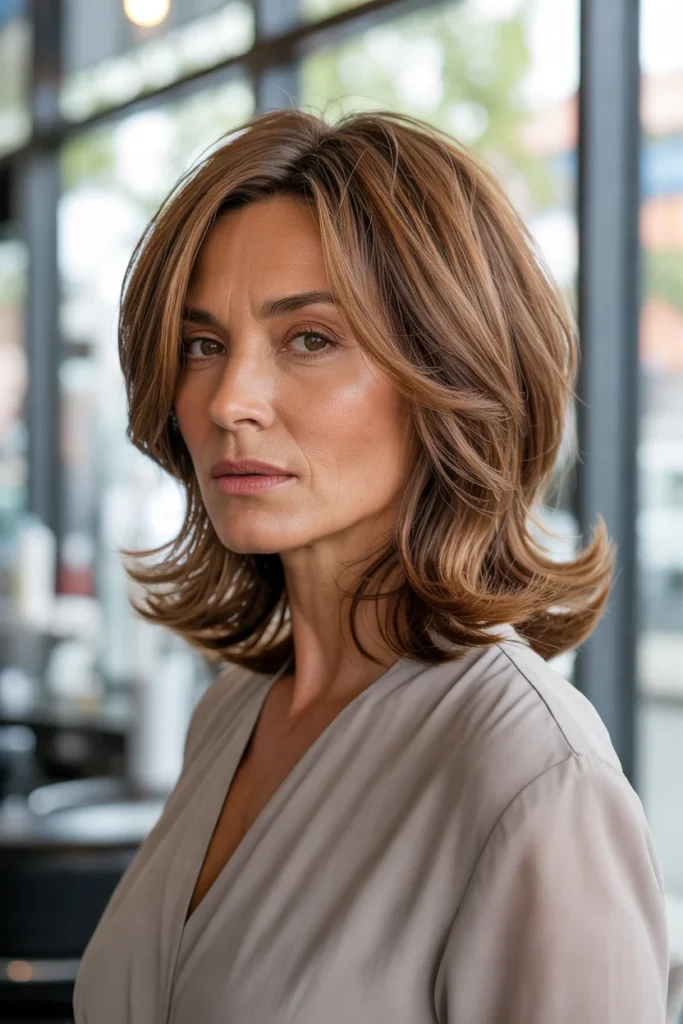
Quick Tip: Start with damp hair and apply a lightweight texturizing mousse from the roots through the mid-lengths. When blow-drying, lift the crown with your fingers instead of pressing the layers flat. Once dry, use a small amount of texture spray through the ends to separate the layers.
A medium-length version provides a useful balance between movement and manageability. The layers can begin around the cheekbones or jaw while the lower length falls toward the shoulders. This shape is especially practical for women who still want enough length for a ponytail, half-up style, or loose waves.
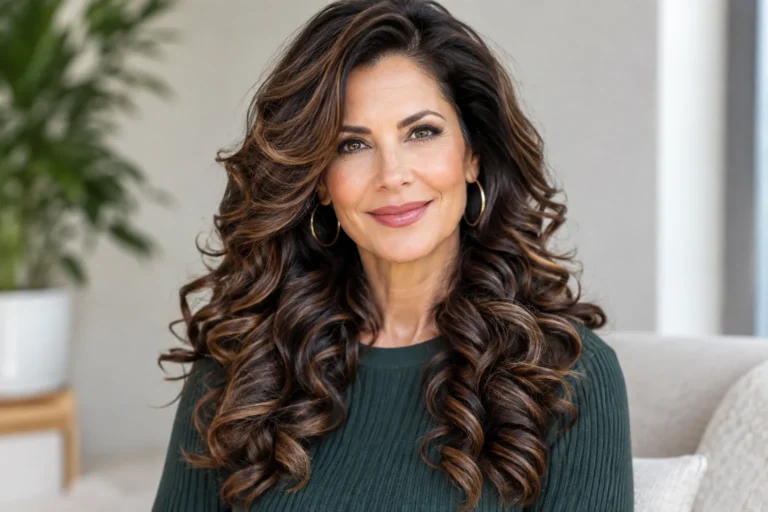
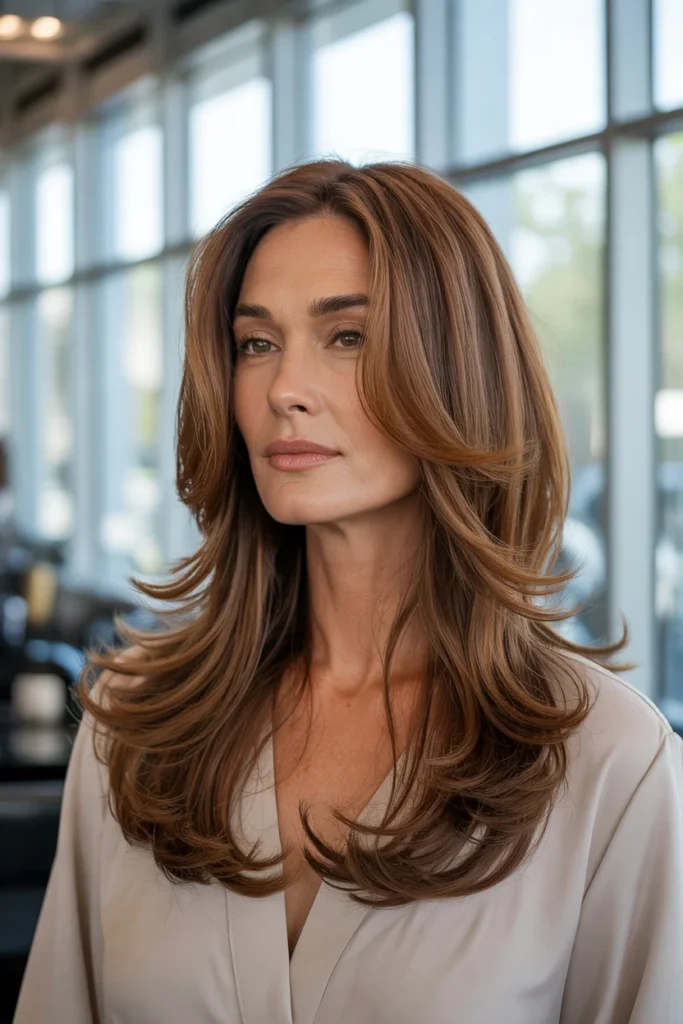
4. Long Wolf Cut With Face-Framing Layers
BEFORE
Long hair can sometimes look heavy when it has minimal layering, particularly around the front. The ends may hang in one continuous shape, while the area around the face lacks movement.
AFTER
Long face-framing layers create more dimension around the cheeks and jaw while keeping plenty of length through the back. The shorter front pieces blend gradually into longer layers, so the haircut retains a flowing appearance rather than looking abruptly disconnected.
To maintain the shape, style the face-framing pieces away from the face with a round brush or large barrel brush. The longer lengths can be left naturally straight or given loose waves for additional separation.
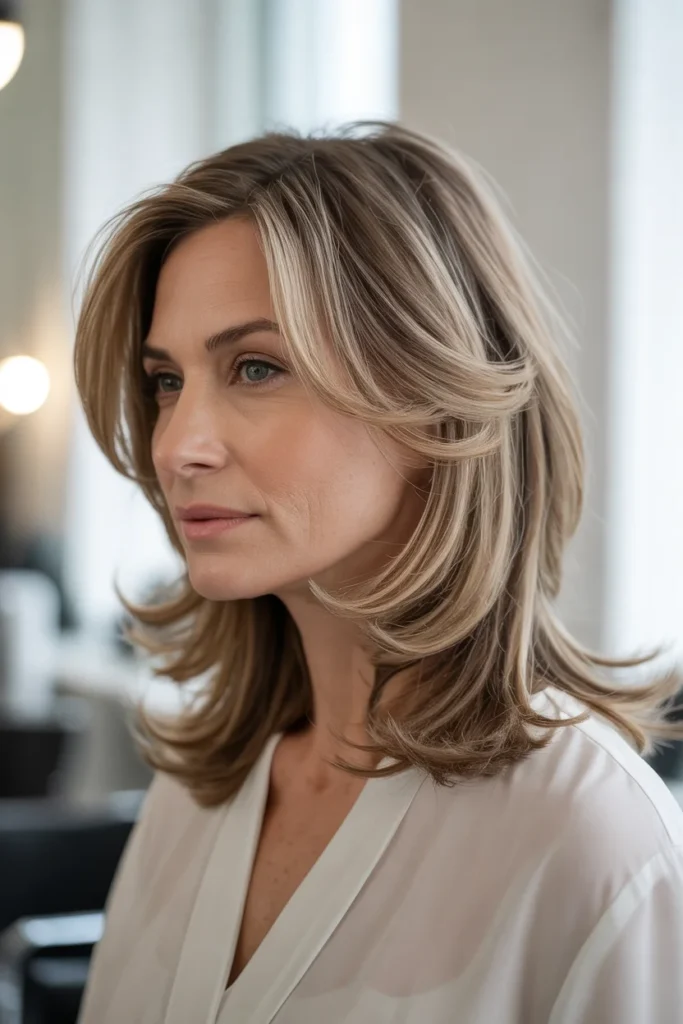
5. Soft Wolf Cut
- Prepare the hair: Wash and condition according to your hair type, then towel-dry gently.
- Add light texture: Apply a lightweight mousse or styling cream through the mid-lengths and ends.
- Shape the crown: Blow-dry the upper layers with a round brush, lifting slightly at the roots.
- Define the ends: Use your fingers to separate the shorter layers rather than creating very defined curls.
- Finish lightly: Add a small amount of flexible-hold spray if your hair tends to lose its shape.
A soft wolf cut is a good choice if you like the layered structure of a wolf haircut but do not want an extremely shaggy finish. Keeping the layers longer and blending the transitions creates a polished shape that can work for professional settings as well as relaxed weekends.
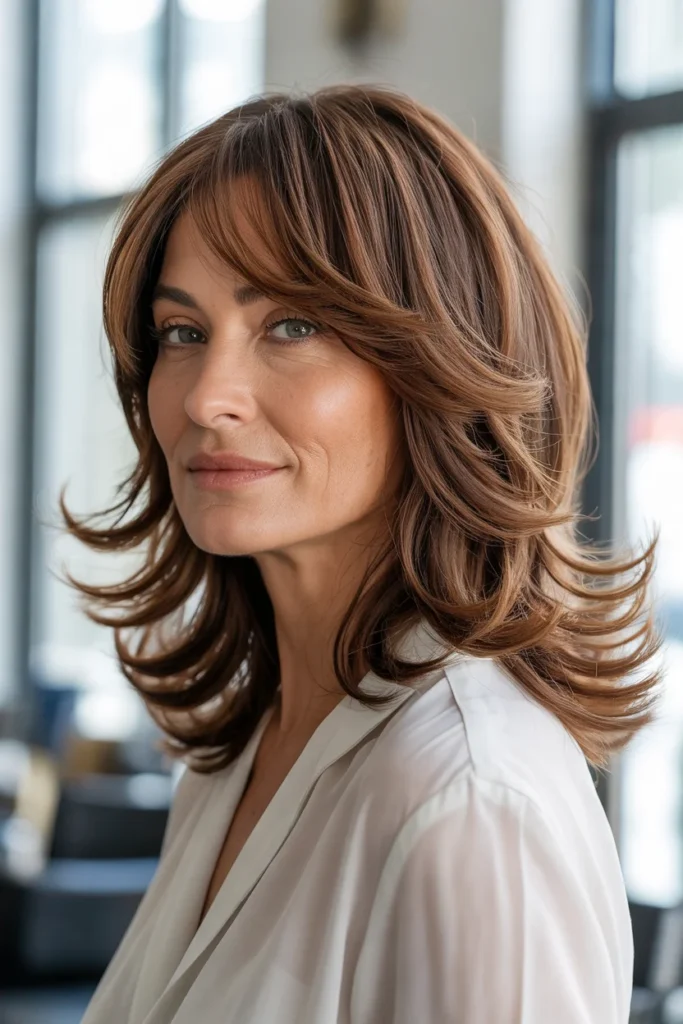
6. Wolf Cut With Curtain Bangs
| Feature | Soft Curtain Bangs | Long Curtain Bangs |
| Bang Length | Around the cheekbone | Below the cheekbone |
| Finish | Light and airy | More defined and sweeping |
| Styling | Quick round-brush shaping | Requires more directional styling |
| Face Framing | Concentrated around the upper face | Extends farther toward the jaw |
Curtain bangs give a wolf cut a strong face-framing element while keeping the forehead partially visible. Shorter versions can emphasize the cheekbones, while longer pieces blend into the surrounding layers. Choose the length based on how much daily bang styling you are comfortable doing.
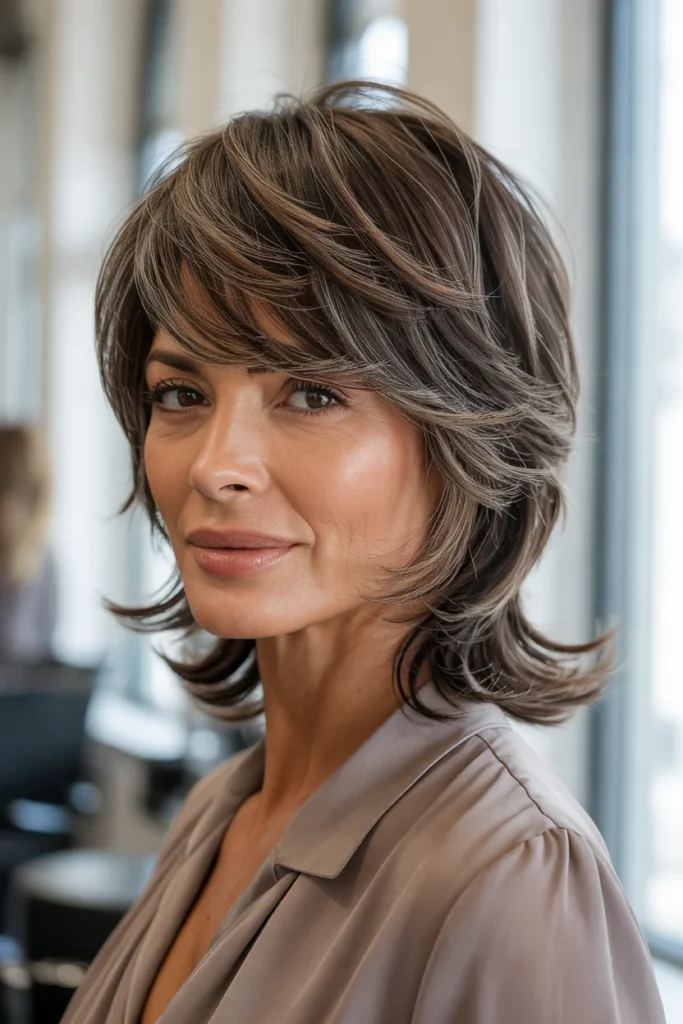
7. Wolf Cut With Side-Swept Bangs
DO
- Blow-dry the bangs diagonally away from their natural part.
- Keep the shortest face-framing layer slightly below the brow or cheekbone, depending on your preferred shape.
- Use a lightweight styling cream to control flyaways without flattening the crown.
- Create a gentle bend in the ends to connect the bangs with the rest of the haircut.
DON’T
- Saturate the fringe with heavy oils or creams.
- Cut the shortest bang section too close to the forehead without considering its natural growth pattern.
- Use excessive heat on already dry or fragile ends.
- Over-texturize fine bangs, as too much thinning can make them appear sparse.
Side-swept bangs introduce asymmetry and can make a layered wolf cut feel softer around the forehead. The direction of the fringe can also be adjusted according to your natural part, which makes everyday styling easier and reduces the need to fight against the hair’s natural movement.
8. Shaggy Wolf Cut With Choppy Layers
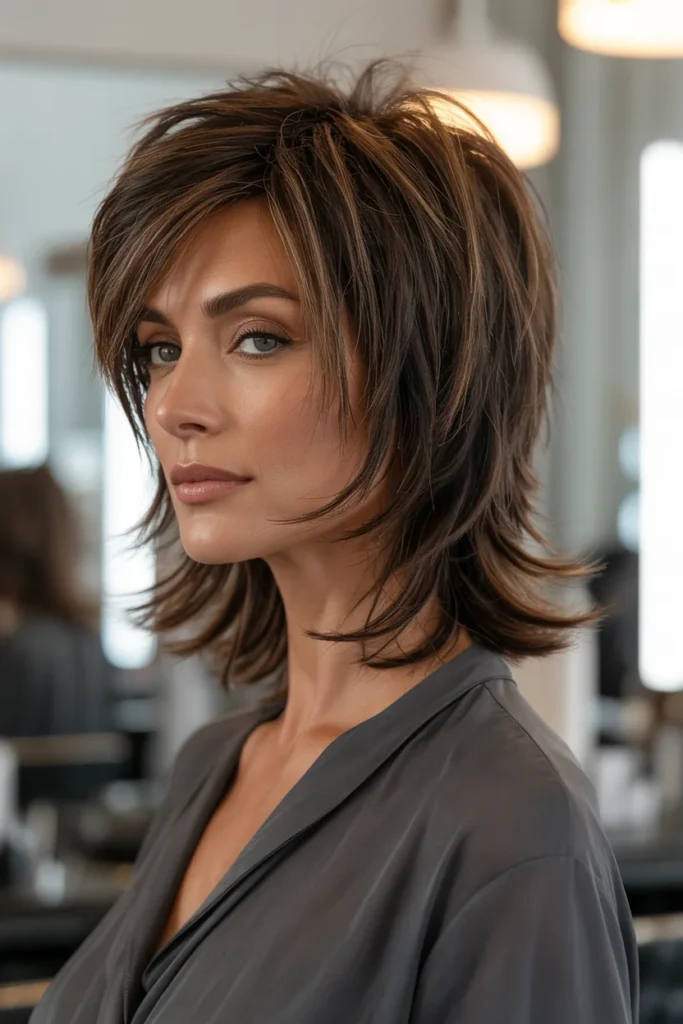
Hair Length: Medium to long
Layer Shape: Choppy layers concentrated around the crown and upper sides
Texture: Tousled, separated, and slightly undone
Volume: Most noticeable around the crown
Best For: Hair that naturally has some body or texture
The defining feature here is separation between the layers. Instead of creating a smooth transition from one length to another, the cut uses visible texture to give the hair a lived-in appearance. A small amount of matte texture paste can emphasize individual pieces, particularly around the crown and ends.
9. Wolf Cut for Fine Hair
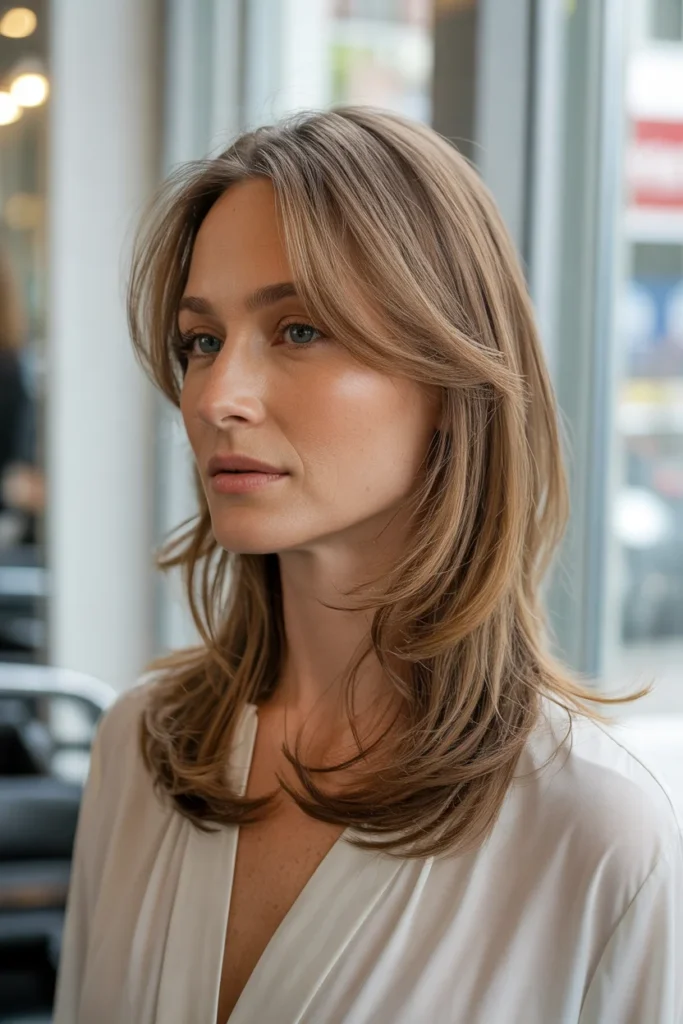
Fine hair can benefit from a wolf cut, but the layering needs to be controlled. Removing too much density from the ends can make already delicate hair look thinner, so the haircut should retain enough weight through the lower sections.
A good approach is to keep the overall perimeter relatively full while using shorter layers near the crown and face to create movement. Blow-dry the roots upward with a round brush and finish with a lightweight volumizing spray. Avoid heavy waxes and rich oils around the roots, which can quickly reduce lift.
10. Wolf Cut for Thick Hair
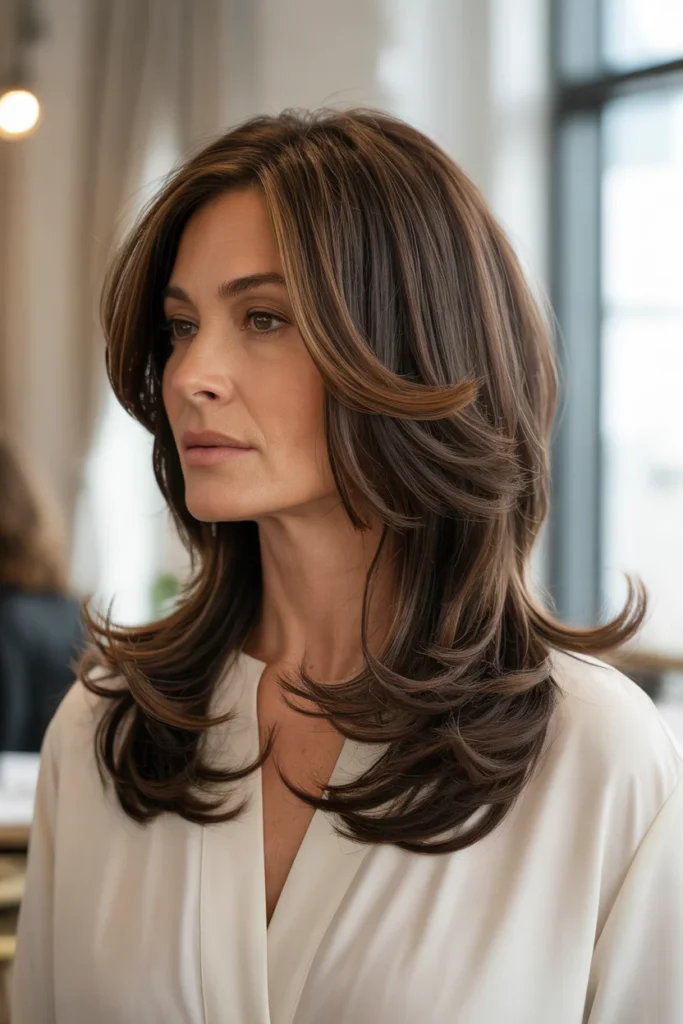
Thick hair gives a wolf cut plenty of natural volume, but strategic weight removal can help prevent the layers from becoming bulky. The goal is to create movement while maintaining enough density for the ends to look substantial.
Ask for internal texture where your hair feels heaviest, particularly through the sides and underneath sections. Styling can be as simple as applying a smoothing cream to damp hair and allowing the natural texture to show through. For a more polished finish, use a large round brush to smooth the outer layers while preserving volume at the crown.
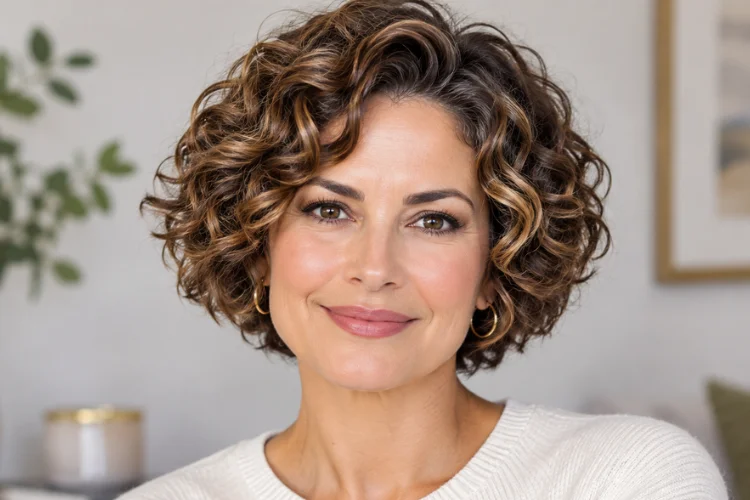
11. Curly Wolf Cut for Women Over 40
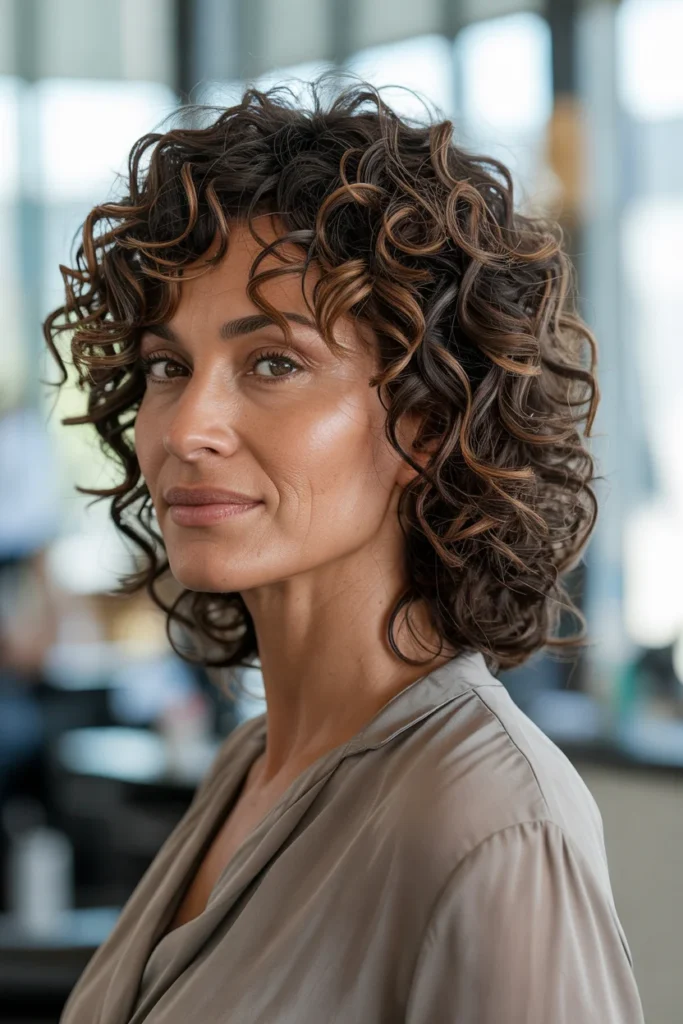
- Work with damp curls: Apply your normal curl cream or lightweight leave-in product while the hair is still damp.
- Encourage the curl pattern: Scrunch the lengths upward gently rather than brushing the curls repeatedly.
- Shape the crown: Use your fingers to lift the roots while diffusing on a low or moderate setting.
- Leave the curls alone: Once the hair is dry, avoid excessive touching, which can create frizz.
- Separate selectively: If a few curls have clumped together, gently separate only those pieces.
Curly hair can give a wolf cut a rounded, highly textured silhouette. Because curls shrink differently depending on their pattern, the haircut should be planned with the natural curl shape in mind. A stylist familiar with curly hair can help determine where the shorter layers should sit before significant length is removed.
12. Wavy Wolf Cut With Tousled Texture
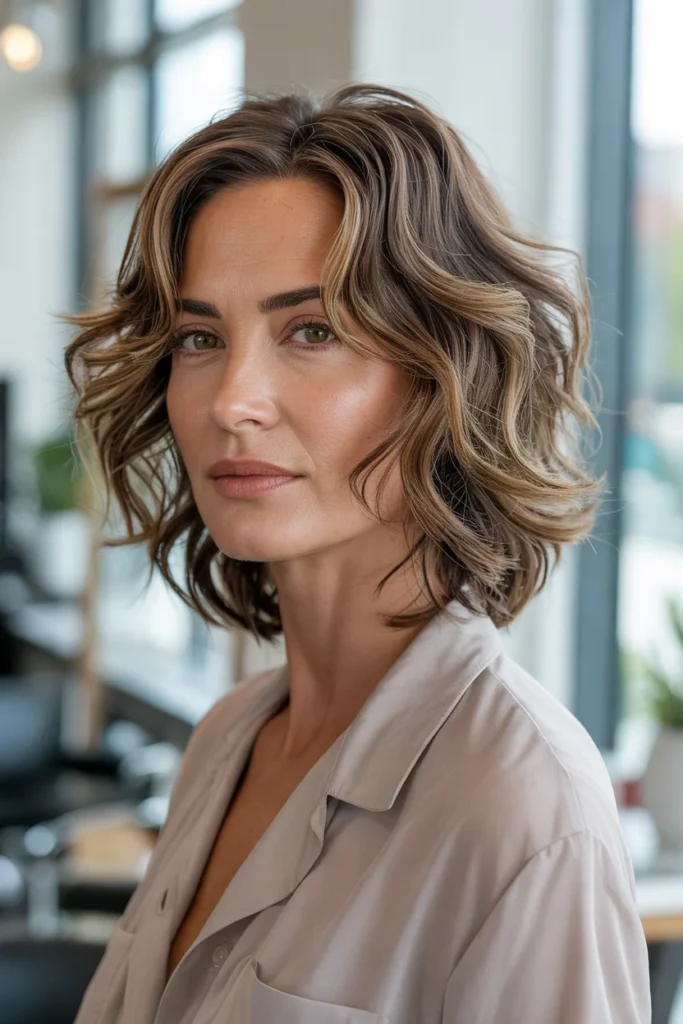
| Styling Direction | Natural Waves | Defined Waves |
| Product | Lightweight mousse | Mousse plus light styling cream |
| Finish | Soft and relaxed | More structured |
| Volume | Moderate root lift | More pronounced crown volume |
| Best Setting | Everyday wear | Dinners and occasions |
Wavy hair naturally complements the separated layers of a wolf cut. For a relaxed appearance, apply mousse to damp hair and scrunch the lengths before air-drying or diffusing. If you prefer clearer waves, wrap a few front sections around a medium curling wand after the hair is dry, leaving the ends slightly loose.
13. Wolf Cut With Gray or Silver Hair
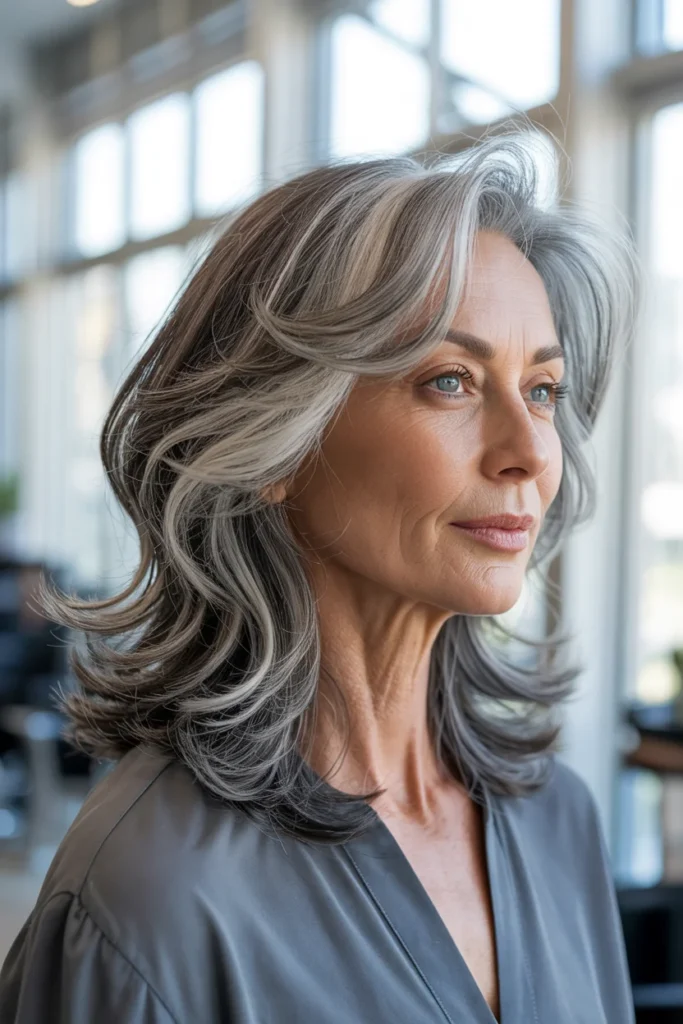
Gray and silver hair can add another dimension to a layered haircut because natural variations in tone become more visible as the layers move. A medium or long wolf cut can allow silver strands to catch the light around the face, while shorter crown layers create additional texture.
Hair Color: Natural gray, silver, or a blend of both
Best Feature: Visible dimension between layered sections
Styling Time: About 10 to 20 minutes depending on texture
Finish: Soft waves, natural texture, or a lightly tousled blowout
Maintenance: Regular trims help keep the layers intentional as the hair grows
If gray hair tends to feel dry, use a moisturizing conditioner and a heat protectant before styling. Keeping the ends conditioned can make a textured haircut appear smoother and more defined.
14. Wolf Cut With Highlights
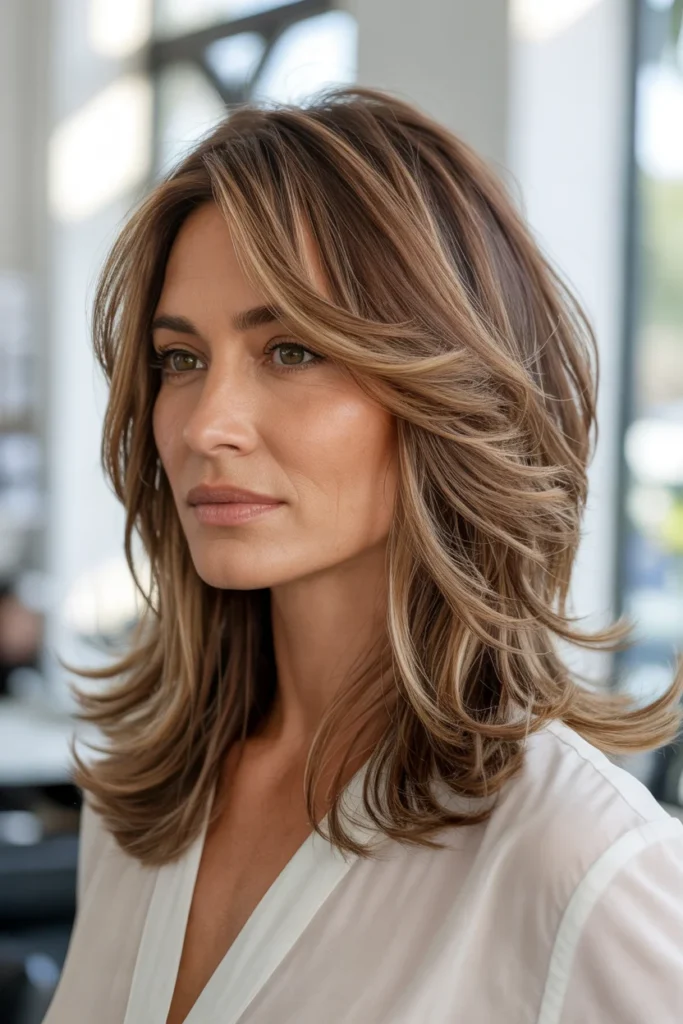
Highlights can emphasize the movement of a wolf cut by adding lighter pieces around selected layers. Face-framing highlights can draw attention toward the front, while subtle dimensional pieces throughout the mid-lengths can make the texture easier to see.
For a softer result, consider fine highlights that blend gradually into the base color rather than highly contrasting sections. Balayage-inspired placement can also work well when you want visible dimension with a less uniform appearance. Keep the lightened ends conditioned, especially if your hair is already dry or prone to breakage.
15. Edgy Wolf Cut With Piecey Layers
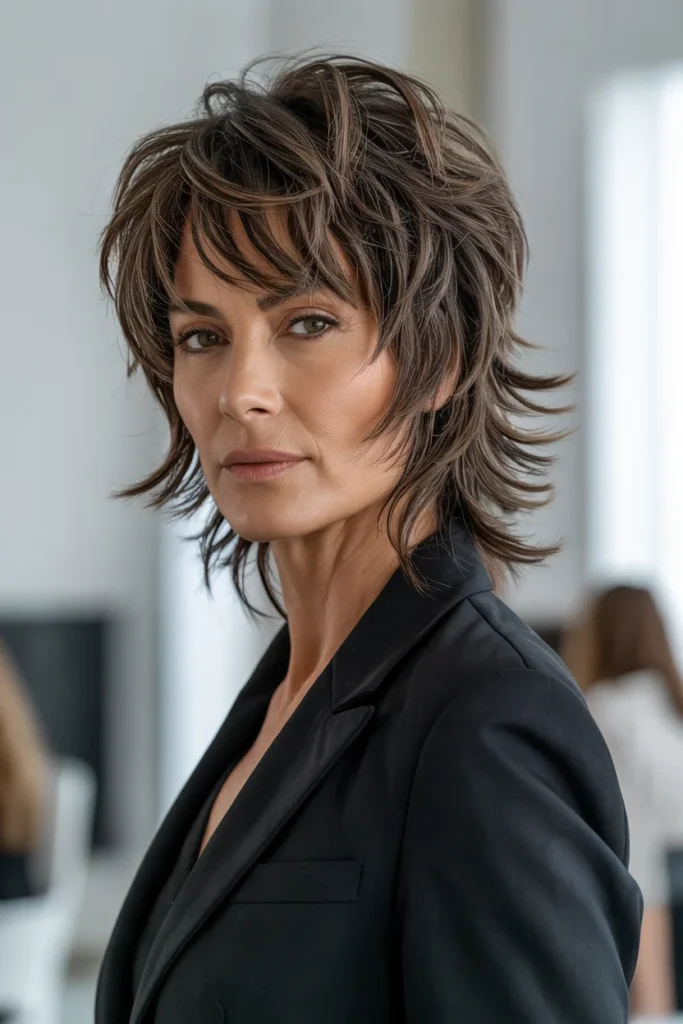
An edgier wolf cut uses more obvious separation between individual layers. The crown can be shorter and fuller, while piecey sections around the sides and ends create a deliberately textured finish.
This style suits women who enjoy a modern haircut with visible personality rather than a highly polished silhouette. A small amount of styling paste can define individual sections after blow-drying. For a softer everyday version, simply brush through the pieces with your fingers and let the natural texture remain visible.
How to Choose the Right Wolf Cut After 40
The most flattering version depends less on age and more on your hair’s natural characteristics and the amount of styling you want to do.
Consider your hair density. Fine hair generally benefits from controlled layering that keeps enough weight at the ends. Thick hair can accommodate more internal texture to reduce heaviness.
Think about your natural texture. Straight hair may need styling to reveal the layers, while wavy and curly hair often develops its own shape. Curly hair should be assessed in its natural state because shrinkage can significantly change the apparent length.
Choose layers according to your face shape. Face-framing pieces can be adjusted to emphasize or soften different areas. Longer layers around the jaw can create a gradual frame, while shorter pieces can draw more attention toward the cheekbones.
Consider your daily routine. A highly textured cut may require some product and styling to look intentionally shaped. If you prefer quick mornings, ask for a softer version with blended layers that still works when air-dried.
Think about your desired length. A short wolf cut gives a stronger change in shape, while medium and long versions offer more flexibility for ponytails, half-up styles, and other everyday looks.
How to Style a Wolf Cut
Start with damp hair and apply a product suited to your texture. Fine hair usually benefits from lightweight mousse, while coarse or curly hair may need a moisturizing styling cream.
For volume, concentrate product at the roots and lift the crown while blow-drying. A round brush can create a smoother finish, while finger-drying keeps the texture more relaxed.
For waves, use a curling wand or iron on selected sections rather than curling every strand uniformly. Leaving the ends slightly straighter helps preserve the layered, piecey appearance.
If you have naturally wavy or curly hair, scrunching and diffusing can enhance the haircut without adding unnecessary heat. Finish with a flexible styling spray if you need additional hold.
Always use heat protection when using hot tools, especially if your hair is color-treated, gray, dry, or fragile.
Wolf Cut Maintenance Tips
A wolf cut depends on its layers for its shape, so regular trims help prevent the haircut from becoming uneven as it grows.
- Trim the bangs regularly: Curtain and side-swept bangs can quickly lose their intended shape as they grow.
- Monitor the ends: Highly textured ends can appear dry if they are exposed to frequent heat or chemical processing.
- Use lightweight products: Too much product can flatten the crown and make separated layers look heavy.
- Refresh between washes: A small amount of water or texture spray can reactivate natural waves and curls.
- Protect against heat: Apply heat protectant before blow-drying, curling, or straightening.
- Adapt as your hair changes: Hair density and texture can change over time, so the amount and placement of layering may need adjustment.
Frequently Asked Questions
Is a wolf cut flattering for women over 40?
A wolf cut can work well for women over 40 when the layers are tailored to the individual’s hair density, texture, face shape, and preferred styling routine. A softer version with blended layers can provide movement without creating an overly dramatic shape.
Is a wolf cut good for thin or fine hair?
It can be, provided the layering is carefully controlled. Fine hair usually benefits from keeping sufficient weight through the ends while adding shorter layers around the crown for lift. Excessive thinning can make fine hair appear less dense.
What face shape suits a wolf cut?
A wolf cut can be adapted to many face shapes because the placement and length of the face-framing layers can be customized. Longer pieces can create a gradual frame, while shorter layers can emphasize the cheekbone area. Your natural hair texture should also influence the final shape.
Can a wolf cut work with curly or wavy hair?
Yes. Wavy and curly textures can add natural movement to the layered shape. Curly hair requires particular attention to shrinkage and curl pattern, while wavy hair can often be styled with mousse, scrunching, and light diffusing.
How often should a wolf cut be trimmed?
Many people find that trimming every 6 to 10 weeks helps preserve the intended shape, although the ideal schedule depends on hair growth, bang length, and how strongly layered the cut is. Bangs may need attention sooner if you want to keep them at a specific length.
Conclusion
A wolf cut can be adapted in many ways, from a soft layered shape to a more textured, edgy haircut. The best version depends on your natural hair texture, density, preferred length, face-framing needs, and how much time you want to spend styling.
These 15 Wolf Cut Hairstyles for Women Over 40 include options for fine, thick, wavy, curly, gray, highlighted, short, medium, and long hair. Save your favorite ideas on Pinterest, then discuss the layer placement and styling requirements with your hairstylist before choosing your cut.