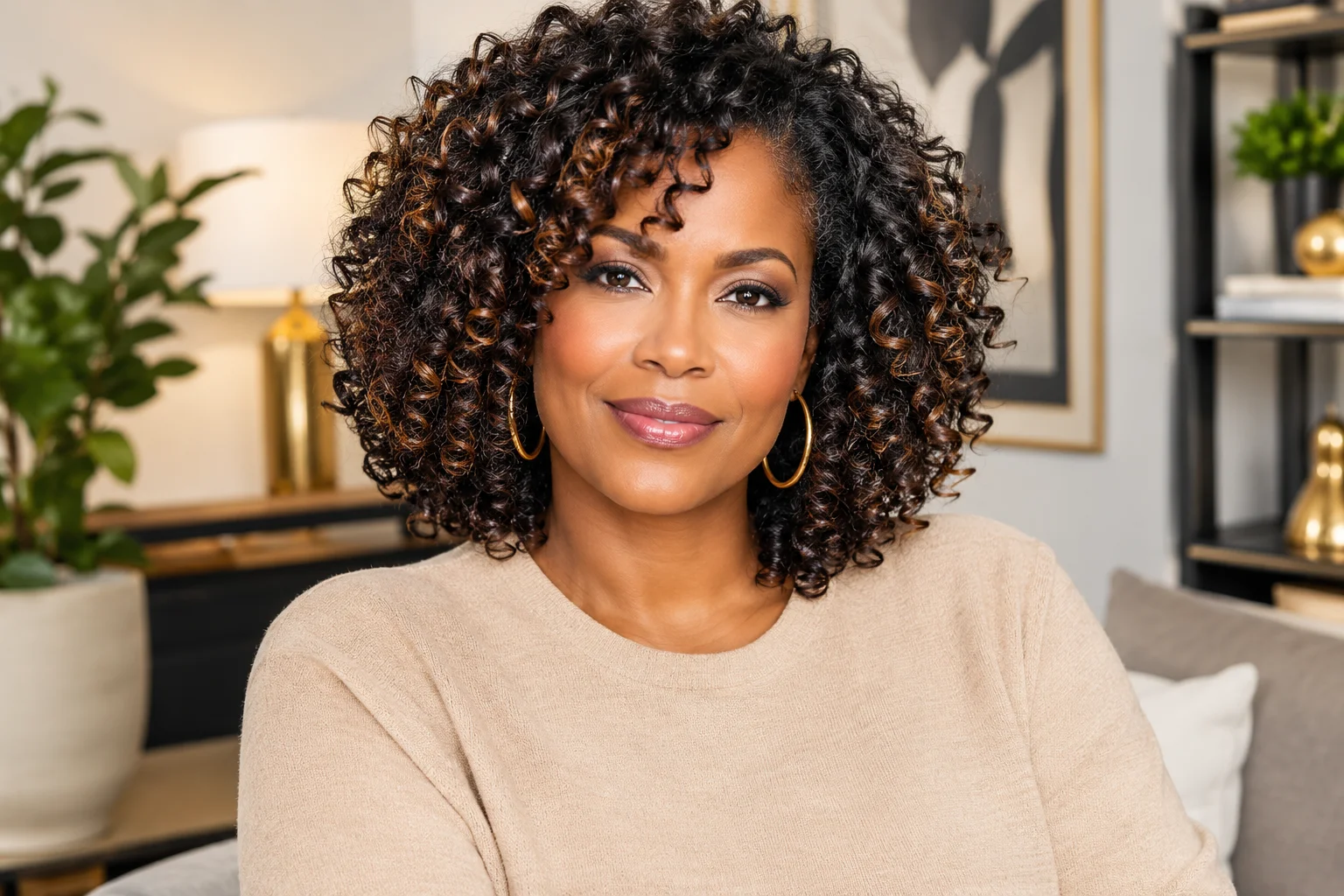
25 Curly Hairstyles for Black Women Over 40
Curly hairstyles for Black women over 40 can be wonderfully versatile, whether you prefer natural texture, defined coils, a polished bob, or a shorter cut that keeps styling simple. The right shape can bring out your curl pattern while adding movement, volume, and flattering face-framing detail.
This collection brings together 25 wearable ideas across short, medium, and long lengths. You will find natural curls, layered cuts, bobs, pixies, ponytails, half-up styles, and elegant options for special occasions. Each idea includes practical details about texture, volume, styling, maintenance, and ways to adapt the look to your own hair. The goal is not to follow one formula, but to find a shape that works with your natural texture and fits comfortably into your lifestyle.
1. Voluminous Shoulder-Length Curls
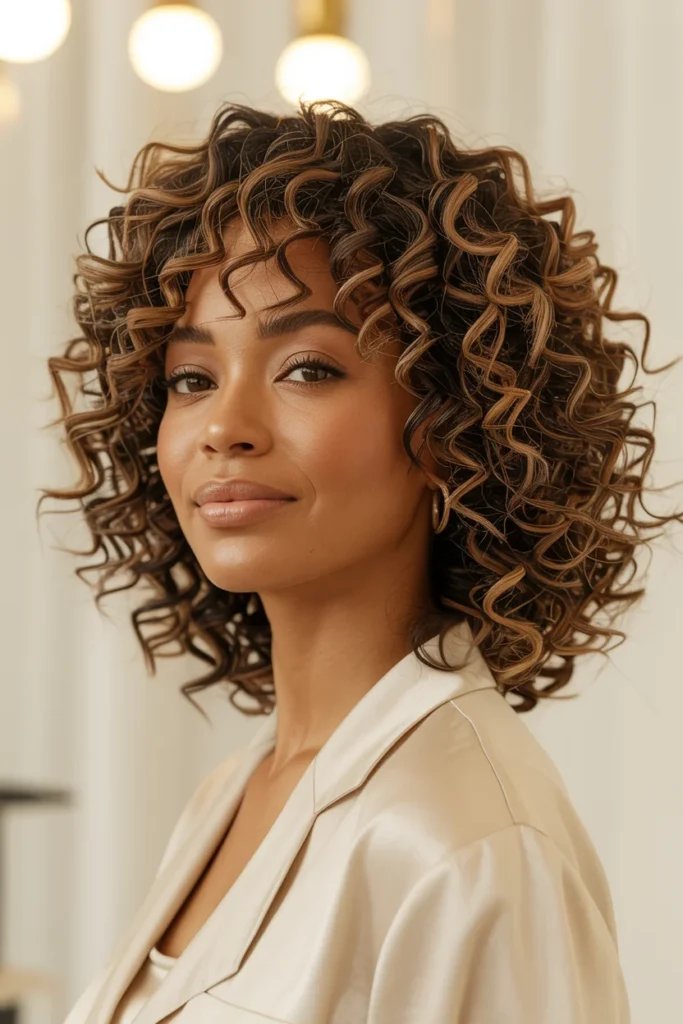
Shoulder-length curls create a balanced shape that gives natural texture enough room to move without becoming difficult to manage. Keeping the ends around the shoulders allows the curls to form a rounded silhouette, while subtle layers prevent the shape from looking too heavy. A side or slightly off-center part can add extra movement around the face.
This length is particularly useful for women who want versatility. It can be worn loose, pinned partially back, or gathered into a low ponytail. For dense curls, strategically removing some internal weight can help the hair retain bounce. For finer curls, fewer layers may preserve fullness through the ends.
2. Defined Natural Curls With Side Part
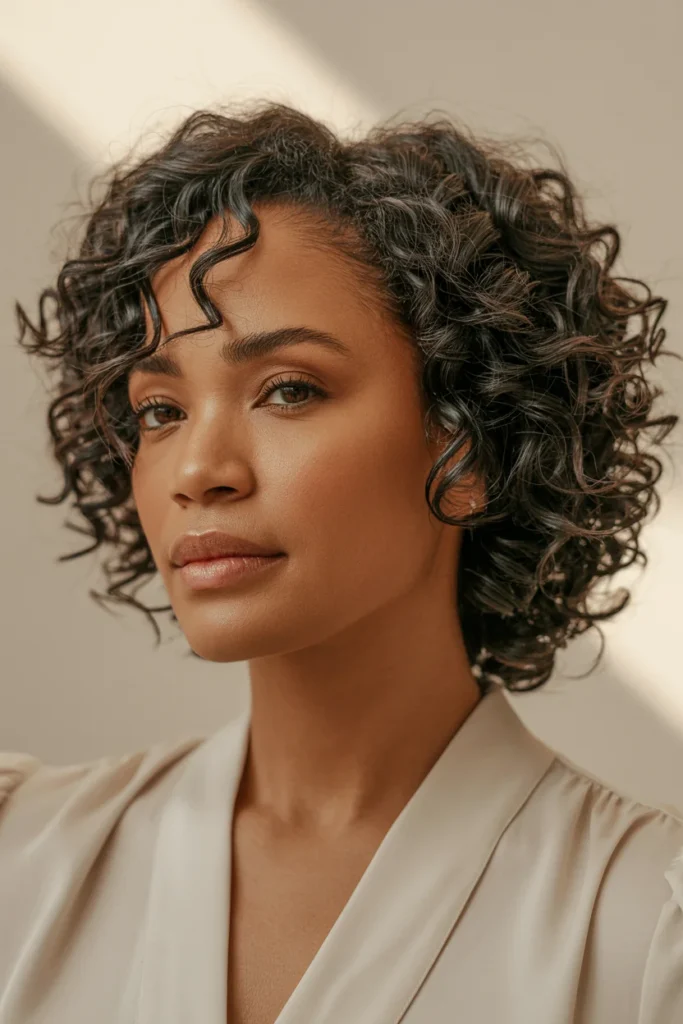
- Parting: A deep or moderate side part shifts the visual weight toward one side and creates an attractive asymmetrical shape.
- Texture: Defined curls or coils work especially well when the natural pattern is encouraged rather than stretched.
- Volume: Keep more volume on the fuller side for a rounded, dimensional finish.
- Products: A leave-in conditioner followed by curl cream or gel can help separate curls without making them feel overly stiff.
- Maintenance: Refresh individual curls between wash days instead of restyling the entire head.
The side part changes the silhouette without requiring a dramatic haircut. It is also easy to adjust depending on how much volume you want around the forehead and cheekbones. Diffusing on a low heat setting or allowing the curls to air-dry can help preserve definition.
3. Curly Bob With Face-Framing Layers
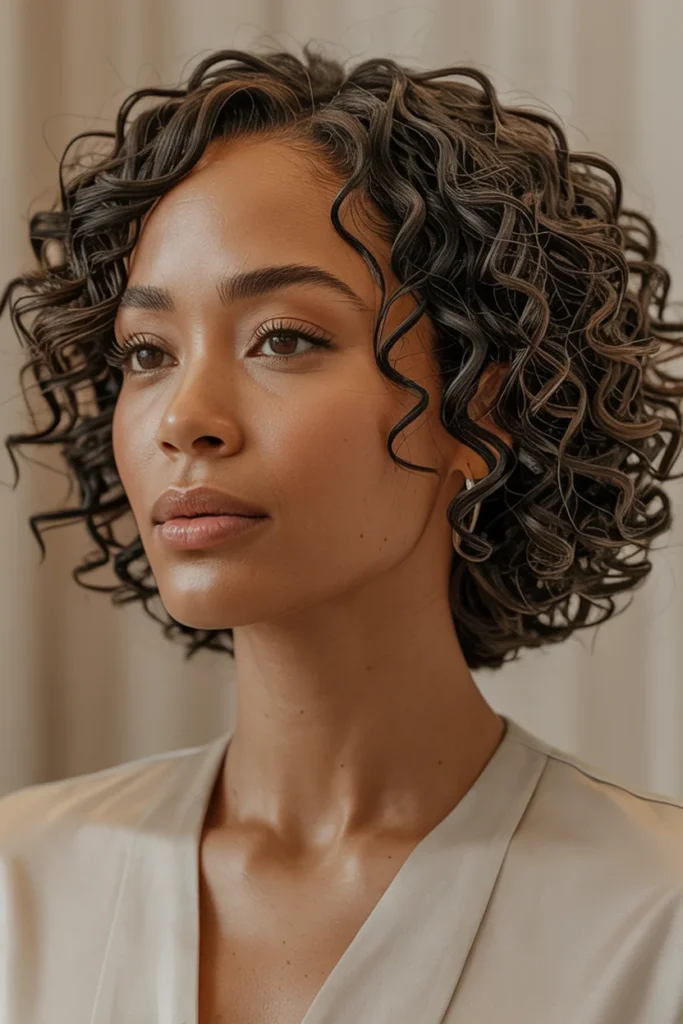
Quick Tip: Ask for face-framing layers that begin around the cheekbone or slightly lower rather than cutting every curl to the same length. This creates movement around the face while keeping the bob’s overall shape intact. Use a curl-defining product on damp hair and gently scrunch upward.
The finished bob sits around the chin to jawline, with individual curls creating a soft, rounded outline. It can suit a range of curl patterns, although very dense hair may benefit from careful weight distribution. A slightly longer front section can also create a more elongated appearance.
4. Long Layered Curly Hairstyle
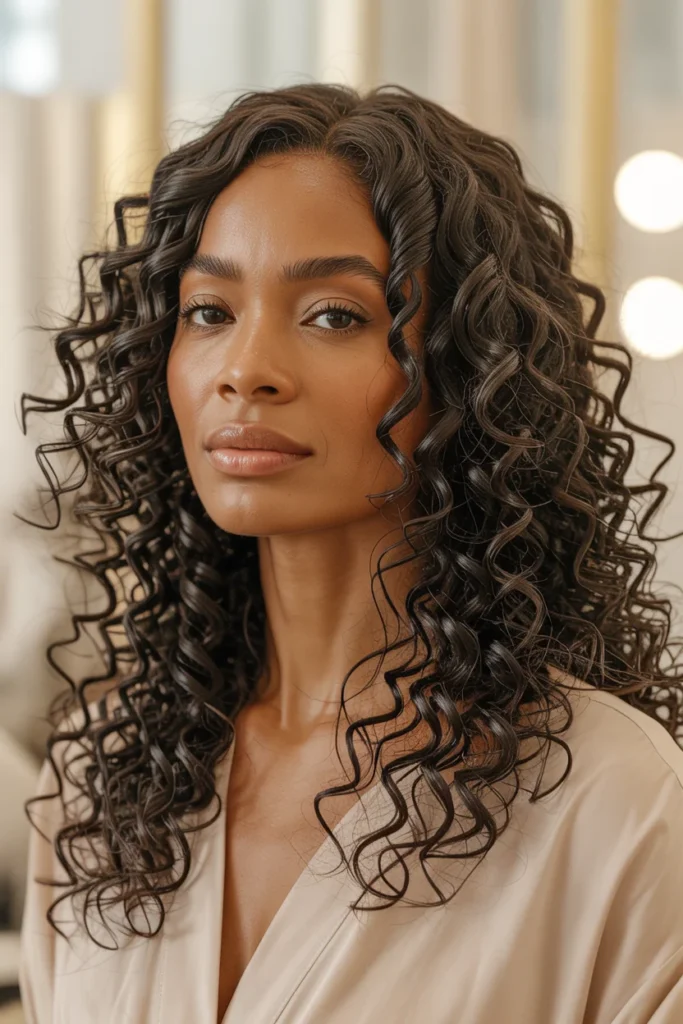
BEFORE
Long curly hair can sometimes develop a heavy appearance when all the length sits at one level. The roots may look flat while the lower sections carry most of the visual weight, making the curls appear less mobile.
AFTER
Long layers distribute the shape throughout the hair, allowing curls to stack naturally instead of forming one heavy mass. Face-framing pieces can soften the front while preserving enough length for a substantial, flowing silhouette.
To maintain the shape, ask for layers that respect the natural shrinkage and curl pattern. Avoid removing excessive weight from the ends if your curls become noticeably thinner when dry. Regular conditioning also helps the layers maintain definition.
5. Short Curly Pixie Cut
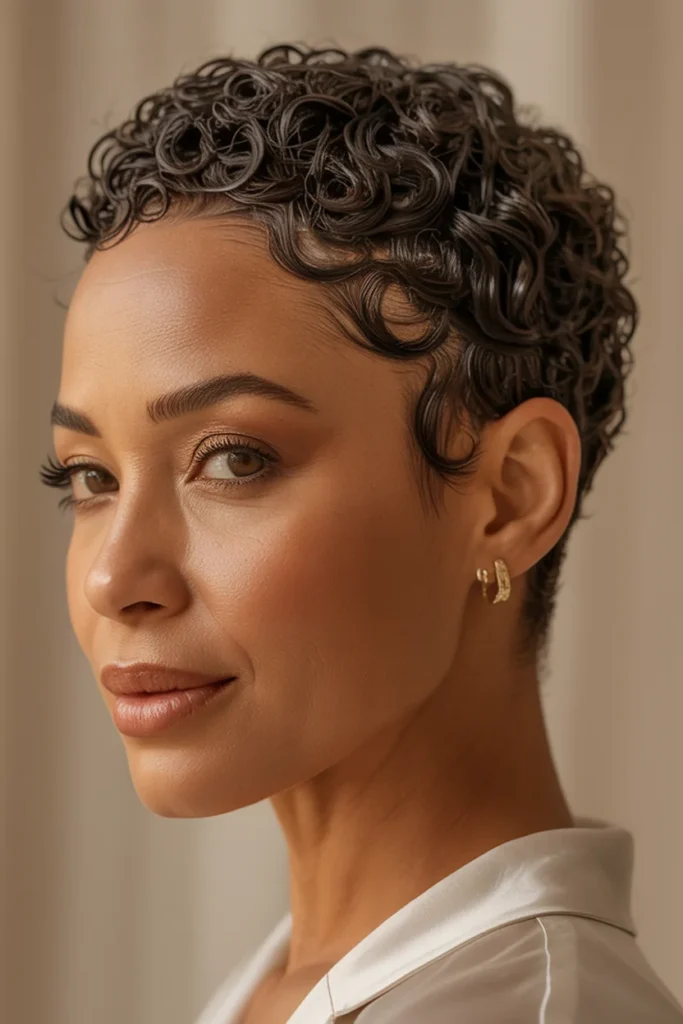
- Prepare the curls: Start with clean, conditioned hair and gently remove excess water with a microfiber towel or soft T-shirt.
- Define the pattern: Apply a lightweight curl cream or styling gel, concentrating on the areas where you want visible curl definition.
- Shape the sides: Keep the sides and nape relatively close while allowing more curl through the top for contrast.
- Dry gently: Air-dry or diffuse with low heat, avoiding excessive manipulation while the curls set.
- Finish: Once dry, gently lift the roots with your fingertips rather than brushing through the curls.
A curly pixie is useful for women who want less length without giving up texture. The longer top creates styling flexibility, while the shorter sides keep the overall shape neat. The cut does require regular trims to maintain the tapered outline, especially around the nape and sideburn area.
6. Curly Lob With Side-Swept Bangs
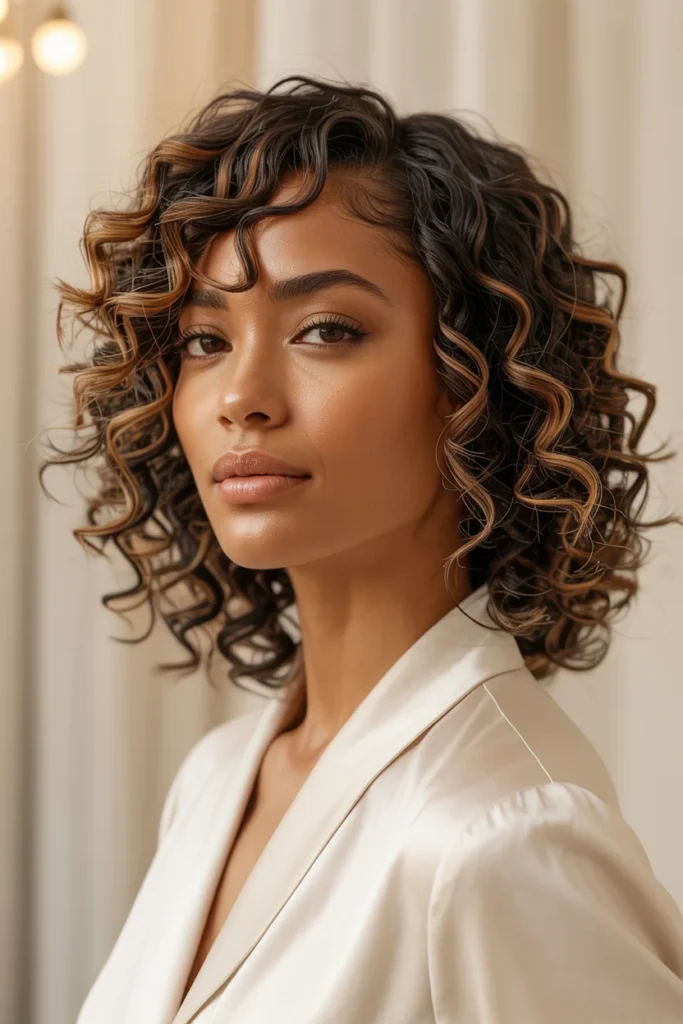
| Feature | Soft Curly Lob | Side-Swept Curly Lob |
| Front Shape | Open around the face | Curled toward one side |
| Bang Effect | No defined fringe | Soft forehead framing |
| Volume | Balanced throughout | More visual weight on one side |
| Styling | Simple curl definition | Requires shaping the front curls |
The side-swept version adds movement around the forehead without committing to a full fringe. It can be especially useful when you want a longer bob that still has a noticeable change in the front. The bangs can be adjusted in length according to shrinkage and curl density.
7. Natural Curly Afro
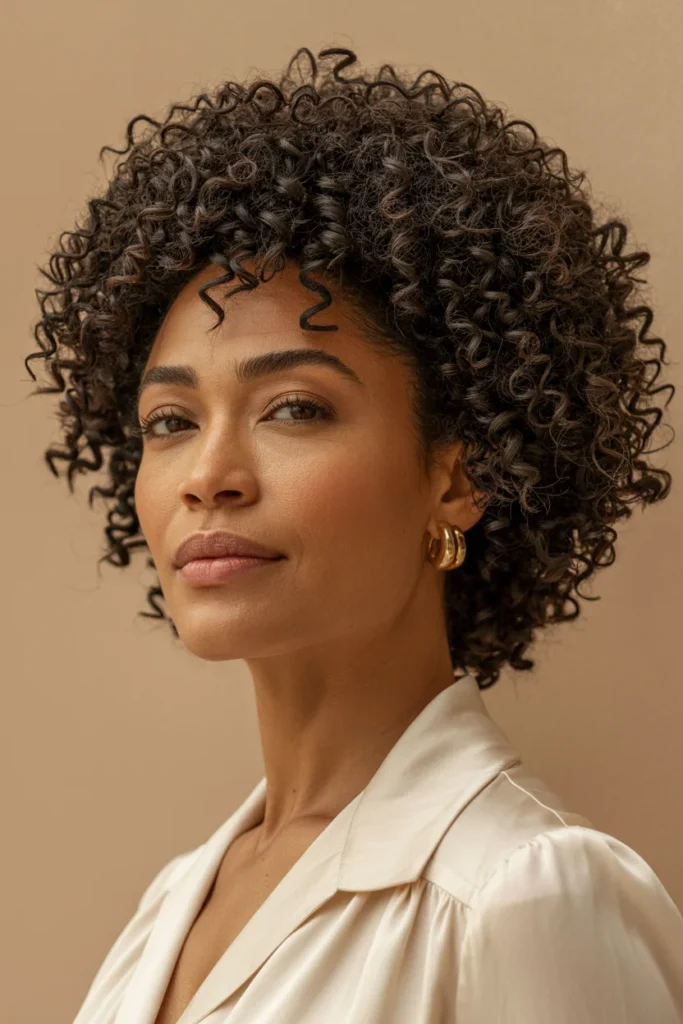
DO
- Let the natural curl pattern determine the final rounded shape.
- Moisturize regularly so the hair remains flexible and comfortable.
- Use gentle finger shaping or a wide-tooth pick at the roots for controlled volume.
- Keep the perimeter intentionally shaped so the silhouette remains balanced.
DON’T
- Brush aggressively through dry curls.
- Add excessive product to the roots if you want airy volume.
- Remove too much length without considering shrinkage.
- Use high heat frequently when the goal is to preserve natural curl definition.
A curly afro can be striking because its shape comes primarily from natural texture and volume. The most important styling principle is controlled shaping rather than forcing every curl into identical definition. A well-maintained perimeter helps the hairstyle look intentional while still retaining its natural character.
8. Curly Shag With Soft Layers
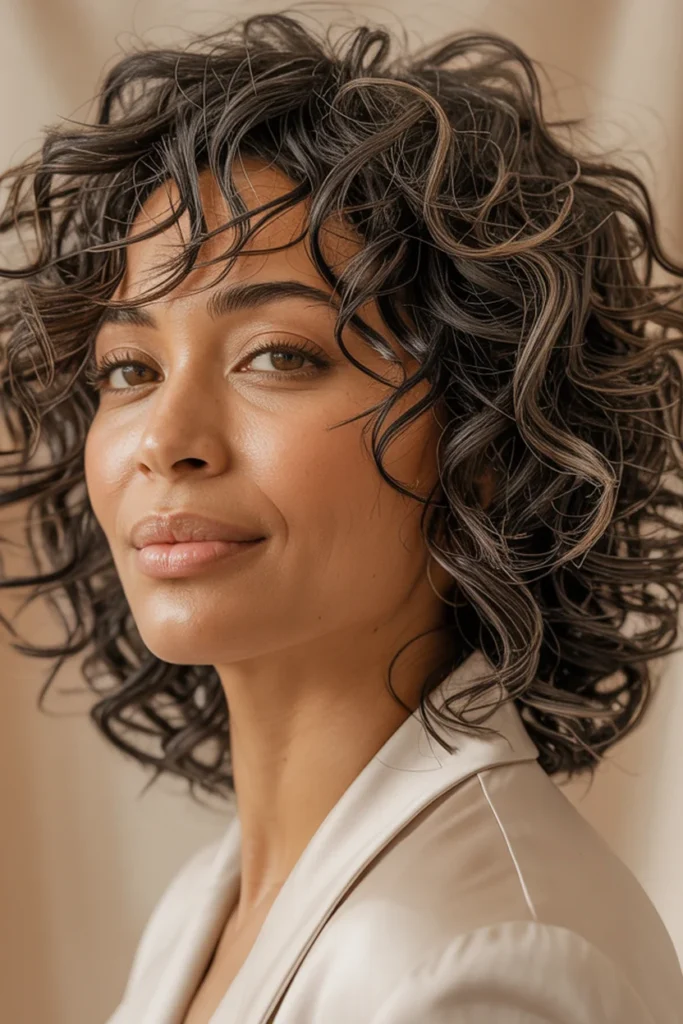
Hair Length: Chin-length to shoulder-length or longer
Layer Placement: Shorter around the crown with softer pieces toward the sides
Texture: Best suited to naturally curly or coily hair that benefits from movement
Volume: Concentrated around the crown and upper sides
Best For: Casual styling and naturally textured finishes
A curly shag works by distributing layers through the upper portion of the haircut, creating a more textured silhouette. The amount of layering should be adjusted to hair density because thick curls can expand significantly. Keep the face-framing pieces soft if you prefer a less dramatic finish.
9. Wash-and-Go Defined Curls
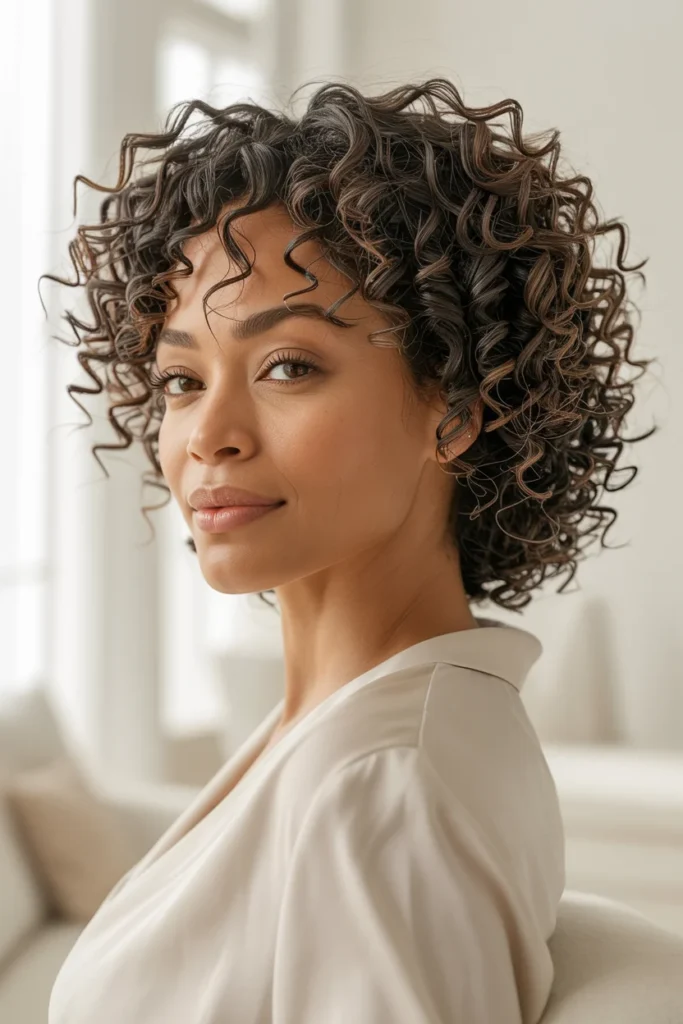
A wash-and-go can be a practical choice when you want your natural curls to remain the focus of the hairstyle.
Start by applying leave-in conditioner to soaking-wet or very damp hair. Follow with a curl cream or gel, working in small sections so the product reaches the curls evenly. Use your fingers to separate larger curl groups where needed, then scrunch upward to encourage the natural pattern.
Allow the hair to air-dry or use a diffuser on a low setting. Once completely dry, gently squeeze the curls to soften any temporary cast left by styling gel. The result should be defined curls with movement rather than a heavily manipulated appearance.
10. Curly Hair With Gray Highlights
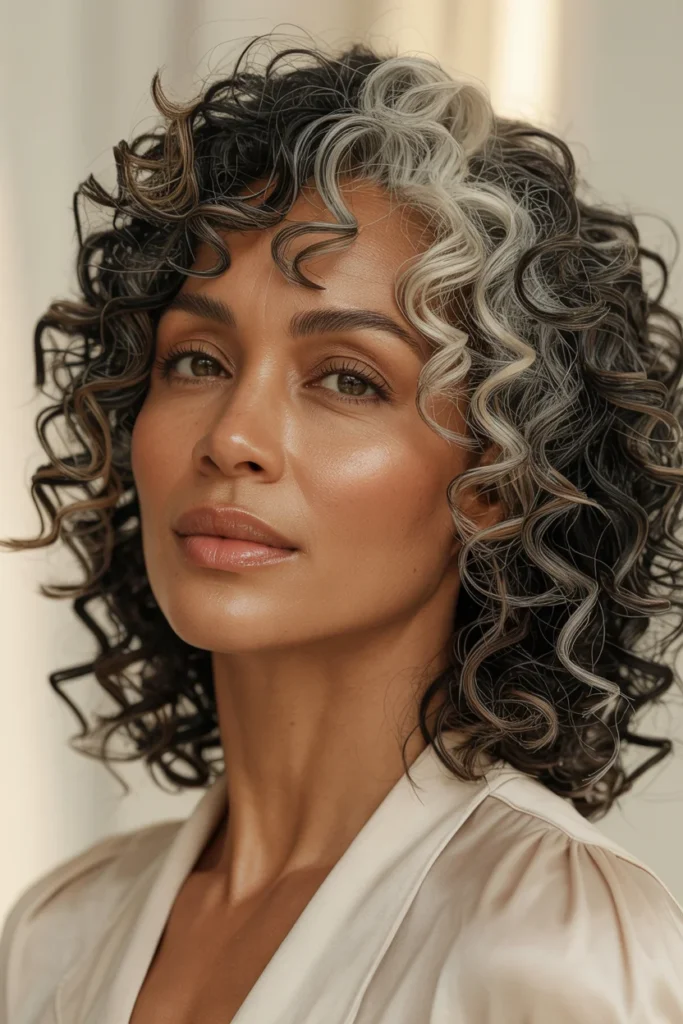
Quick Tip: If your natural gray is appearing around the temples or throughout the curls, consider working with the existing color instead of trying to hide every strand. A stylist can use strategically placed highlights or lowlights to create a more blended transition.
Gray and silver strands can add visual dimension to curly hair because the different tones catch light across the curl pattern. Keeping the haircut layered or softly rounded helps the color variation become part of the overall texture. Use a moisturizing routine because color-treated curls can become drier and need extra conditioning.
11. Side-Parted Curly Bob
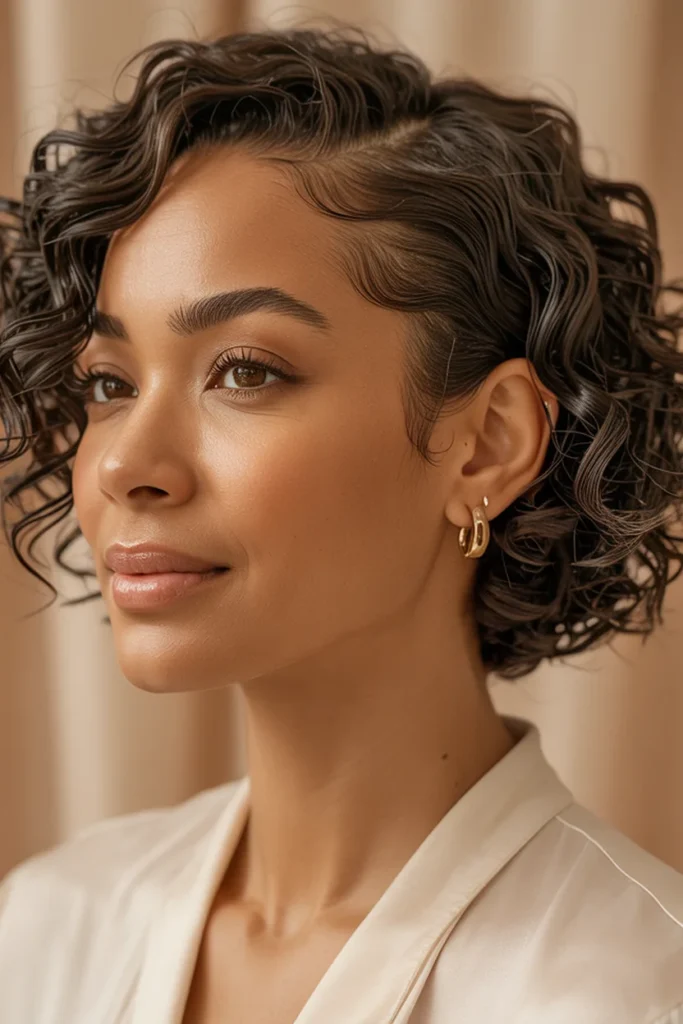
BEFORE
A bob with curls falling evenly on both sides can sometimes look visually flat, particularly when the roots have little lift. The shape may also feel too symmetrical around the face.
AFTER
Moving the part to one side creates an instant shift in volume and allows the curls to fall at slightly different heights. The result is a fuller-looking bob with a more dynamic outline around the cheek and jaw area.
For extra lift, apply styling product while the hair is damp and gently direct the roots upward during drying. Avoid repeatedly touching the curls as they dry, since excessive handling can disrupt definition and increase frizz.
12. Layered Curls With Curtain Bangs
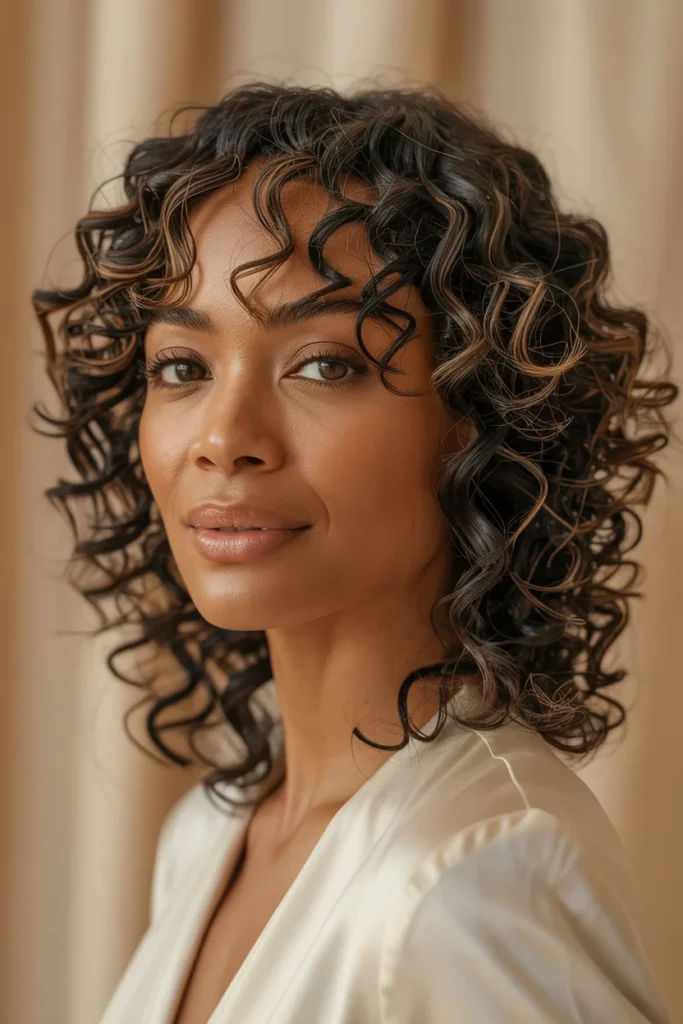
- Set the part: Begin with a soft center or slightly off-center part while the hair is damp.
- Shape the fringe: Apply a small amount of curl cream to the front sections and encourage the curls away from the center.
- Define the layers: Work styling product through the mid-lengths and ends, using your fingers to separate curl groups.
- Dry the shape: Diffuse gently while directing the curtain-like front pieces away from the face.
- Finish: Once dry, lightly separate a few curls around the forehead for a softer frame.
Curtain bangs can make layered curls feel fresh while keeping the fringe more flexible than a straight-across bang. The key is allowing the natural curl pattern to influence the final length. Remember that curly bangs can shrink considerably, so they should be cut with the dry curl pattern in mind.
13. Short Tapered Curly Cut
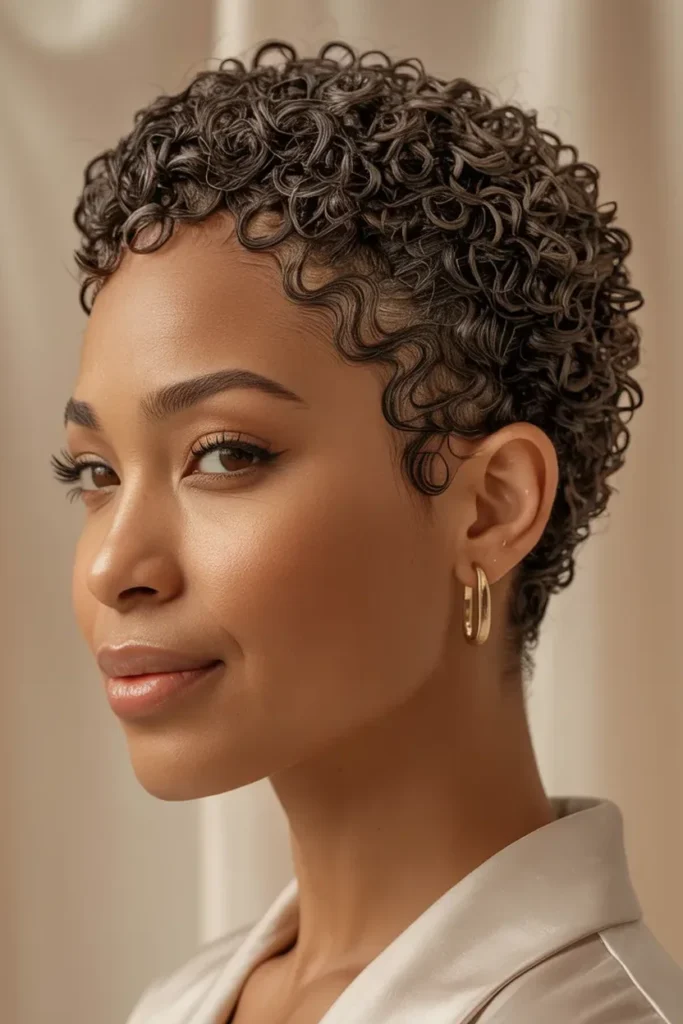
| Feature | Tighter Taper | Softer Taper |
| Sides | Closely shaped | More length retained |
| Top | Defined curls | Fuller curls |
| Maintenance | Frequent trims | Slightly longer grow-out |
| Overall Effect | Clean and structured | Soft and textured |
Both approaches keep the hairstyle compact while preserving curls on top. A tighter taper creates more contrast between the sides and crown, while a softer taper gives the haircut a fuller outline. Your choice can depend on how frequently you want to visit the salon and how much side length you prefer.
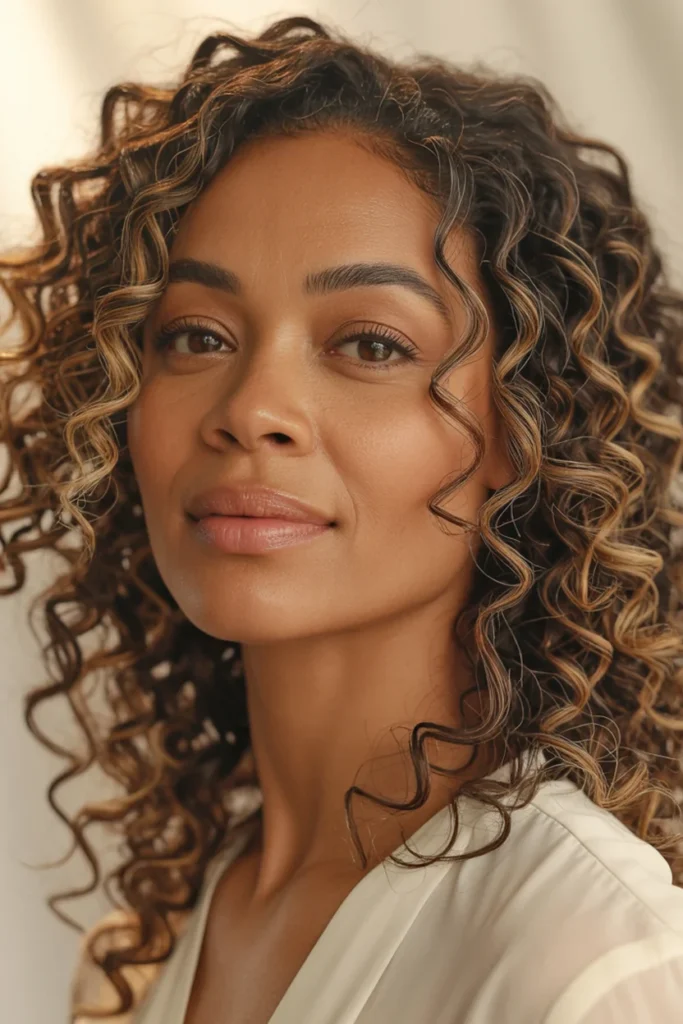
14. Medium-Length Curls With Highlights
DO
- Place lighter pieces where the curls naturally catch light.
- Keep the highlights blended rather than creating overly sharp blocks of color.
- Use moisturizing products after chemical color services.
- Ask for layers that help the highlighted curls move independently.
DON’T
- Apply excessive heat to freshly colored curls.
- Overload the hair with heavy oils that can reduce bounce.
- Ignore the effect of shrinkage when deciding highlight placement.
- Use one flat color throughout if your goal is visible curl dimension.
Medium-length curls provide enough surface area for highlights to become visible without requiring very long hair. Subtle color variation can emphasize individual curl groups and make the hairstyle appear more dimensional. Keep the cut and color coordinated so the brightest pieces naturally frame the areas you want to emphasize.
15. Curly Updo With Face-Framing Curls
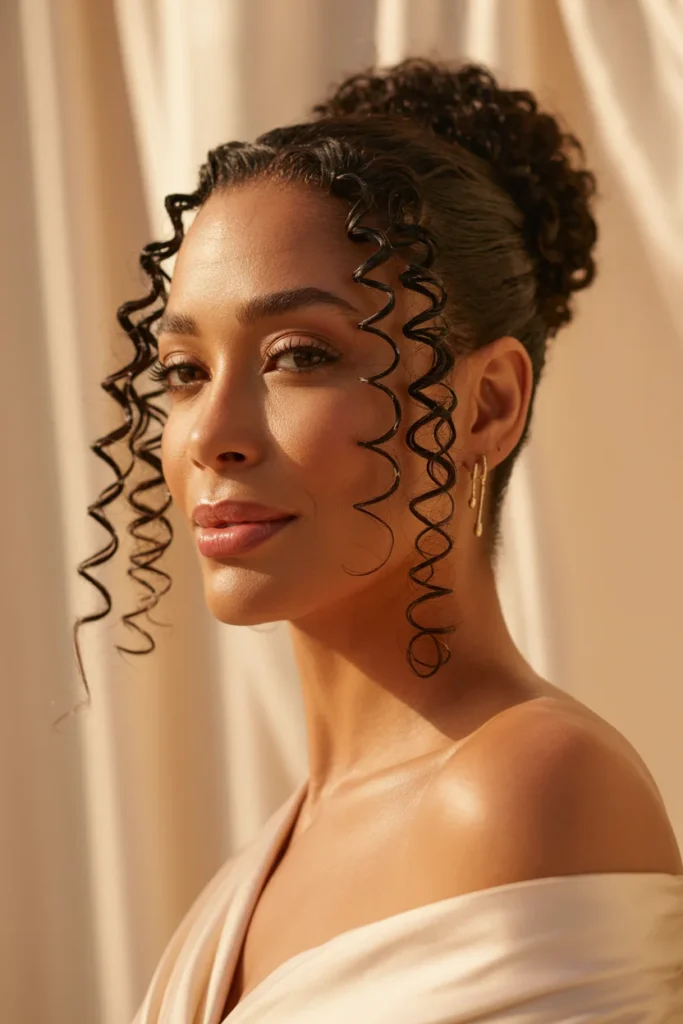
Hair Length: Medium to long
Texture: Natural curls, coils, or curl-enhanced hair
Styling Time: Approximately 20 to 35 minutes depending on preparation
Skill Level: Moderate
Best Occasion: Weddings, dinners, celebrations, and formal events
Gather the main body of the curls toward the crown or back of the head, leaving a few intentional curls around the forehead and temples. Secure the updo without pulling the front too tightly. The loose tendrils provide softness while the gathered curls create height and structure.
For longer-lasting hold, work with hair that has enough moisture to remain flexible but is not saturated with heavy product. A light-hold gel or styling spray can help secure the shape without making the curls appear rigid.
16. Half-Up Curly Hairstyle
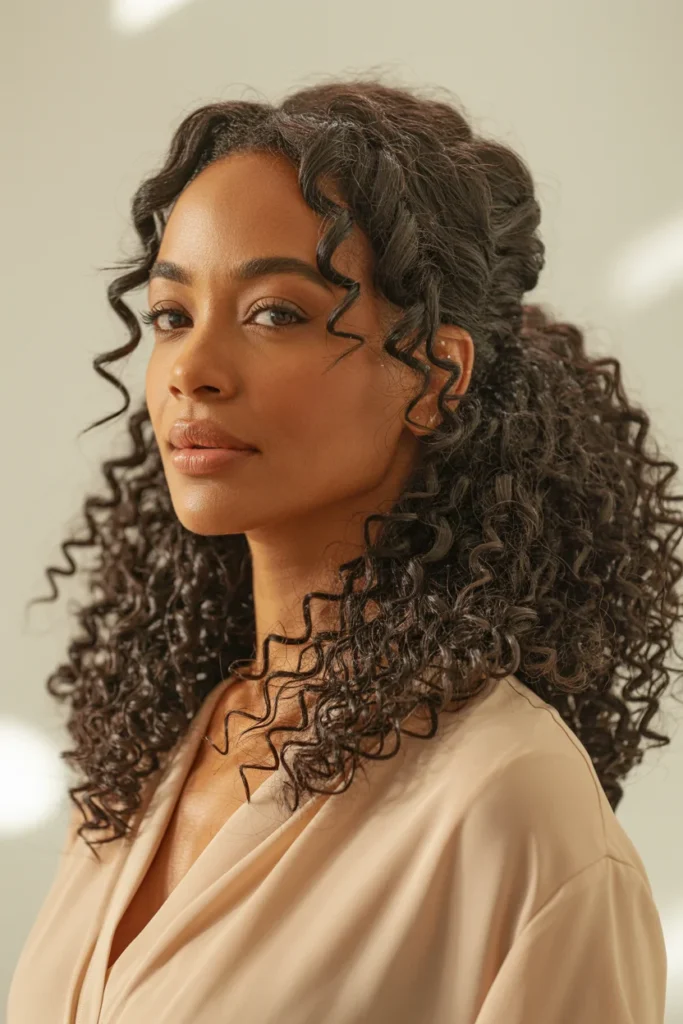
A half-up style gives you the best of two silhouettes: the face stays open while the curls remain visible through the lower lengths. Gather only the upper section, leaving the sides and back loose. This is especially useful when you want to keep volume without having all the hair around your face.
For a polished version, smooth the gathered section gently with your fingers and secure it at the crown. For a relaxed look, allow a few curls to remain loose near the temples. A decorative clip can also turn the style into an easy occasion hairstyle without changing the underlying shape.
17. Shoulder-Length Curls With Bangs
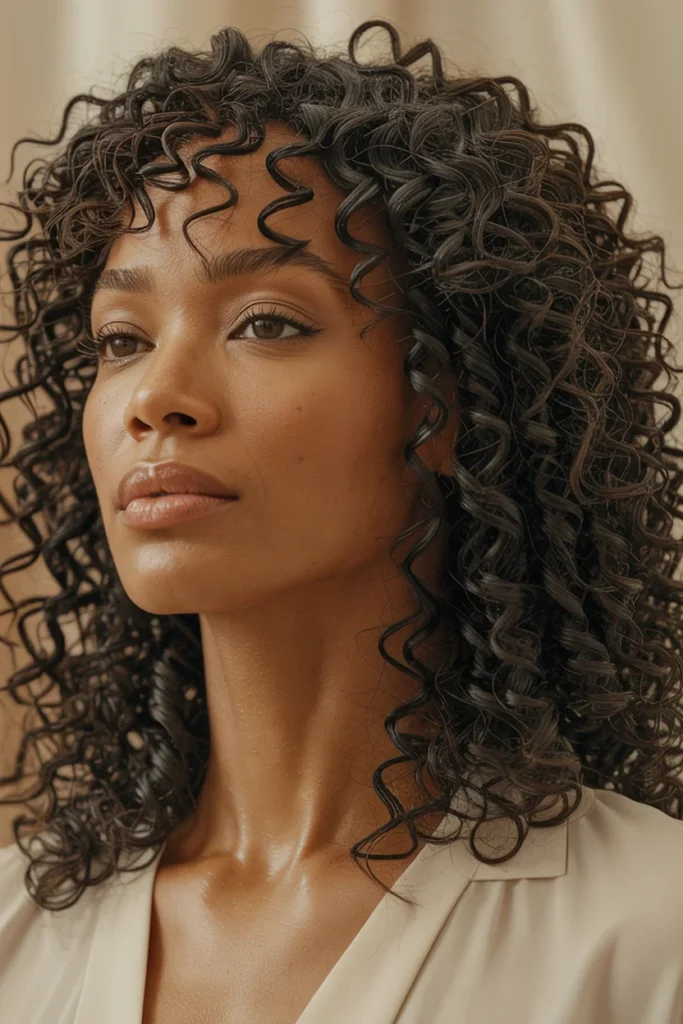
Quick Tip: Curly bangs often look shorter once the hair dries, so avoid judging the length while the curls are fully stretched. Define the bangs in their natural pattern and let them settle before deciding whether they need additional trimming.
Shoulder-length curls with bangs create a strong frame around the face while keeping enough length for a variety of styling options. The fringe can be rounded, separated into smaller curl groups, or slightly swept to one side. This style works particularly well when the bangs and layers are cut to cooperate with the natural texture.
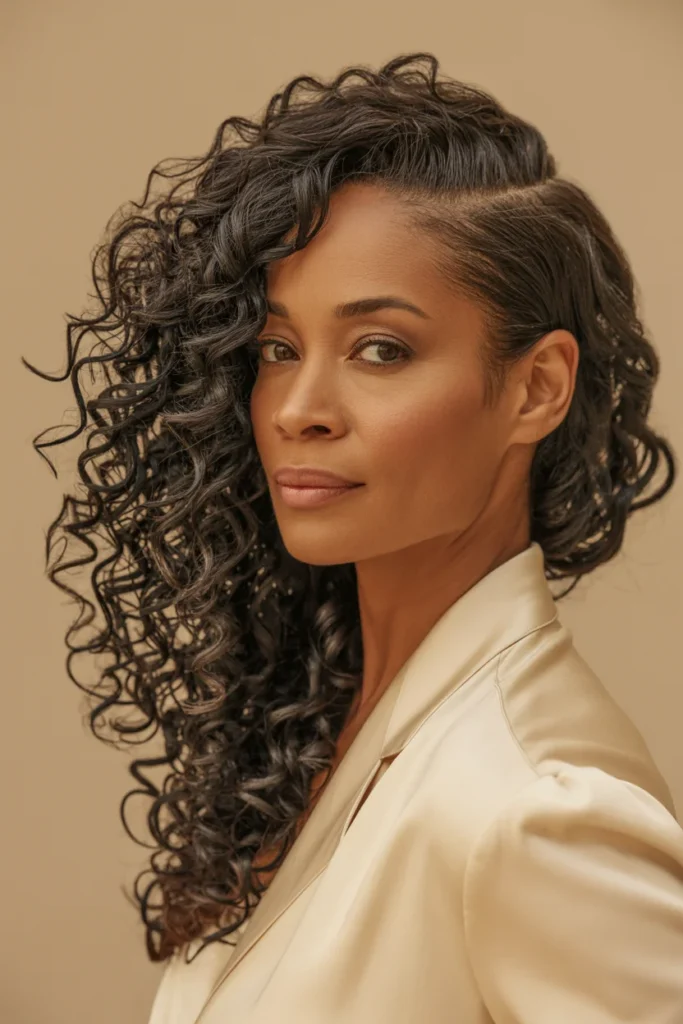
18. Voluminous Curly Side Sweep
BEFORE
Fine or flattened roots can make long curls appear narrower, particularly when the hair is parted directly down the center. The curls may still have good definition, but the overall shape lacks height.
AFTER
A deep side sweep redistributes the hair and creates more visible lift near the crown. The longer side falls diagonally across the face while the opposite side remains closer to the head, producing an intentionally asymmetrical shape.
To recreate the volume, apply a lightweight root-lifting product before drying and move the part while the hair is still damp. Once the curls are dry, gently lift the roots with your fingertips rather than combing through the lengths.
19. Curly Crop With Tapered Sides
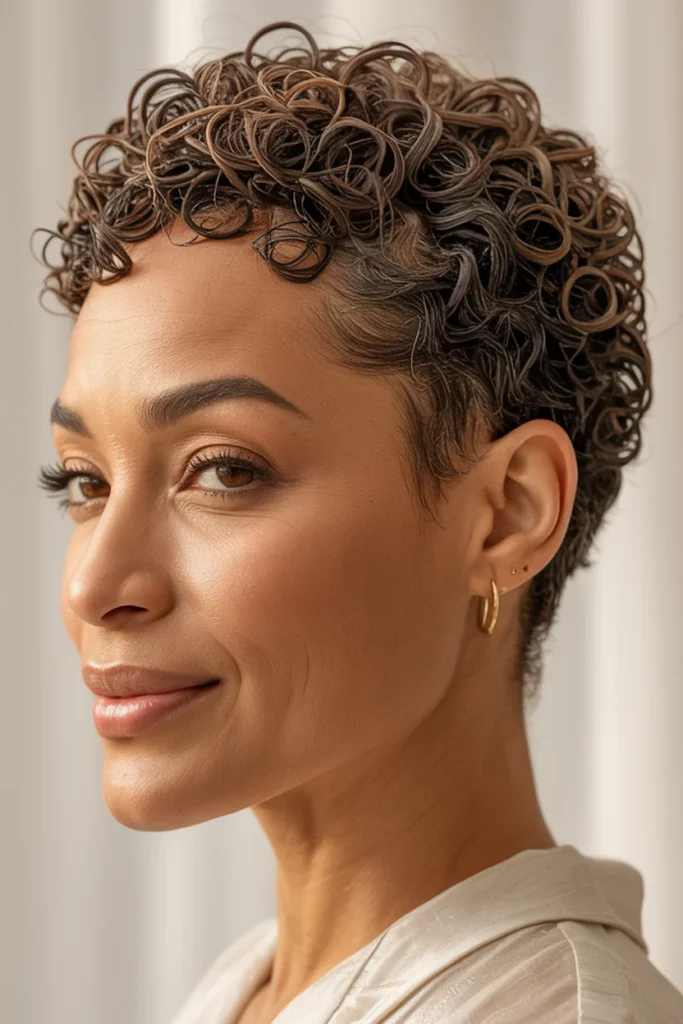
- Condition first: Use a lightweight moisturizing conditioner and rinse thoroughly so the short curls remain flexible.
- Define the top: Apply a small amount of curl-enhancing product to the longer top section.
- Shape the sides: Keep the tapered areas neat while directing the top curls into their natural pattern.
- Dry carefully: Allow the hair to air-dry or diffuse at low heat to avoid disturbing the curl groups.
- Refresh between washes: Mist the curls lightly with water and reactivate them with a small amount of styling product.
The cropped shape keeps the hairstyle visually clean while the longer curls on top provide texture. It can be especially practical for women who prefer shorter styling routines but still want their natural pattern to remain visible. Regular shaping around the tapered sections keeps the cut defined.
20. Long Natural Curls With Middle Part

| Feature | Defined Middle Part | Soft Natural Part |
| Center Line | Clearly visible | Less structured |
| Face Framing | Even on both sides | More irregular and relaxed |
| Volume | Balanced left and right | More naturally distributed |
| Finish | Polished | Casual and organic |
A middle part gives long curls a symmetrical foundation and lets the natural texture become the main visual feature. A softer part is useful if you prefer less structure at the roots. Either approach can be adapted by adjusting the amount of volume around the crown and cheekbones.
21. Curly Ponytail With Defined Texture
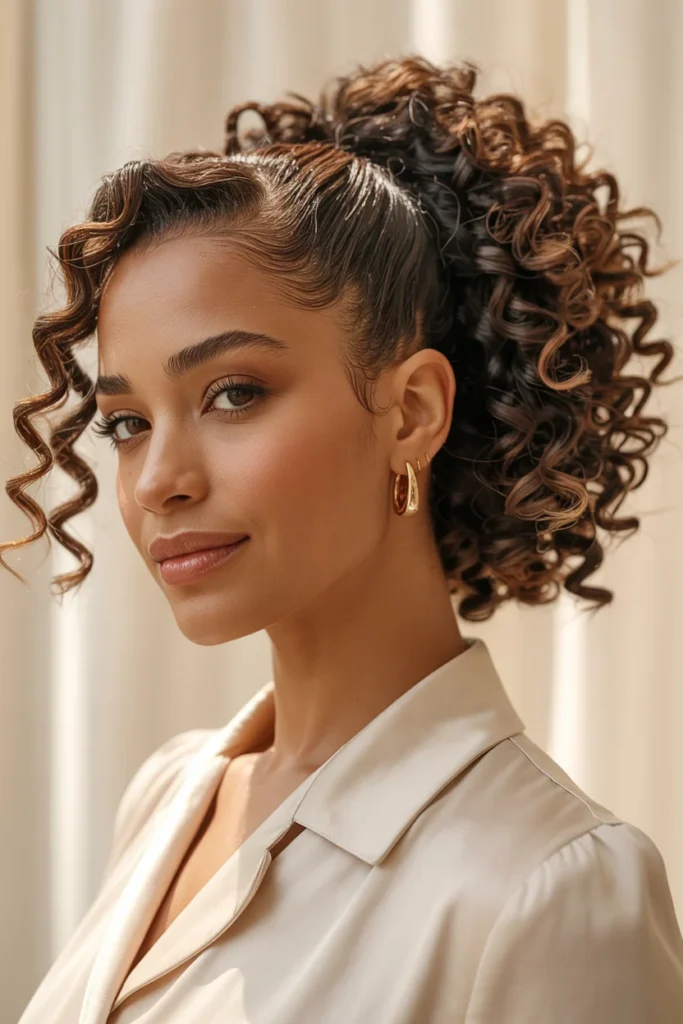
DO
- Gather the curls at a comfortable height rather than pulling them tightly.
- Use a fabric-covered elastic or another gentle hair tie.
- Define the ponytail separately before securing it.
- Leave a few curls around the hairline if you want a softer finish.
DON’T
- Stretch the curls aggressively while securing the ponytail.
- Keep the same tight ponytail position every day if it causes discomfort.
- Apply large amounts of heavy product to the roots.
- Brush the textured ponytail repeatedly once it is defined.
A curly ponytail can be casual or polished depending on its height and finish. A mid-height ponytail gives the curls room to expand, while a lower version creates a more understated silhouette. The important consideration is tension. A comfortable hold allows the style to look neat without placing unnecessary stress on the hair.
22. Soft Curly Bob for Mature Hair
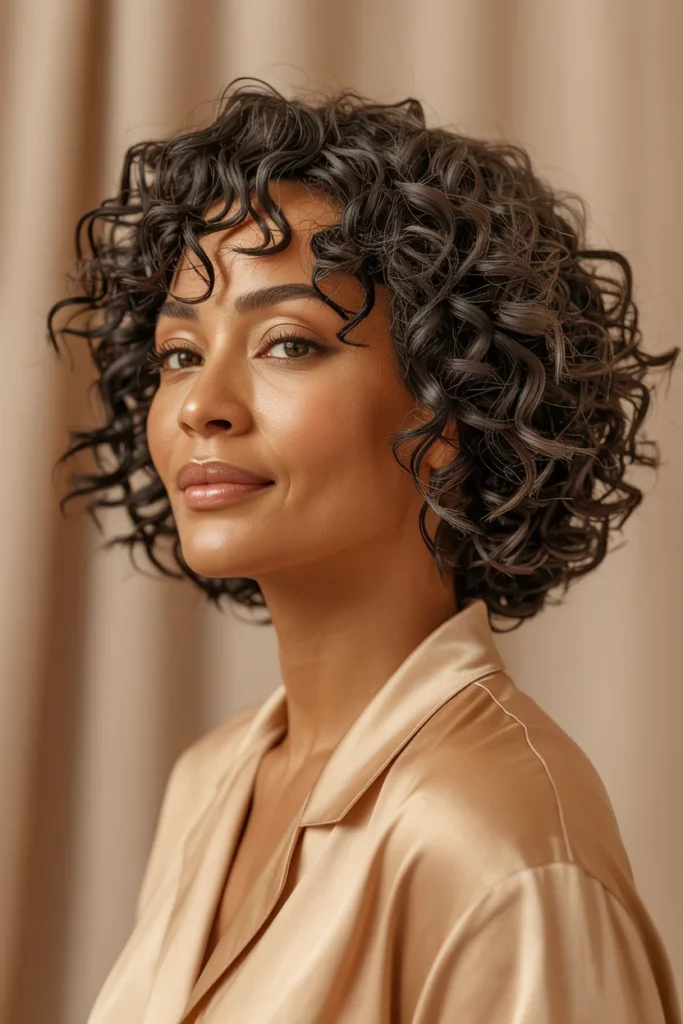
Hair Length: Chin to jawline
Shape: Rounded with softly graduated ends
Texture: Loose curls, tight curls, or curl-enhanced hair
Volume: Moderate, concentrated around the sides and crown
Maintenance: Regular shaping with simple curl refreshes
A soft curly bob can be adjusted according to hair density. Finer hair may benefit from a fuller perimeter that keeps the ends looking substantial, while very thick hair may need internal weight removed to prevent excessive bulk. Keeping the front slightly longer can also create graceful face framing.
23. Layered Curly Cut With Side Bangs
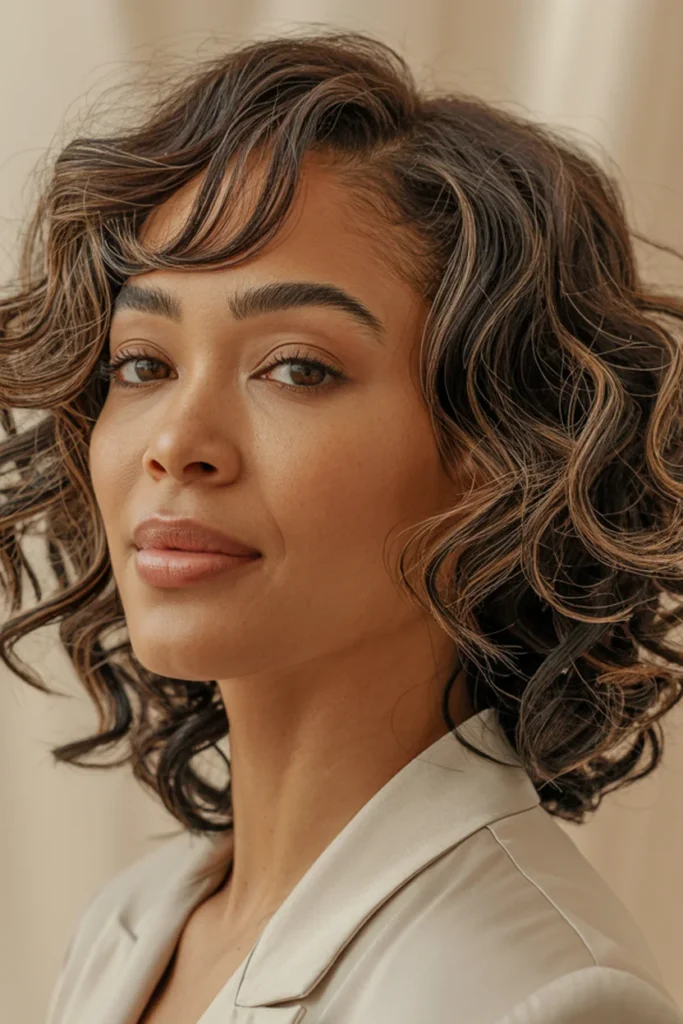
Layered curls become particularly expressive when the front is shaped into a side-swept fringe. Ask your stylist to connect the side bangs gradually into the surrounding layers rather than leaving an abrupt transition. This helps the curls blend naturally as they grow.
For daily styling, direct the front section toward the side while the hair is damp and use a small amount of curl cream to encourage definition. If your hair has significant shrinkage, allow the curls to dry completely before deciding whether the fringe needs additional shaping. This cut is adaptable enough for both relaxed everyday styling and more polished occasions.
24. Elegant Curly Hairstyle for Special Occasions
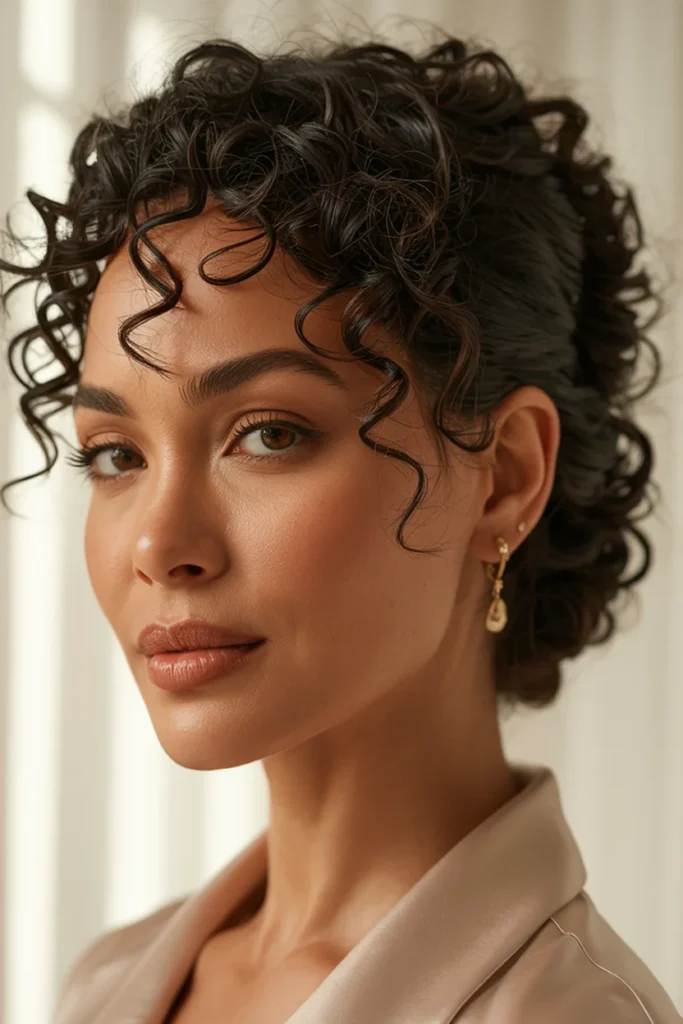
For an evening event, gather defined curls into a low or medium-height updo while preserving visible texture around the crown. Leave several deliberate curls near the temples or cheekbones to keep the front soft. A side part can add additional structure, while a simple accessory can provide a polished finishing detail.
The most successful formal curly styles usually depend on preparation rather than excessive product. Start with well-conditioned hair, define the curls before pinning them, and use enough hold to secure the finished shape. This approach allows the hairstyle to remain touchable and textured rather than stiff.
25. Defined Curls With Natural Gray Blend
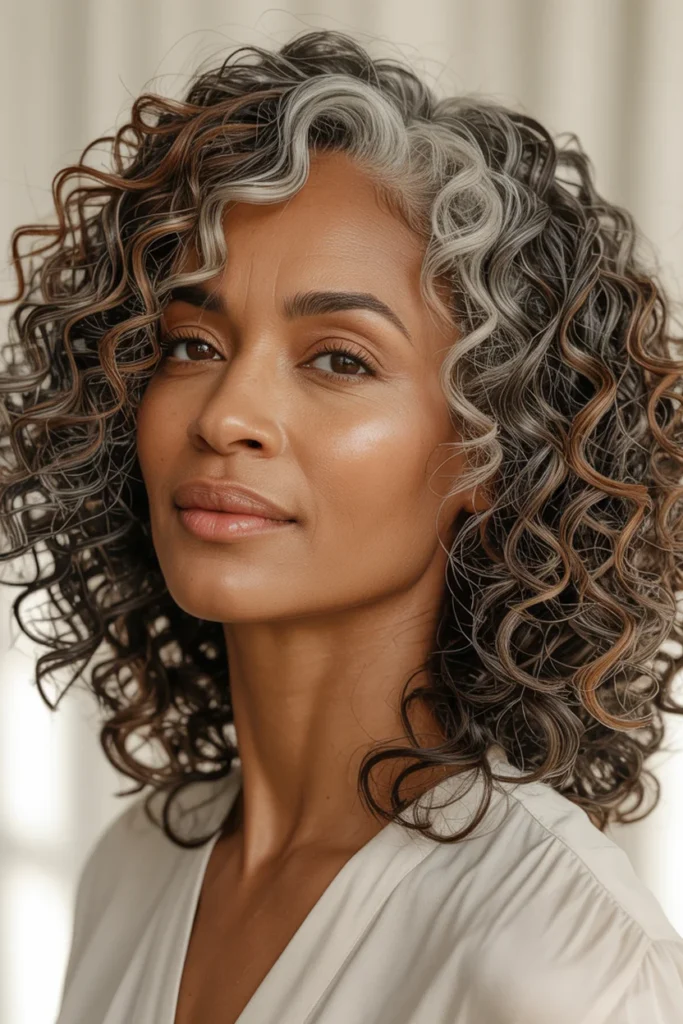
BEFORE
As gray strands become more noticeable, curls can show several shades throughout the same hairstyle. If the color transition is not considered, the contrast may look uneven, particularly around the hairline and crown.
AFTER
Allowing the gray to blend naturally creates a multi-tonal effect that can complement the curl pattern. Silver strands can catch light differently from darker curls, adding subtle dimension without requiring a complete color change.
A gentle color plan can help the transition look intentional if you are moving toward natural gray. Focus on maintaining moisture and reducing unnecessary heat, especially if the hair has also been chemically colored. The final result should work with the natural variation rather than trying to make every curl identical.
How to Choose the Best Curly Hairstyle Over 40
Start with your natural curl pattern and density. A haircut that works beautifully on fine, loose curls may need a different layer placement on dense coils. The amount of shrinkage also matters, particularly for bobs, bangs, and shorter cuts.
Next, consider face framing. Layers around the cheeks can soften a haircut, while greater height at the crown can change the overall proportions. A side part creates asymmetry, while a middle part gives a more balanced appearance.
Think about your daily routine as well. If you prefer to wash, condition, define, and go, a shape that supports your natural texture may be more practical than a style that requires frequent heat styling. Shorter cuts can reduce drying time, but tapered styles generally need more frequent shaping.
Finally, consider maintenance and growth. Bangs and tightly tapered sides need regular trims to preserve their intended shape. Longer layered styles may offer more flexibility between appointments.
Tips for Maintaining Healthy Curly Hair
- Prioritize moisture: Curly and coily textures can lose moisture more quickly because natural oils do not travel as easily along the bends of the hair. Use conditioning products that suit your hair’s density.
- Detangle gently: Work through curls with your fingers or a wide-tooth comb while the hair is conditioned or sufficiently damp.
- Limit unnecessary heat: Frequent high heat can affect the appearance and feel of textured hair. When using a diffuser or other heated tool, use an appropriate heat protectant and moderate settings.
- Protect curls overnight: A satin or silk bonnet, scarf, or pillowcase can reduce friction while sleeping and help preserve the shape.
- Refresh strategically: Instead of completely restyling every morning, mist dry curls lightly with water and reactivate individual sections with a small amount of styling product.
- Watch product buildup: Heavy creams, oils, and gels can eventually make curls feel coated or reduce volume. Clarify as needed according to your hair’s response.
- Trim according to the cut: Short bobs, pixies, bangs, and tapered cuts usually need more frequent shaping than longer styles.
- Consider humidity: Moisture in the air can change how curls behave and increase frizz. Lightweight hold products can help preserve definition without making the hair feel rigid.
Frequently Asked Questions
What curly hairstyles are best for Black women over 40?
The best choice depends on curl pattern, density, hair length, face shape, lifestyle, and preferred maintenance level. Options include natural afros, shoulder-length curls, layered cuts, curly bobs, pixies, lobs, ponytails, half-up styles, and formal updos.
Are shorter curly hairstyles easier to maintain?
Shorter hair can reduce washing and drying time, but not every short cut is automatically lower maintenance. Pixies, tapered cuts, and curly crops often need regular trims to maintain their shape. A longer wash-and-go style may require more drying time but fewer salon visits.
How can I make natural curls look more defined?
Start with well-conditioned damp hair, then apply a curl-defining product in manageable sections. Finger coiling, scrunching, or gently raking the product through the curls can encourage definition. Avoid excessive touching while the hair dries because repeated manipulation can disturb curl groups.
What curly hairstyles work well with thinning hair?
Fuller bobs, carefully placed layers, shorter rounded cuts, and styles that preserve density around the perimeter can help fine or thinning hair appear more substantial. Avoid removing too much weight from already delicate ends, and choose layering based on the actual density of the hair.
How can I protect curly hair while sleeping?
A satin or silk bonnet, scarf, or pillowcase can reduce friction during sleep. Loosely gathering longer curls or using a gentle pineapple-style arrangement can also help preserve volume and definition. Avoid securing the hair so tightly that it creates tension at the roots or hairline.
Final Thoughts
The most useful curly hairstyle is one that works with your natural texture rather than requiring you to fight it every morning. From a defined curly bob and tapered pixie to long layered curls, a natural afro, soft bangs, or an elegant updo, there are plenty of ways to adapt the shape to your hair density, face shape, lifestyle, and preferred maintenance routine.
These 25 curly hairstyles for Black women over 40 are meant to provide practical inspiration rather than one fixed formula. Save this guide to Pinterest so you can return to your favorite ideas when planning your next haircut or styling routine, then choose the shape and finish that feel most natural for you.