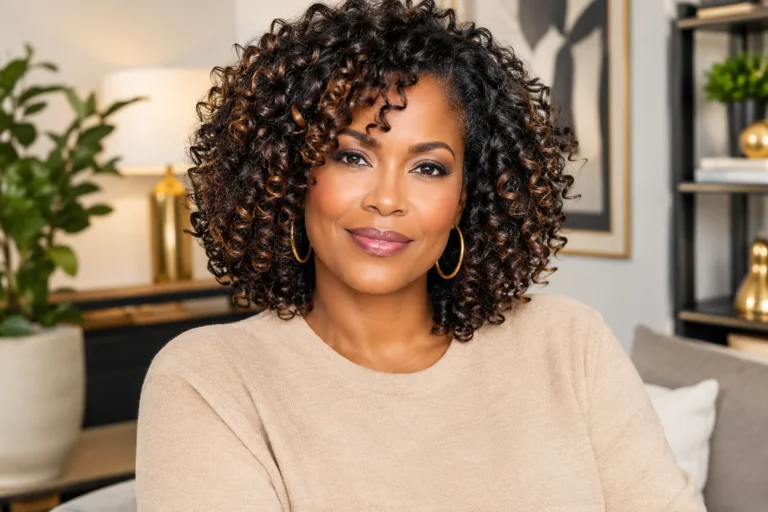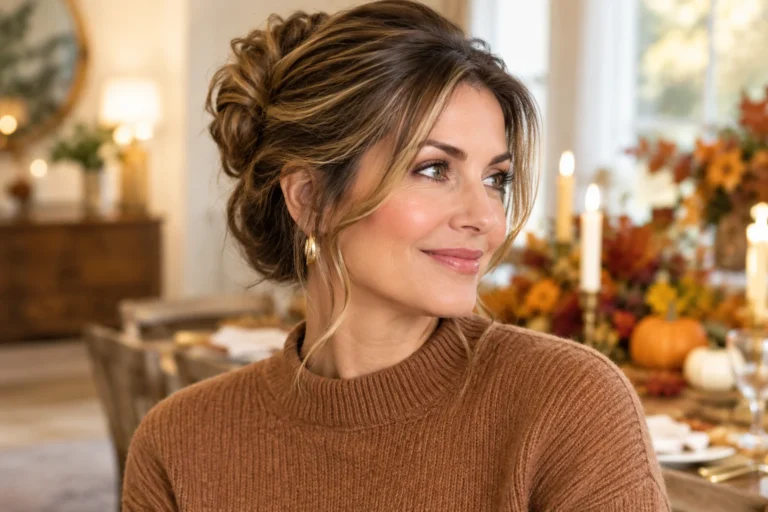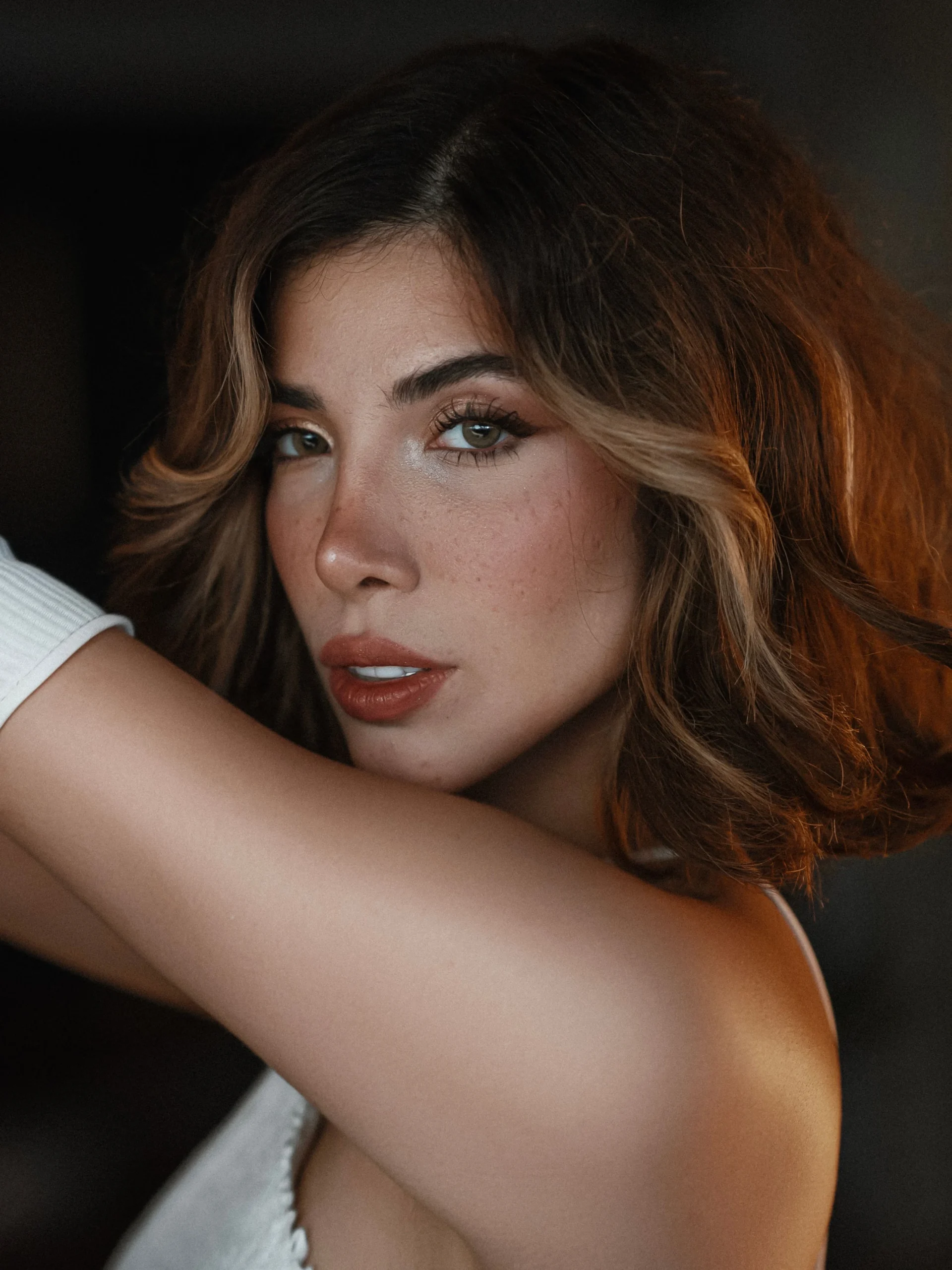
24 Gorgeous Highlight Ideas for Women Over 40
Introduction
Highlight ideas for women over 40 work best when the colour looks like it belongs to the hair, not like it sits on top of it. The right placement can soften the face, add movement to a cut, and make fine hair look fuller without a drastic colour change.
This list covers soft, wearable options rather than extreme contrasts. You will find warm caramels, cool ash tones, gentle grey blending, and low upkeep choices that grow out gracefully. Each idea notes who it suits, how it is placed, and what the upkeep really looks like, so you can walk into the salon with a clear picture.
1. Soft Caramel Highlights
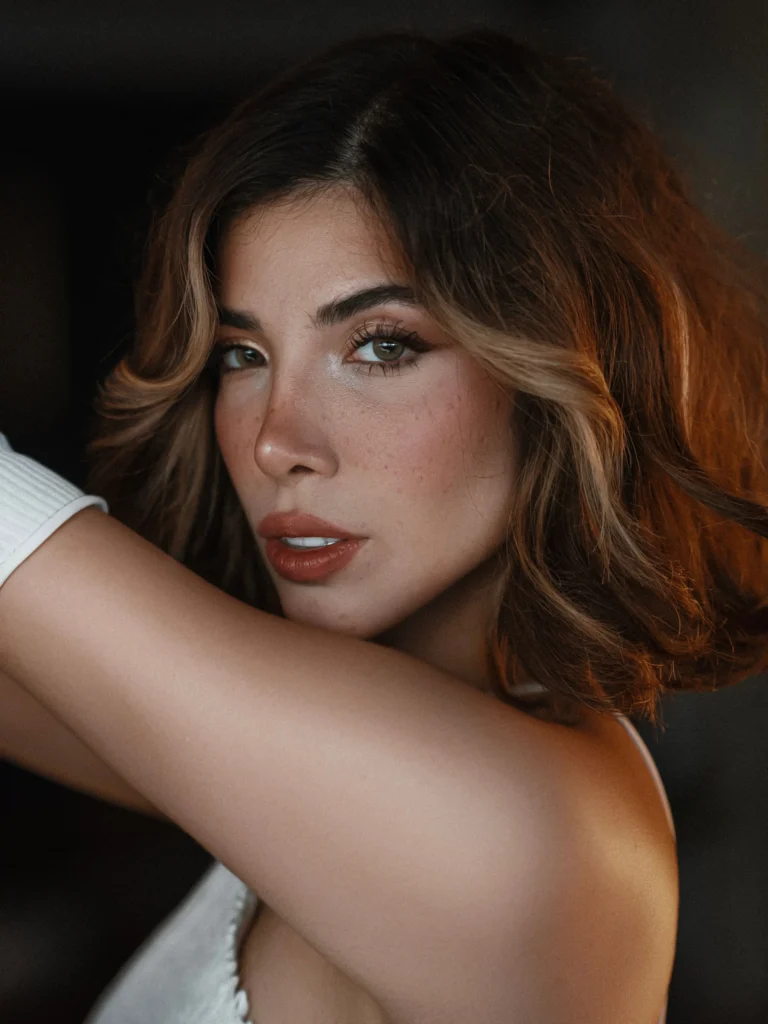
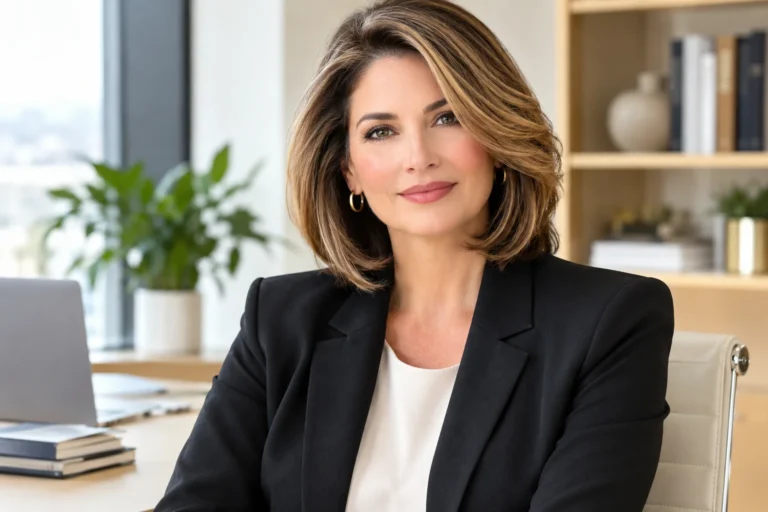
Warm caramel ribbons run through the mid lengths and ends here, leaving the roots in their natural shade. The colour melts into brown or dark blonde hair without a harsh line, and the result reads as depth rather than stripes.
This suits medium to thick hair best, since the ribbons need enough length to show the blend. It flatters warm and neutral skin tones, and it pairs well with layered cuts where the colour can catch the light as the hair moves.
2. Face Framing Blonde Highlights
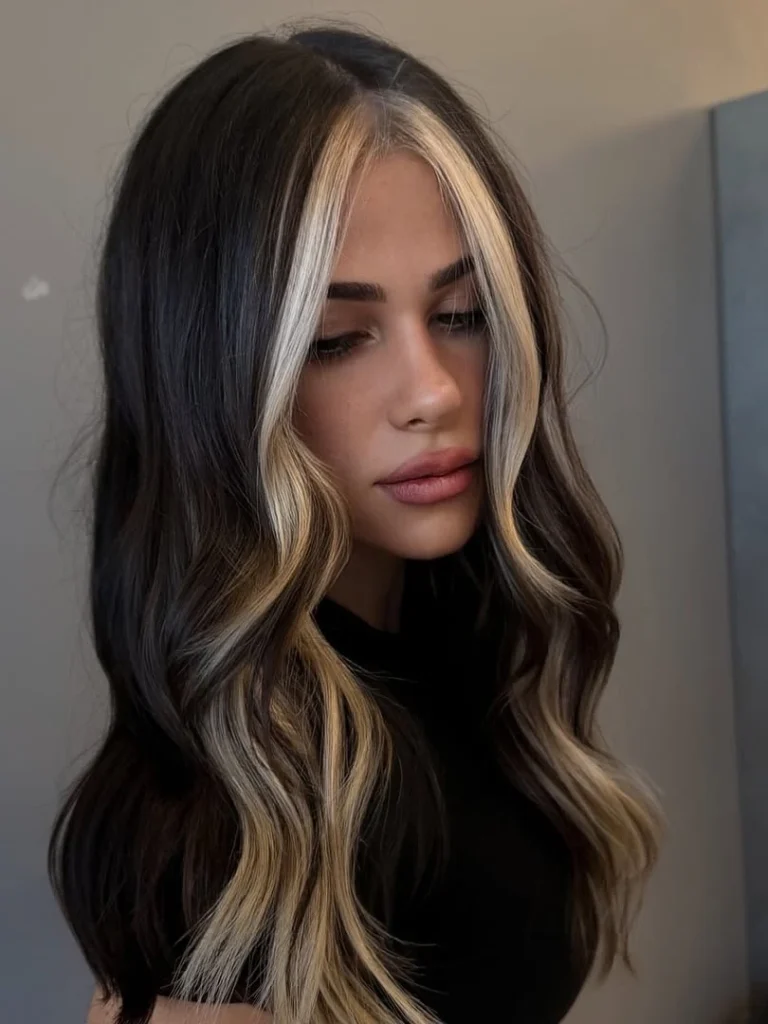
- Length: shoulder length or longer, so the front pieces have room to fall naturally.
- Placement: fine slices around the face, brightest near the cheekbones.
- Texture: works on straight and wavy hair, where the light pieces stay visible.
- Face shape: opens up round and square faces by drawing the eye upward.
- Upkeep: a toner refresh every 8 to 10 weeks keeps the blonde from turning brassy.
Lighter pieces around the face act like a soft frame, brightening the features without lightening the whole head. Ask your colourist to keep the pieces fine and blended, so the grow out stays gentle rather than creating a hard line.
3. Ash Brown Highlights
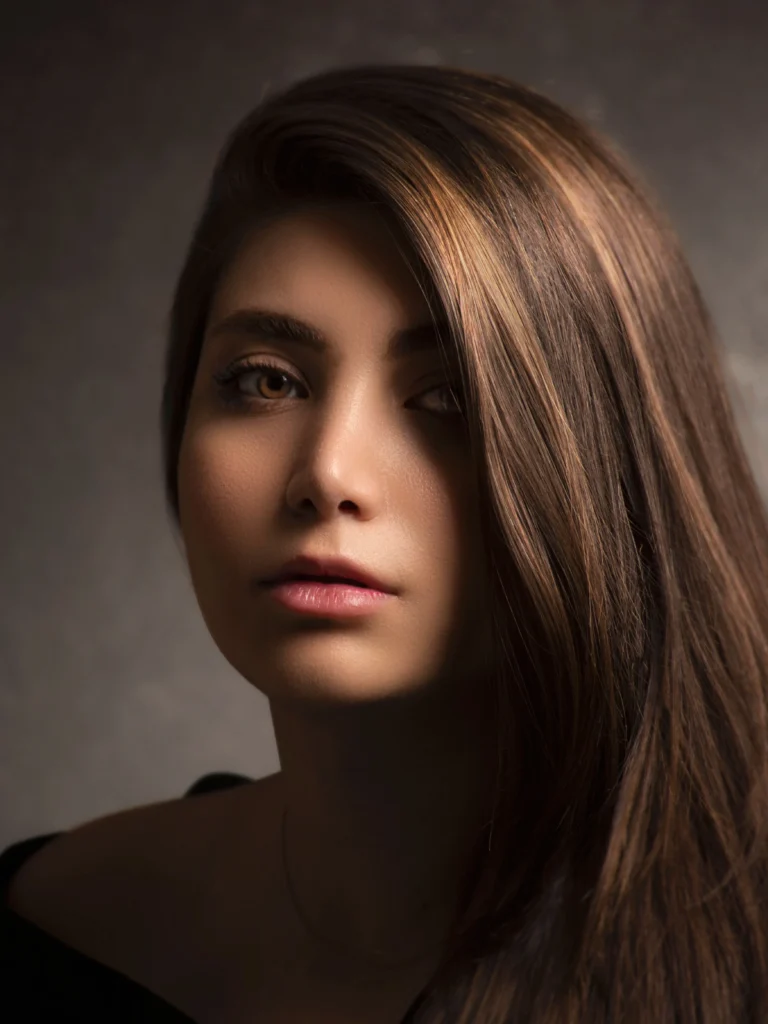
Quick Tip: Ash brown turns brassy fast on warm bases, so ask your colourist for a cool toner at the appointment and use a blue based shampoo once a week, not every wash, to hold the cool tone.
Ash brown highlights cool down warm brown hair with soft, muted ribbons that read as natural shadow rather than colour. The tone suits neutral and cool skin best, and it pairs well with straight or slightly wavy hair.
Keep the pieces fine and close to the base shade, since wide ash panels can look grey instead of dimensional.
4. Golden Honey Highlights
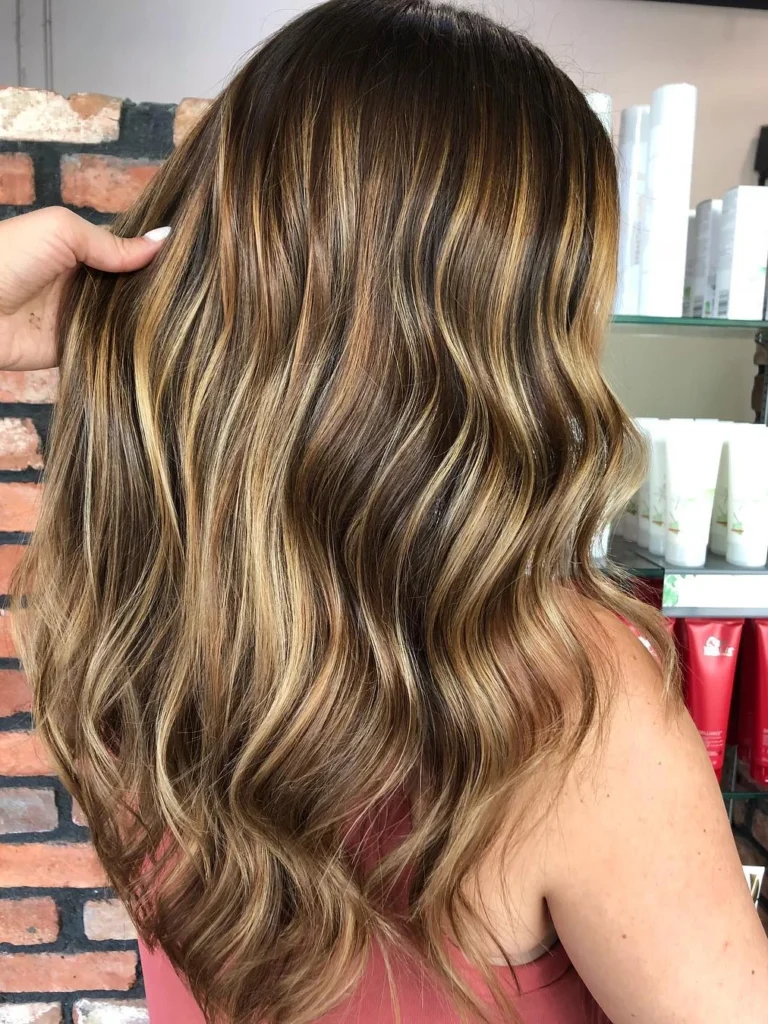
BEFORE: Hair that looks flat in photos, with one solid colour from roots to ends and little visible movement.
AFTER: Warm honey ribbons catch the light with every turn of the head, and layers suddenly look intentional instead of heavy.
Golden honey works best on medium brown to dark blonde bases. The warmth adds a sunlit quality that suits spring and summer, but it holds up through winter too when paired with a gloss. Keep the ribbons fine and varied in width, since uniform stripes are what make highlights look dated.
For a related colour idea that blends rather than stripes, see these beautiful balayage hairstyles for women over 40.
5. Subtle Babylights
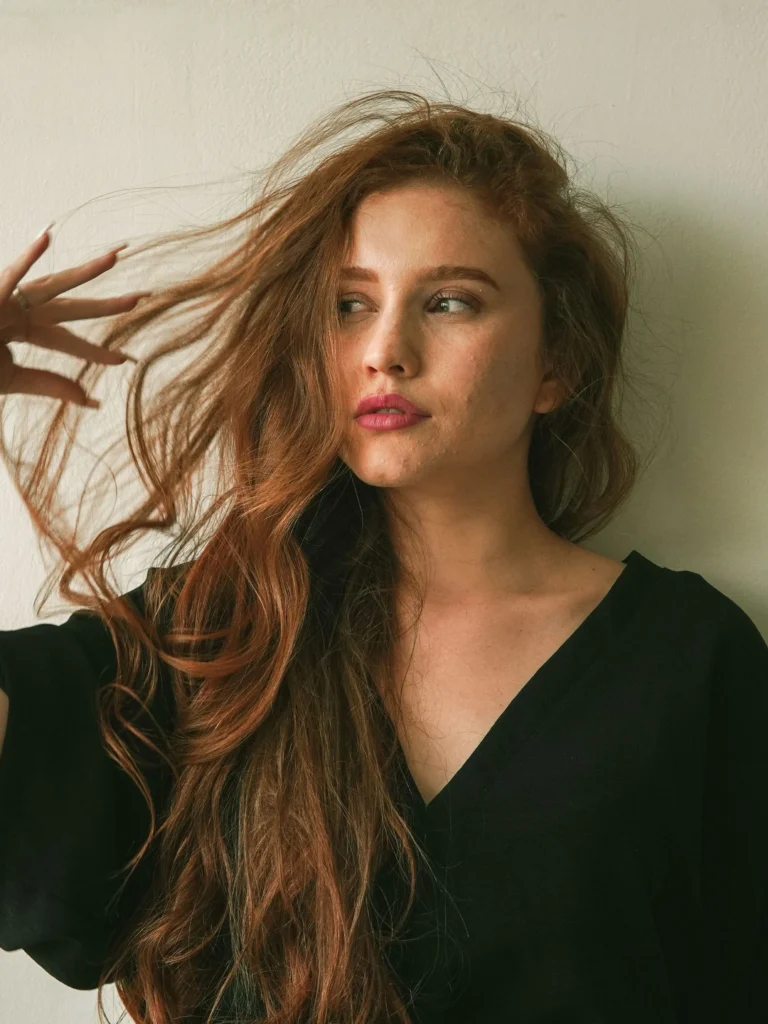
- Start with clean, dry hair so the colourist can see the natural fall.
- Take very fine, scattered sections, mostly through the top layer and around the part.
- Apply a colour only one or two levels lighter than the base.
- Process gently, then gloss to blend the fine pieces into the natural shade.
- Finish with a soft blow dry that shows the dimension without styling it away.
Babylights suit fine hair beautifully, because the tiny pieces add the illusion of thickness without weight. They also suit women growing out old colour, since the fine placement disguises the line between old and new.
6. Warm Copper Highlights
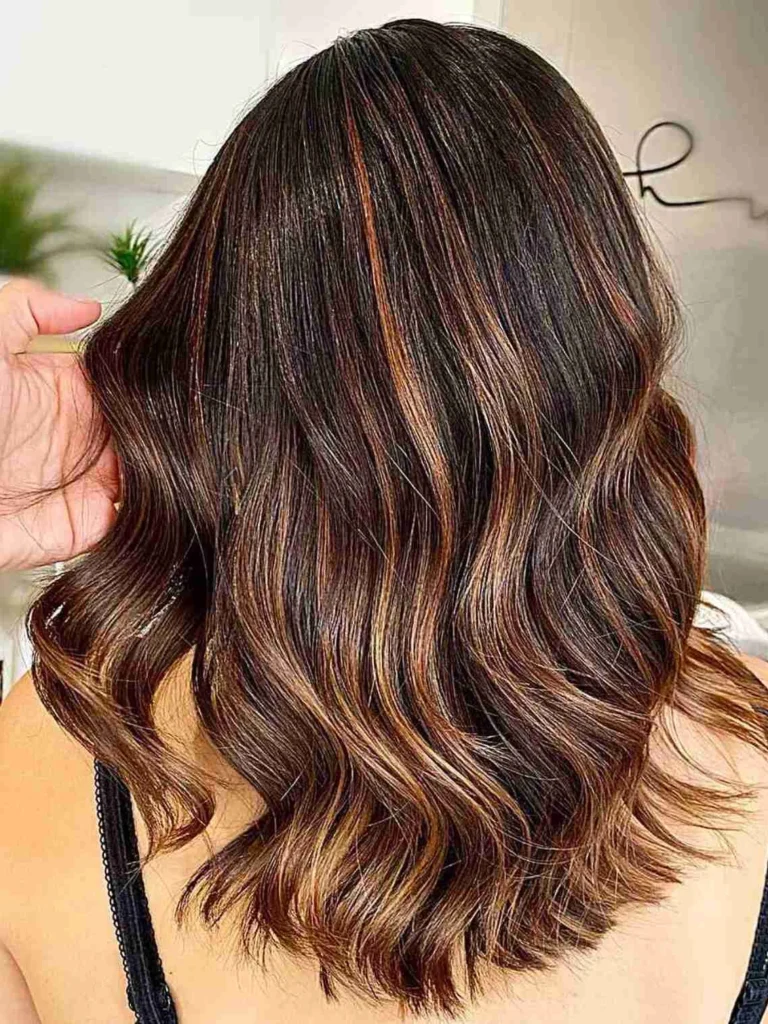
| Feature | Fine Copper Ribbons | Bold Copper Panels |
|---|---|---|
| Look | Warm glow woven through the hair | Rich, visible copper blocks |
| Upkeep | Toner every 8 weeks | Colour refresh every 6 weeks |
| Best for | First time copper wearers | Women who love a statement shade |
Fine ribbons give warmth without commitment, while bolder panels make copper the star of the cut. Both need a colour safe shampoo and cooler water to hold the tone, since red based shades fade faster than brown or blonde.
If your hair is naturally dark, expect the colourist to lift gently in stages rather than forcing bright copper in one visit.
7. Silver Blending Highlights
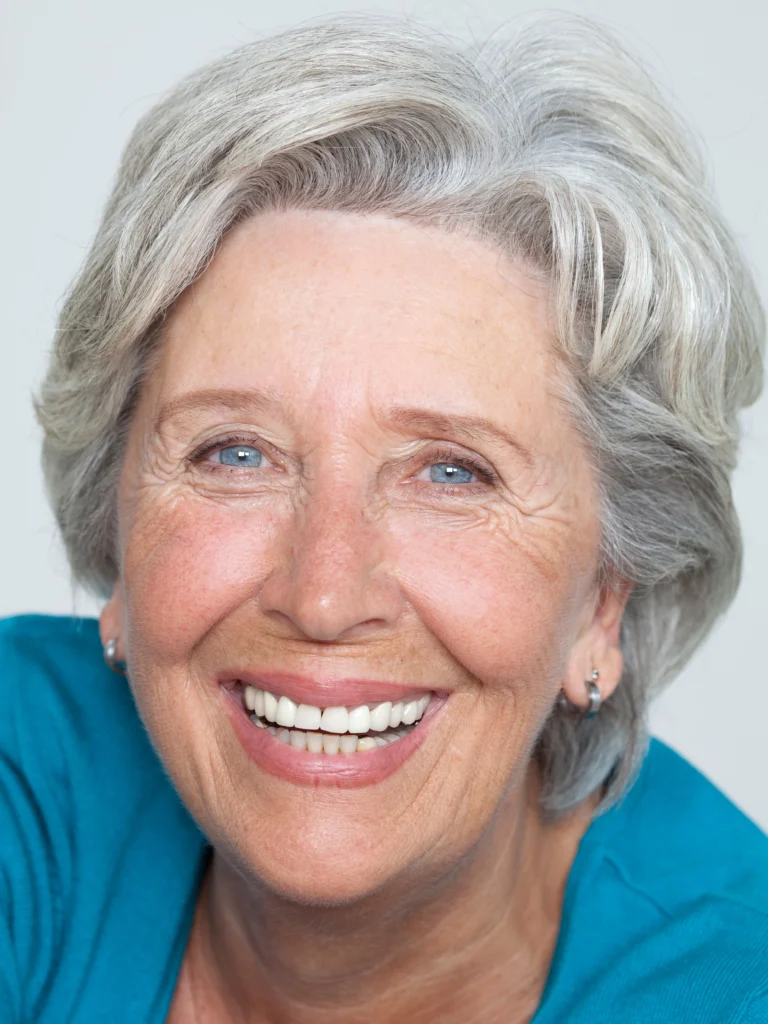
DO:
- Choose a cool, ashy toner that matches your natural grey pattern.
- Place the lightest pieces where grey already appears, usually at the part and temples.
- Keep the base close to your natural shade for a seamless grow out.
DON’T:
- Ask for solid platinum pieces that fight the natural grey.
- Skip the toner, since untoned lightened hair turns yellow fast.
- Overlap lightener on previously lightened lengths.
Silver blending turns grey regrowth from a problem into part of the design. The idea is to weave light silver and soft grey pieces through the hair so new grey simply joins the pattern. Maintenance drops sharply compared with full coverage colour, and many women stretch salon visits to 12 weeks or more.
8. Espresso Mocha Highlights
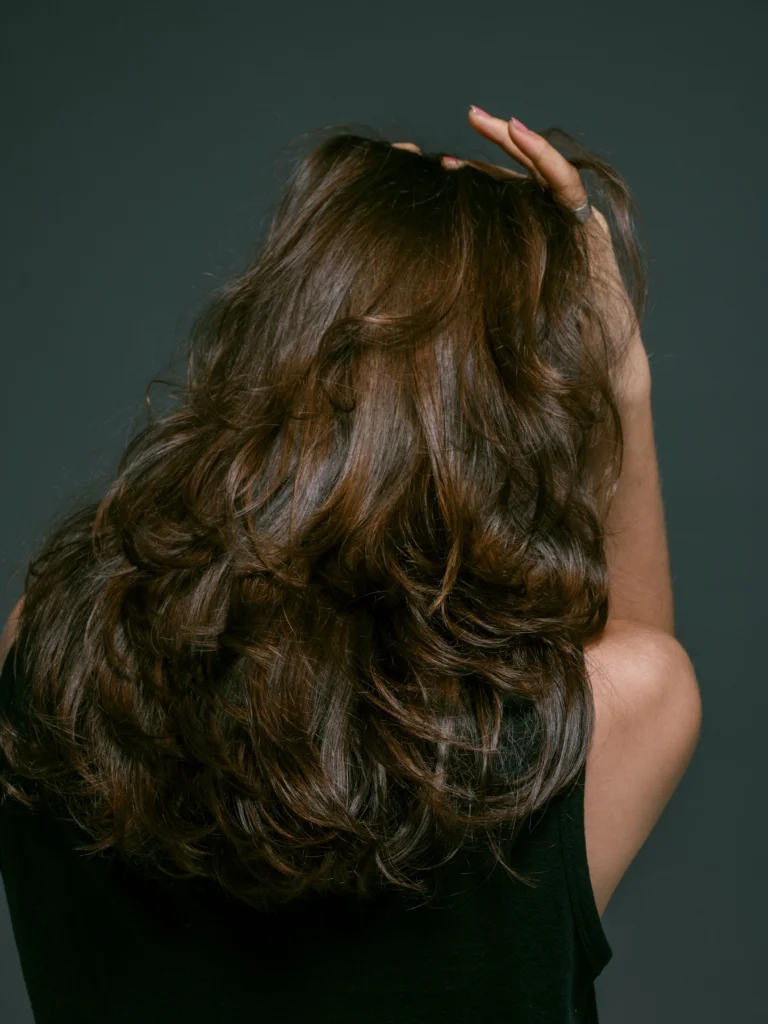
Hair Length: medium to long
Hair Type: thick or coarse
Face Shape: oval, heart, square
Styling Time: 20 minutes with a blow dry.
Espresso mocha highlights add a rich, coffee toned sheen to dark hair without going blonde. The pieces sit only a shade or two lighter than the base, so the effect reads as shine and depth in daylight.
This is a strong choice for women who want dimension but dislike obvious colour, and it grows out with almost no visible line.
9. Dimensional Brunette Highlights
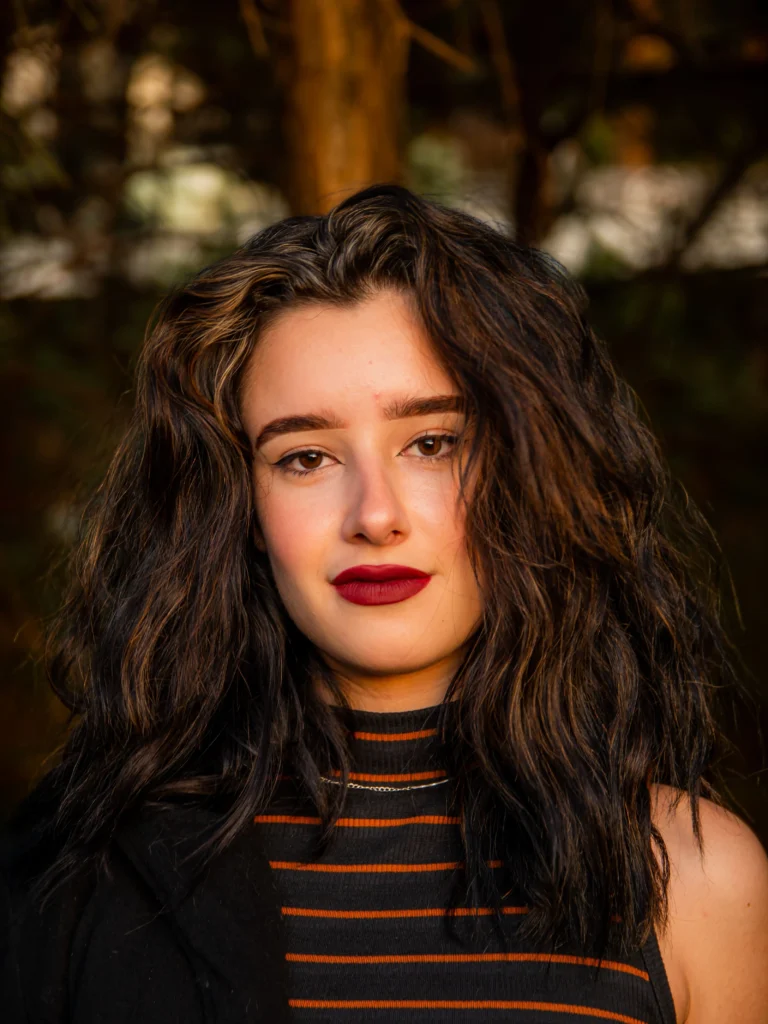
Brunette hair gains its depth from contrast, and dimensional colour uses two or three close tones rather than one flat shade. A darker base stays at the roots, a mid brown runs through the lengths, and a lighter caramel touches the ends and face framing pieces. The layered tones make the hair look thicker and more textured, which helps straight hair that tends to fall flat. Ask for the tones to stay within two levels of each other, since wider jumps create stripes. A gloss between appointments keeps all three tones reading as one intentional colour.
10. Blonde Balayage Highlights
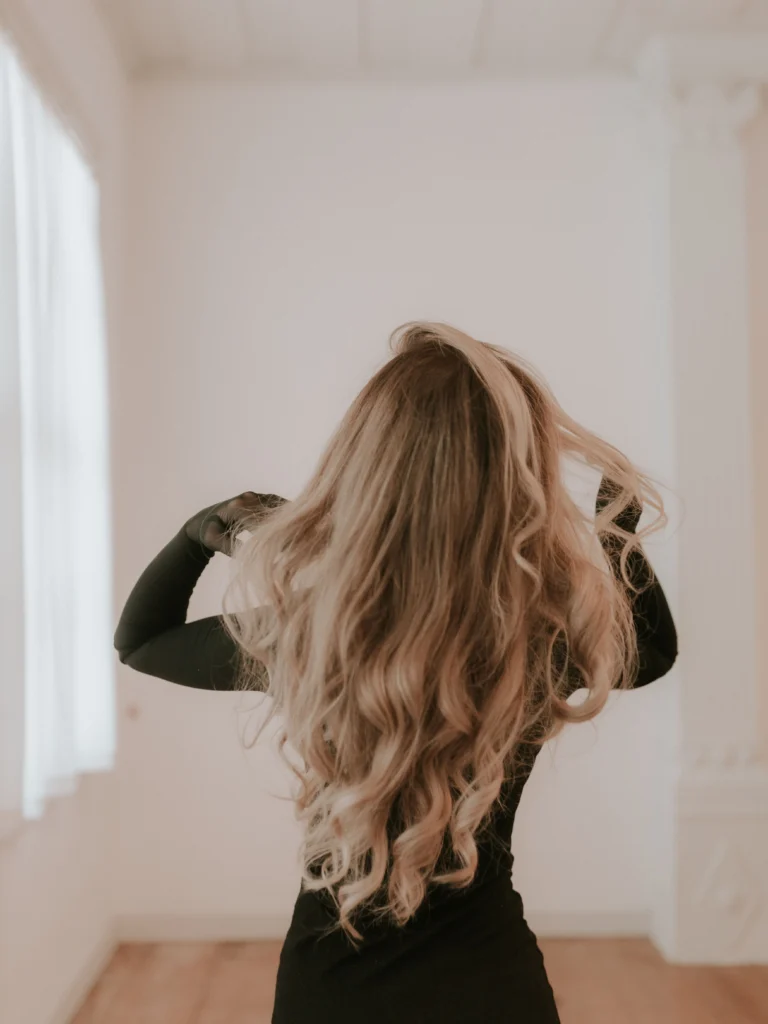
- Length: long layers or a lob, where the hand painted blend has space to develop.
- Placement: painted on the surface, heavier toward the ends, softer at the roots.
- Texture: waves show the gradient best, but straight hair still reads the fade.
- Face shape: the soft root keeps the look gentle on every face shape.
- Upkeep: 10 to 12 weeks between appointments, with a toner in between if needed.
Balayage highlights grow out more gracefully than foil highlights, because there is no hard line at the root. The colour deepens gradually from top to bottom, which suits women who visit the salon less often. It also suits hair that is already layered, since the painted pieces follow the cut.
11. Rose Gold Highlights
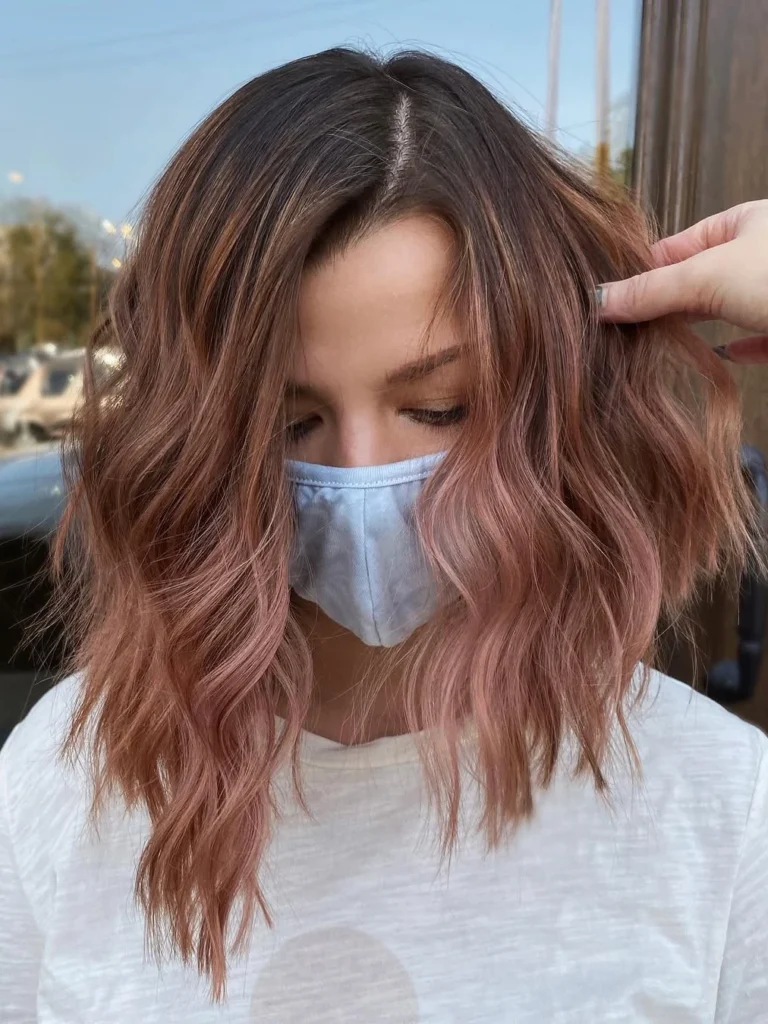
Quick Tip: Rose gold fades fastest on the top layer where the sun hits. A weekly colour depositing mask in a soft pink keeps the tone rosy between salon visits without adding commitment.
Rose gold sits between blonde and copper, with a soft pink warmth that flatters fair and medium skin. It works best over a light blonde or light brown base, since dark hair needs heavy lifting to show the pink. Keep the rose pieces through the mid lengths rather than the roots, so regrowth stays low maintenance and the colour reads as a glow.
For a rich brown colour story that pairs well with warm highlights, see these rich chocolate brown hair ideas for women over 40.
12. Cool Beige Highlights
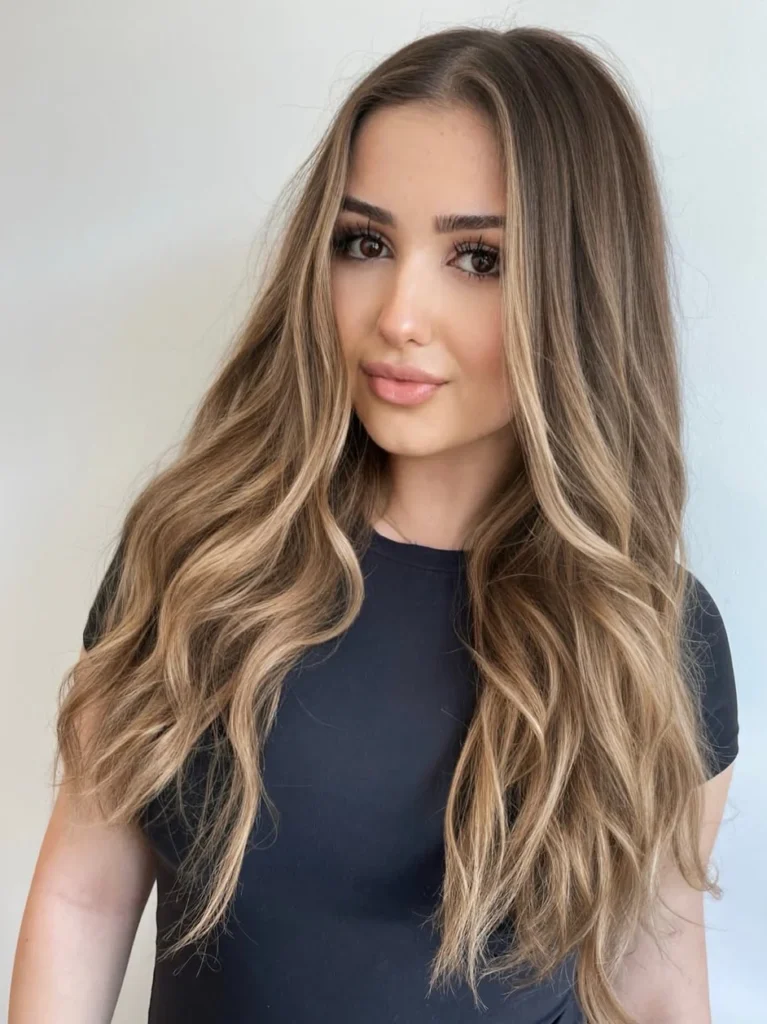
BEFORE: Blonde that turned yellow or brassy after a few washes, making the whole colour look tired.
AFTER: A cool beige tone that stays soft and creamy, with dimension that survives several weeks of washing.
Cool beige suits women whose blonde pulls warm no matter what. The beige toner neutralises yellow without going grey or ashy, which keeps the colour looking expensive rather than flat. Use a purple shampoo sparingly, once a week at most, since overuse pushes beige toward dull grey.
13. Chunky Retro Highlights
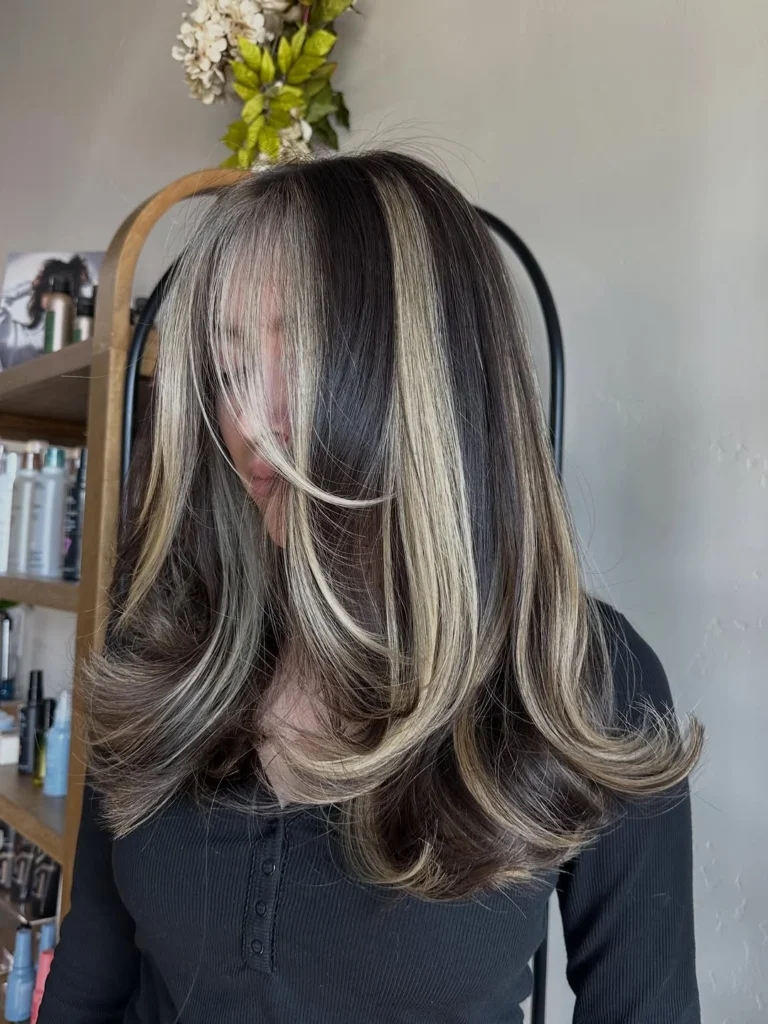
- Choose two tones: one close to the base, one two levels lighter.
- Take wider sections than modern fine highlights, about a finger width.
- Place the lighter pieces where the cut moves most, usually the top layer.
- Keep the underneath darker for contrast when the hair swings.
- Finish with a smooth blow dry so the panels read as deliberate, not striped.
Chunky highlights return in a softer form than the stark stripes of the past. The trick is keeping the contrast moderate and the edges blended, so the panels look like ribbons rather than blocks. This suits thick, straight hair best, where wide pieces stay visible.
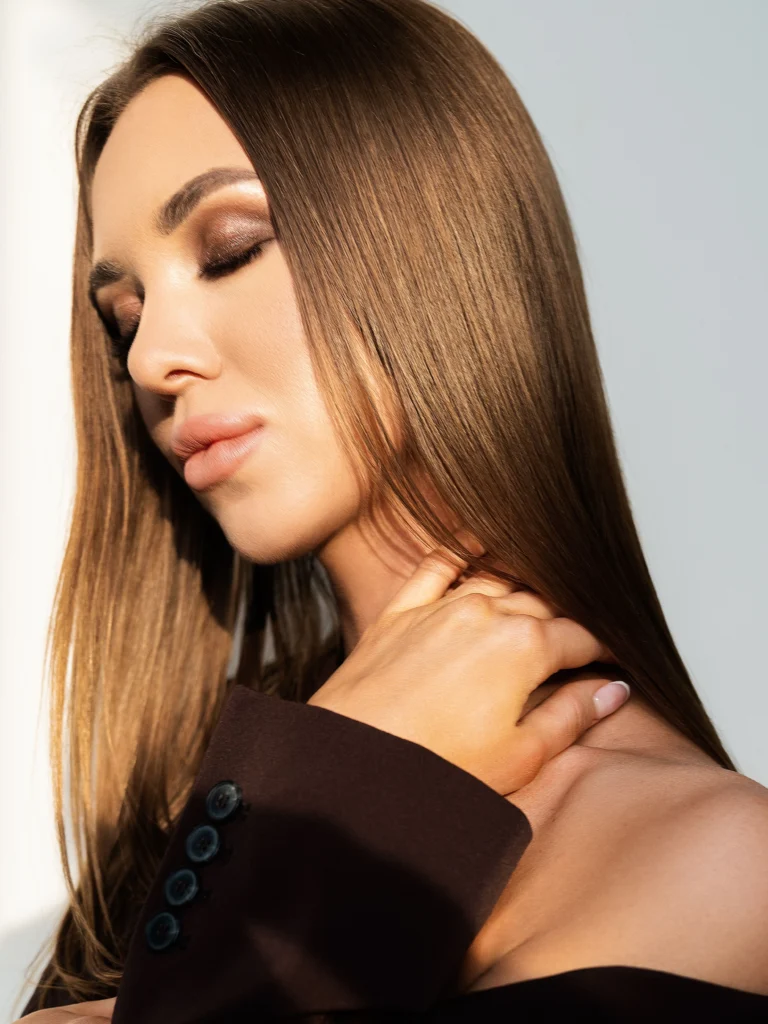
14. Lowlights and Highlights Mix
| Feature | Highlights Only | Highlights Plus Lowlights |
|---|---|---|
| Depth | Lighter pieces on one base | Light and dark woven together |
| Grow out | Visible line at the roots | Softer, more forgiving |
| Best for | Fine hair needing brightness | Thick hair needing shape |
Adding lowlights back into highlighted hair restores the shadow that all over lightening removes. The dark pieces give the light ones something to sit against, so the whole head looks dimensional instead of washed out. This mix suits women whose highlights have gone too light or too uniform, and it stretches the time between appointments.
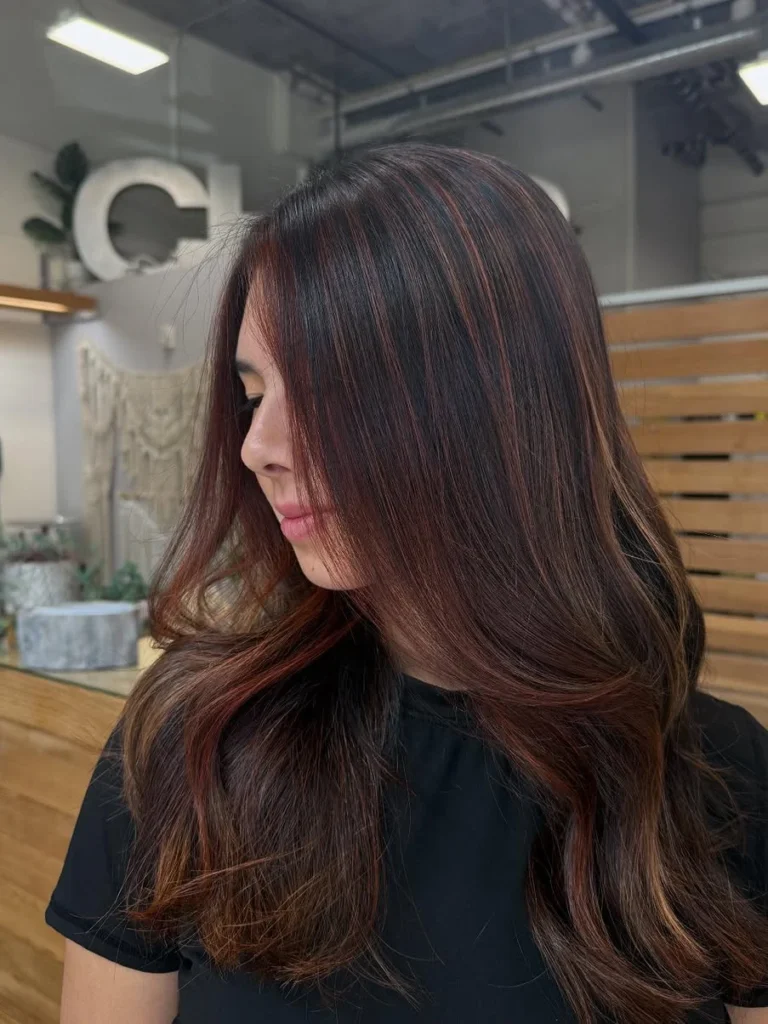
15. Rich Auburn Highlights
DO:
- Pick an auburn with brown depth rather than bright orange red.
- Weave the colour through the mid lengths where it catches light.
- Use a colour safe conditioner to slow fading.
DON’T:
- Lighten dark hair to bright red in a single session.
- Wash with hot water, which strips red tones fastest.
- Skip a gloss, since auburn loses shine as it fades.
Auburn highlights warm up brown hair without a full red commitment. The colour looks richest on medium brown bases and on wavy textures, where the red tones shift as the hair moves. Expect a toner refresh every 6 to 8 weeks, since red based colour fades faster than any other family.
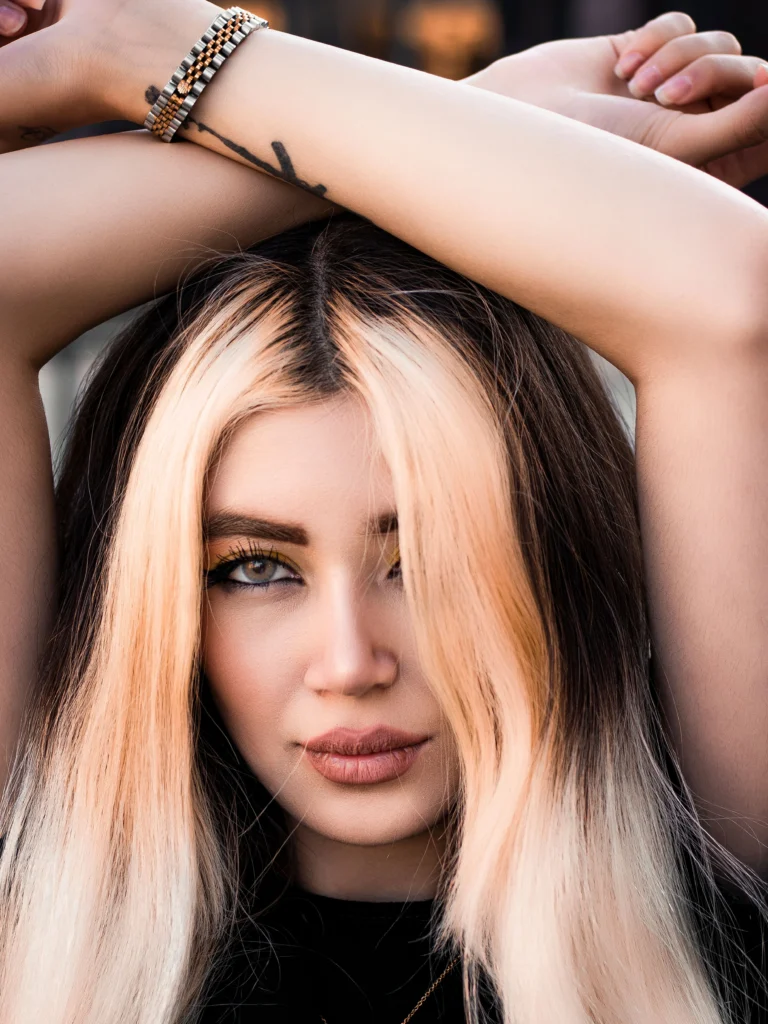
16. Platinum Face Framing
Hair Length: any length with face framing layers
Hair Type: straight or slightly wavy
Face Shape: round, square, heart
Styling Time: 15 minutes with a flat iron.
Platinum pieces around the face make a bold statement, so the rest of the hair should stay close to its natural shade for balance. The contrast draws attention upward and brightens the features, but it needs a purple shampoo routine to stay icy rather than yellow. This suits confident colour wearers who enjoy a visible, modern accent.
17. Honey Ribbon Highlights
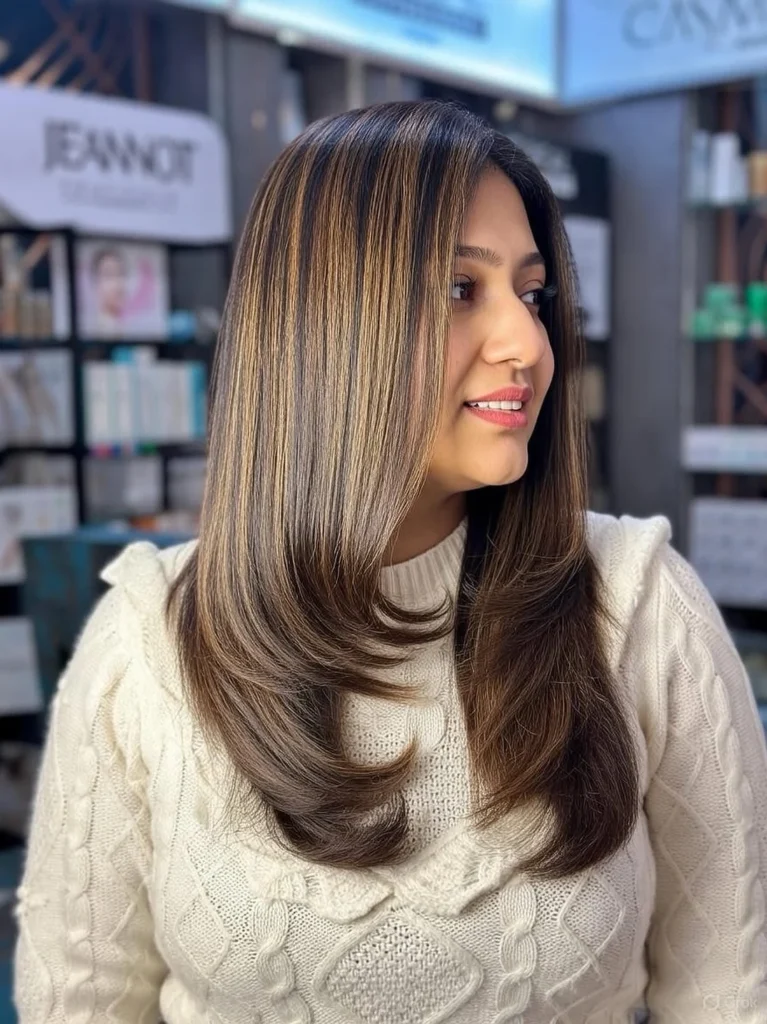
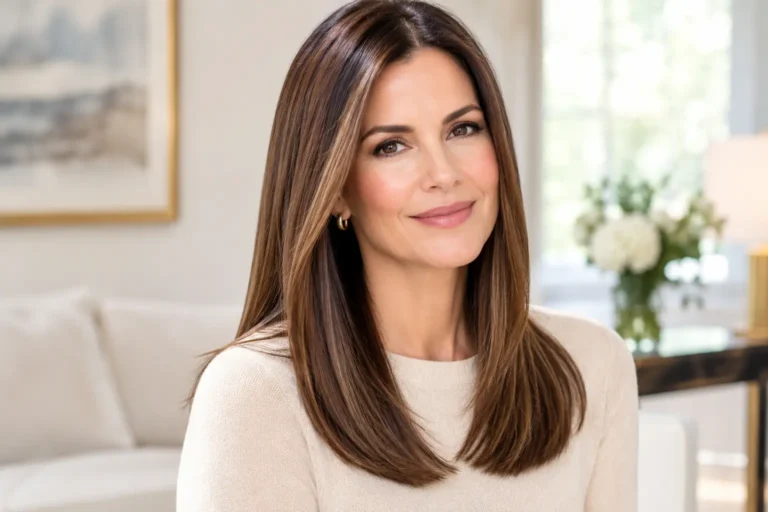
Honey ribbons run as long, flowing pieces through the hair, wider than babylights but softer than chunky panels. The golden tone suits warm skin and medium brown bases, and it gives long hair a sunlit, dimensional finish without lightening the whole head.
This placement works best on layered cuts, where each ribbon follows a layer and the colour moves with the hair. Keep the ribbons varied in width and spacing, since identical ribbons read as stripes. A gloss every couple of months keeps the honey tone golden rather than brassy.
18. Soft Grey Highlights
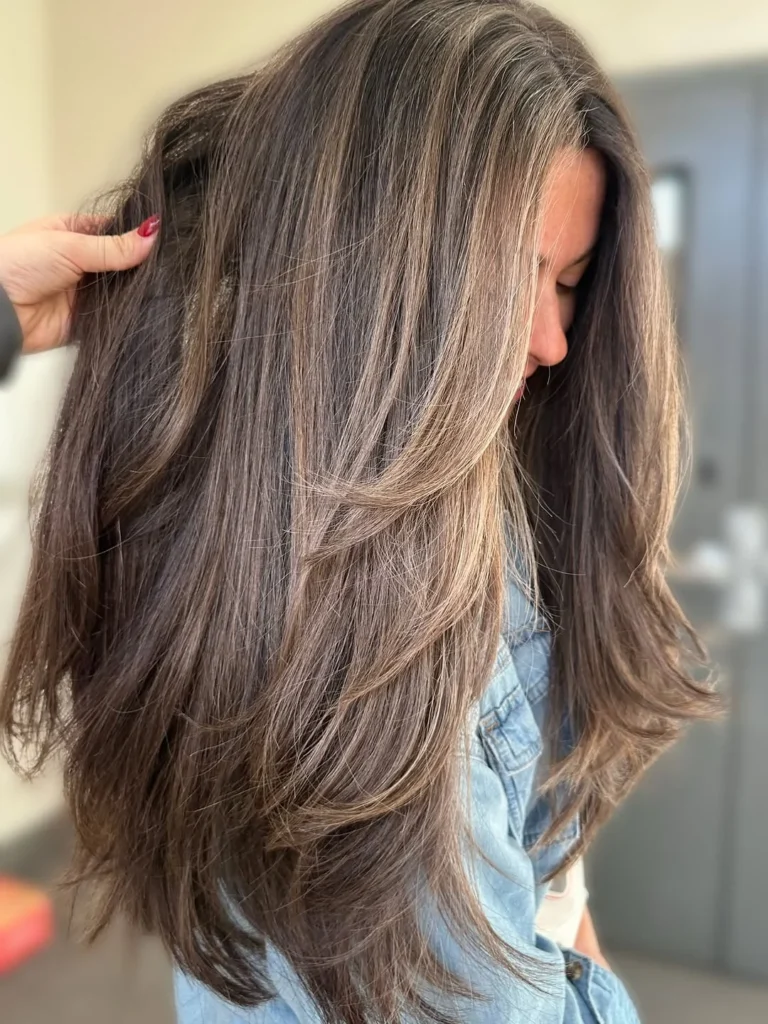
- Length: short to medium, where grey pieces stay crisp and visible.
- Placement: scattered through the top layer and around the part.
- Texture: straight hair shows grey ribbons most clearly.
- Face shape: soft grey suits every face shape when kept close to the natural base.
- Upkeep: toner every 8 to 10 weeks to keep the grey cool, not yellow.
Soft grey highlights suit women who are mostly grey at the roots but not ready for full silver. The pieces bridge the gap between coloured lengths and natural grey, so regrowth looks intentional. The result reads as a modern, deliberate silver blend rather than hair caught between two colours.
19. Warm Chestnut Highlights
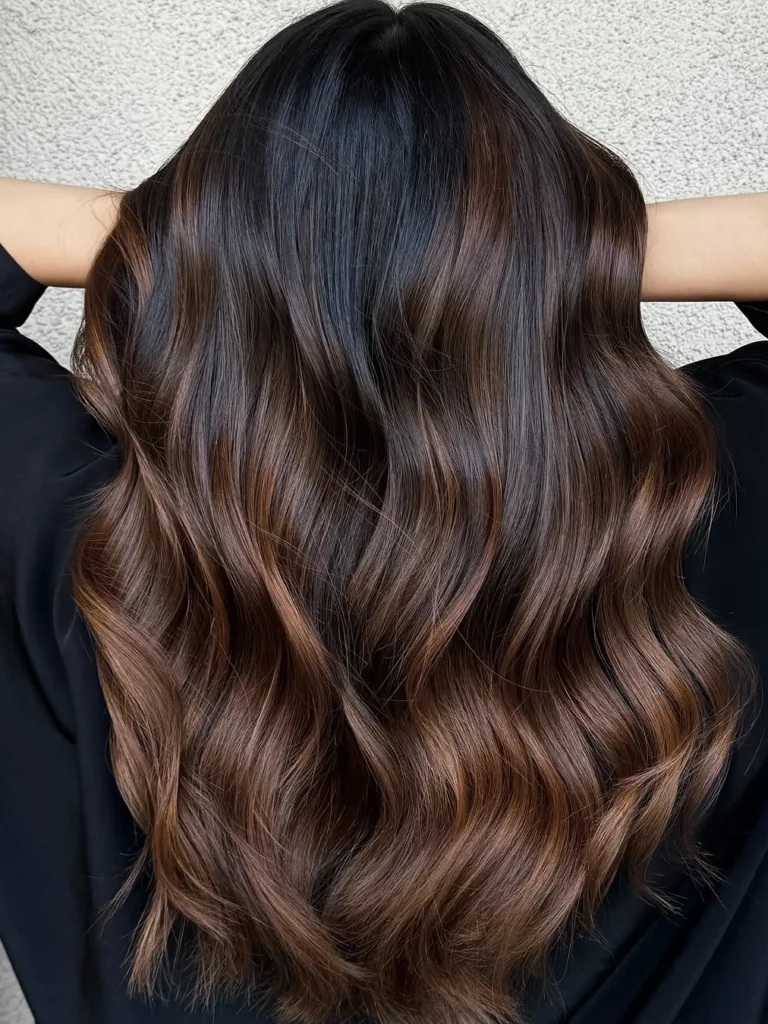
Quick Tip: Chestnut highlights look best with a warm gloss rather than a matte finish. Ask for a clear or warm gloss at the end of the appointment to lock in the shine and deepen the tone.
Chestnut sits between brown and red, giving dark hair a warm, glossy richness. The pieces should stay close to the base colour, only one or two levels lighter, so the effect reads as depth and shine. This suits thick hair well, since the warm tones add visible movement to heavy lengths.
20. Sun Kissed Highlights
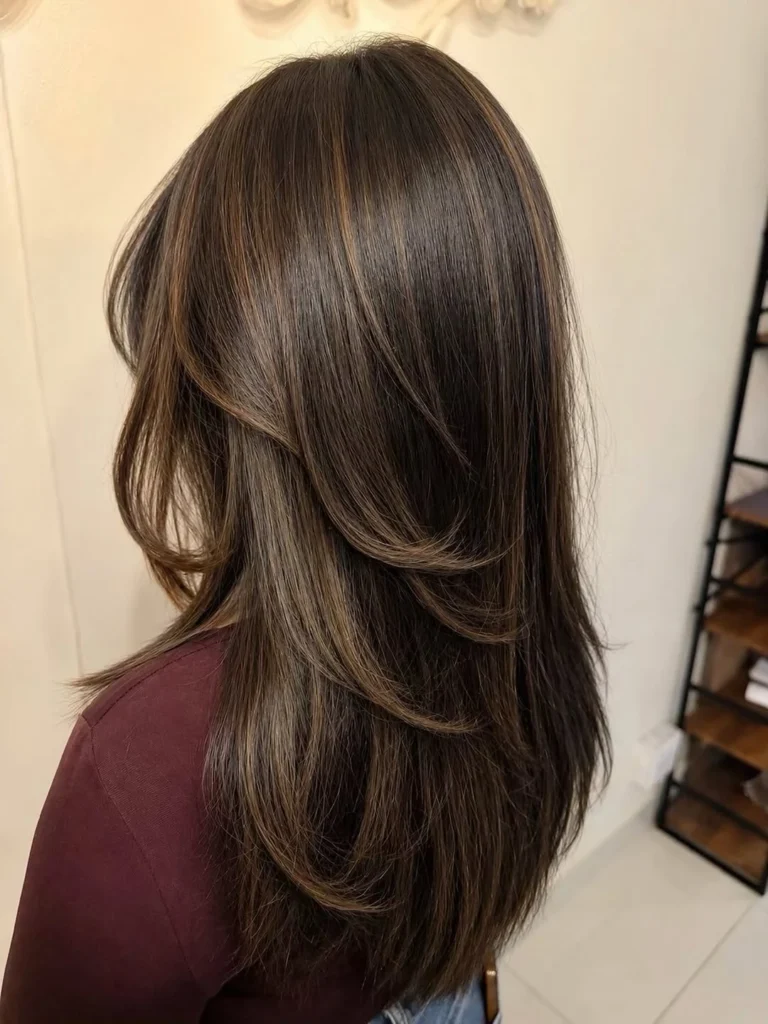
BEFORE: Hair that looks dull indoors and flat in photos, with no visible variation from roots to ends.
AFTER: Light, natural looking pieces through the top layer that mimic a summer outdoors, with soft brightness around the face and ends.
Sun kissed highlights imitate the way the sun naturally lightens hair, so placement stays on the top layer and the ends rather than underneath. The colour should sit only one or two levels above the base. This suits every hair type, but it shines on wavy hair where the light pieces break up the texture beautifully.
21. Burgundy Wine Highlights
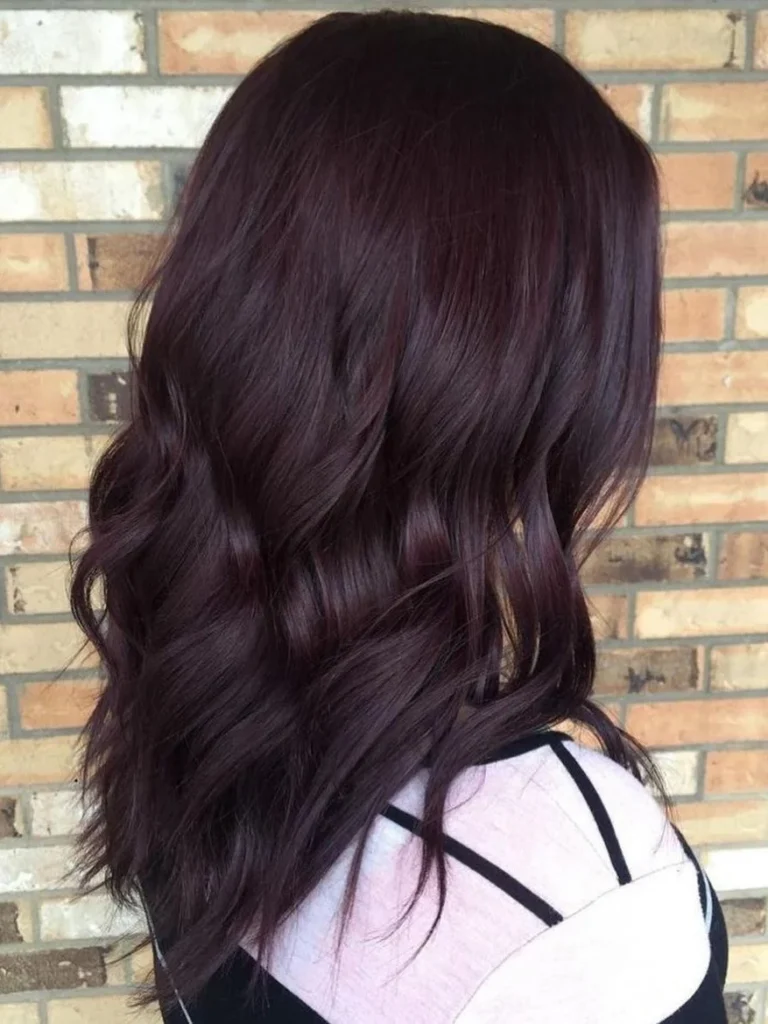
- Start from a medium to dark brown base for the wine tone to show.
- Weave burgundy pieces through the mid lengths and ends.
- Keep the pieces fine so the colour reads as a rich tint, not a block.
- Gloss to seal the tone and add shine.
- Refresh with a colour depositing conditioner between visits.
Burgundy wine adds depth and drama to dark hair without going bright red. The wine tone looks especially good in low light, where it reads as a deep, expensive shade. It fades toward brown over time, which keeps the grow out gentle.
22. Highlighted Pixie Cut
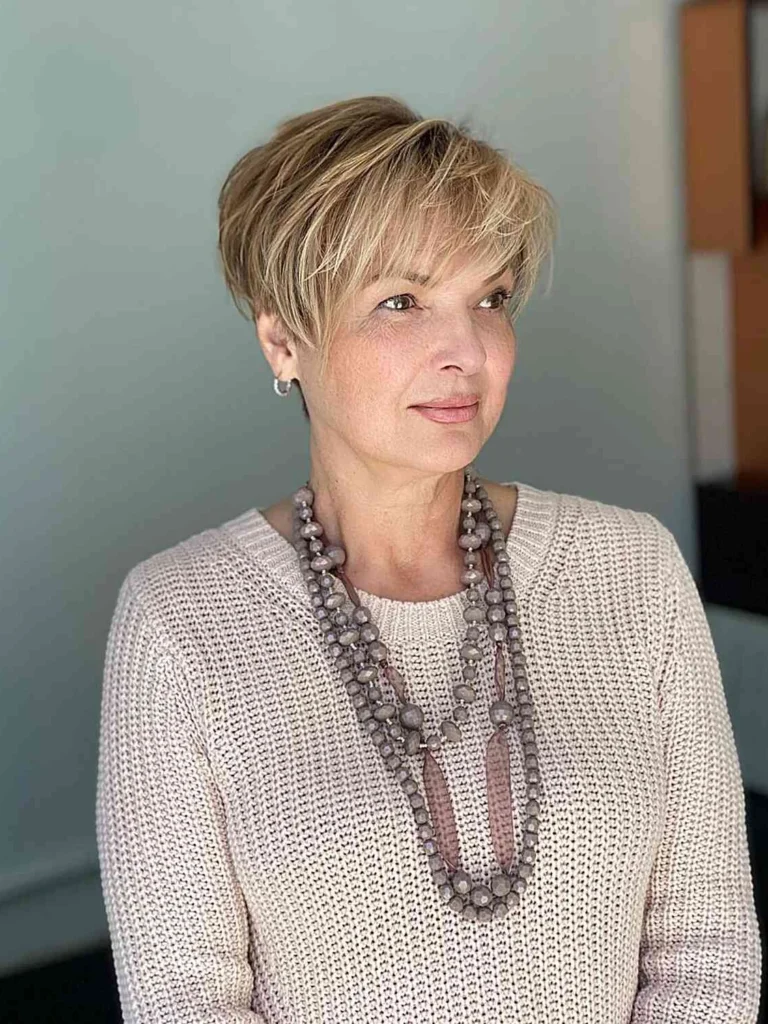
| Feature | Subtle Pixie Highlights | Bold Pixie Highlights |
|---|---|---|
| Placement | Tips and top layer only | Crown and fringe pieces |
| Look | Soft dimension on short hair | High contrast, modern edge |
| Upkeep | Trim plus toner every 6 weeks | Toner every 4 to 6 weeks |
Short hair shows highlights differently, since there is less length for a blend to develop. Placement matters more than quantity: a few well placed pieces on the crown and fringe give a pixie its shape and movement. Keep the contrast moderate, since harsh light pieces on very short hair can look patchy rather than dimensional.
23. Highlighted Curly Layers
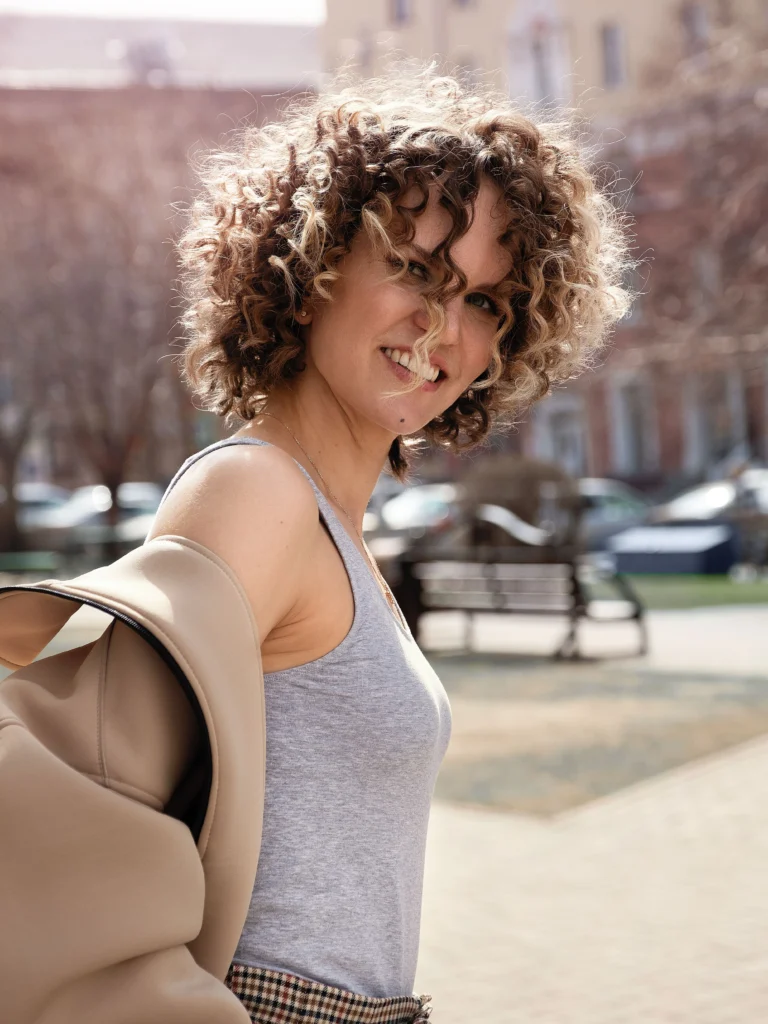
DO:
- Place highlights on the outer curls where light naturally falls.
- Keep pieces fine, since curls break colour into small sections anyway.
- Use a curl cream after colouring to keep definition.
DON’T:
- Foil every curl, which creates a striped, over processed look.
- Lighten more than two levels at once on curly hair.
- Skip deep conditioning after a colour appointment.
Curly hair takes highlights beautifully, because each curl catches light differently and the colour shifts as the hair moves. The key is restraint: fewer, well placed pieces read as natural dimension, while too many create a busy, striped effect. A good colourist paints or foils with the curl pattern, not against it.
24. Low Maintenance Root Highlights
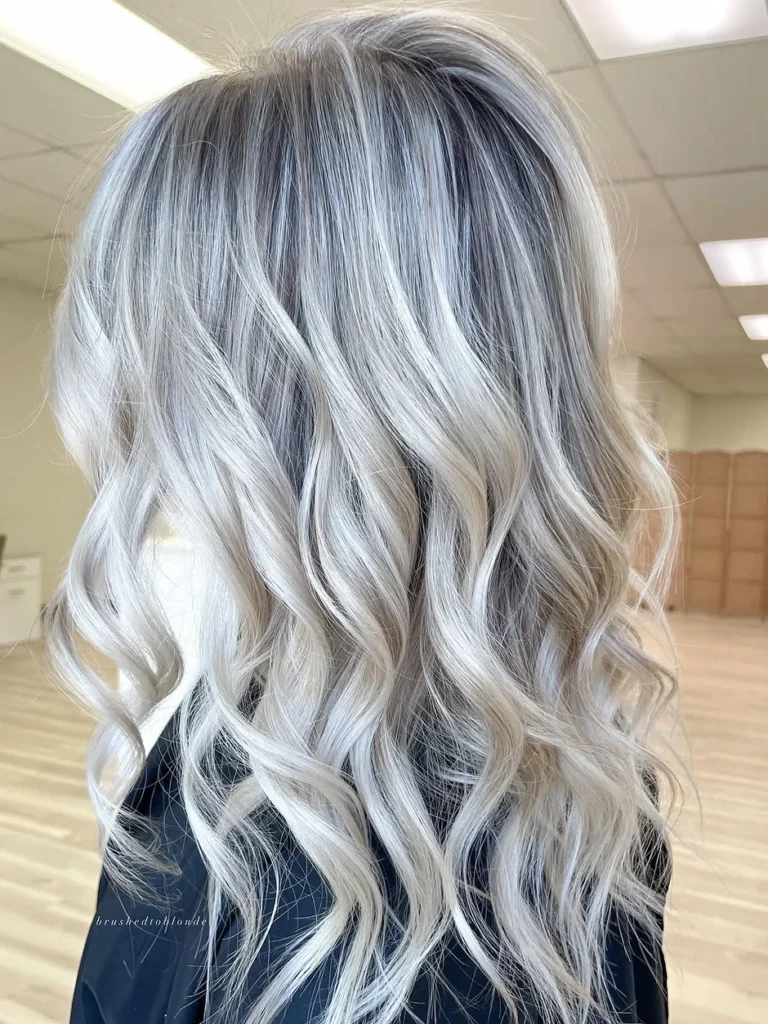
Hair Length: medium to long
Hair Type: any, especially thick
Face Shape: every face shape
Styling Time: 10 minutes with air drying
Low maintenance highlights keep the roots dark and place colour only from the mid lengths down. Regrowth blends into the dark root zone, so appointments stretch to 12 weeks or more without a visible line.
This is the most practical highlight choice for busy schedules, and it suits every face shape since the brightness sits where the hair moves, not at the hairline.
Helpful Styling Tips
Highlights look their best when the cut supports the colour, so book the cut and colour together when possible. Layers give ribbons room to show, while a blunt cut can hide fine placement. Between appointments, a gloss or toner refresh costs far less than a full colour and keeps the tone from drifting brassy or dull.
At home, wash with lukewarm water and a colour safe shampoo, and limit heat styling to two or three times a week. A weekly mask keeps lightened hair soft, since highlighted sections dry out faster than virgin hair.
When in doubt about a new shade, ask for a few test pieces underneath first, where only you will see them while the tone settles.
Conclusion
Highlight ideas for women over 40 are really about placement and tone rather than bold colour changes. Soft ribbons, gentle face framing, and low upkeep blends can refresh a familiar cut without a drastic commitment.
Choose the idea that fits your base colour, your hair texture, and the amount of upkeep you honestly want, then take the description to your colourist and talk through placement together. Save this list on Pinterest so you have the ideas ready at your next appointment, and enjoy a colour that grows out as gracefully as it starts.
FAQs
What highlight colour suits women over 40 best?
Soft, close to natural tones suit most women over 40: caramel, honey, ash brown, and beige blonde. These shades add dimension without harsh contrast, and they grow out more gracefully than bright or platinum colour.
How often do highlights need touching up?
Foil highlights usually need a refresh every 8 to 10 weeks, while balayage and root shadow styles stretch to 12 weeks or more. A toner or gloss between appointments keeps the tone fresh without a full colour service.
Do highlights damage hair?
Lightening lifts the hair cuticle, so highlighted sections can feel drier than virgin hair. Keeping the lift gentle, spacing appointments, and using masks and heat protection keeps most hair healthy.
Are highlights good for fine hair?
Yes, highlights add visual thickness to fine hair by creating light and shadow. Fine, scattered pieces like babylights work best, since wide or heavy highlights can look striped on thin hair.
Can highlights cover grey hair?
Highlights blend grey rather than covering it fully. Silver blending and fine light pieces weave grey into the overall colour, which makes regrowth far less obvious than solid coverage colour.